


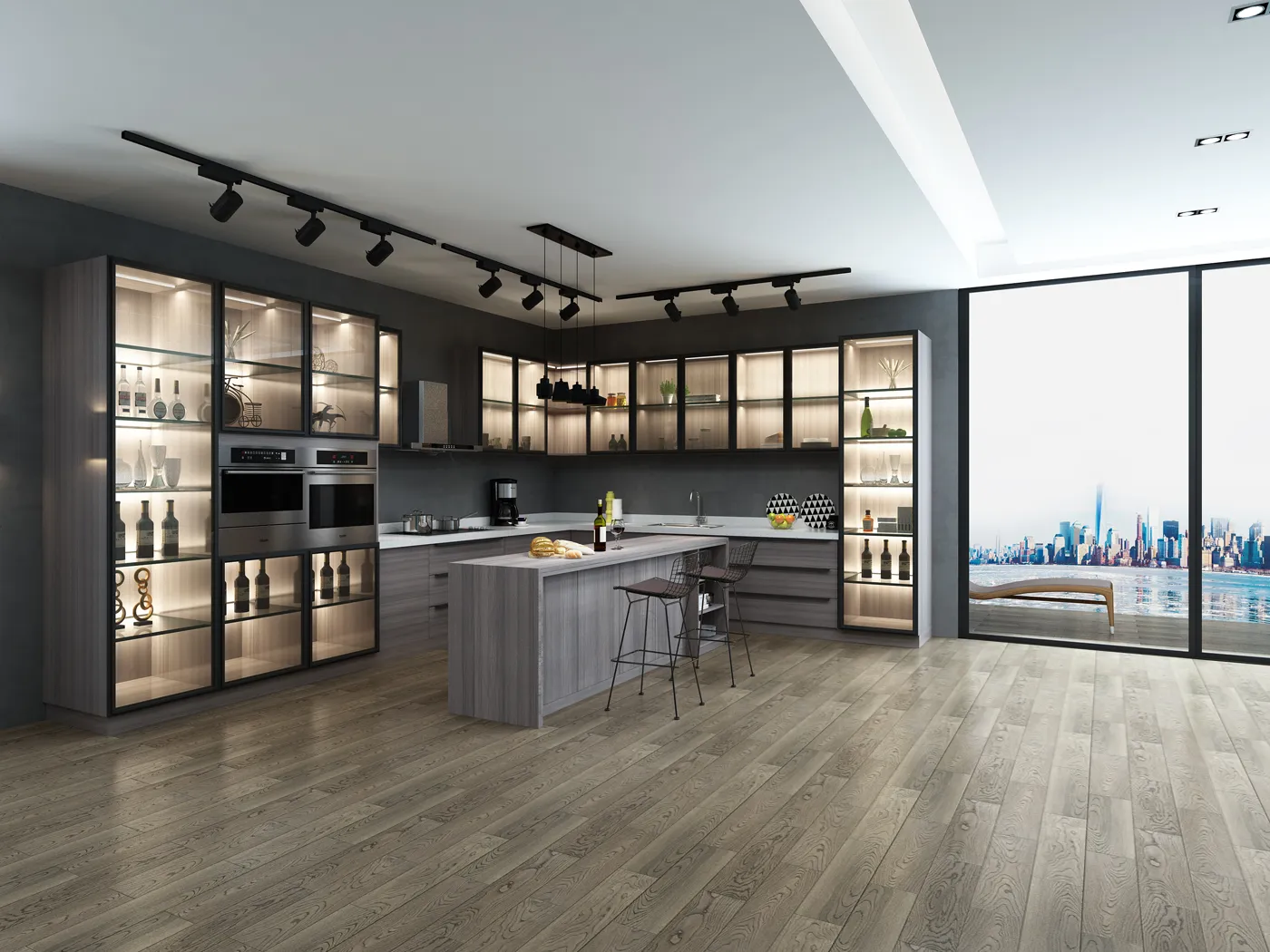
Ever stood in your kitchen, running your hand over those smooth cabinet surfaces, and wondered about the journey they took before landing in your home? Behind every handle and hinge lies a complex dance between brands and manufacturers - a dance governed by OEM or ODM collaboration models. Let's pull back the curtain on these often-misunderstood partnerships.
What "Interpreting" Really Means in Manufacturing
Like bilingual friends translating languages at a dinner party, interpreting in manufacturing means bridging conceptual gaps. It's not just processing specifications; it's about:
- Translating visions into tangible products
- Decoding technical constraints into creative solutions
- Conveying unspoken quality expectations through measurable standards
Remember when the Cambridge Dictionary defined interpreting as "deciding what the intended meaning of something is"? That's precisely what happens when brands and manufacturers collaborate – except instead of words, they're interpreting sketches, mood boards, and half-formed ideas.
Kitchen Cabinets: The Heartbeat of Every Home
Kitchen cabinets aren't just storage - they're the stage for family breakfasts, midnight snacks, and heartfelt conversations. Their importance explains why choosing between OEM and ODM models feels so personal. Think about:
- How cabinet ergonomics affect your cooking flow
- How finish textures connect to your home's personality
- Why hardware choices make you smile each morning
That emotional resonance is why brands sweat the collaboration details. Get it wrong, and customers feel it in their daily rituals.
The OEM Model Explained
Picture bringing a detailed recipe to a bakery. OEM (Original Equipment Manufacturer) is like giving that baker exact instructions: "Use these ingredients, bake at this temperature, frost this exact way." In cabinet terms:
"Make my custom kitchen cabinets with precisely these dimensions, this wood species, and these Blum hinges."
Why brands choose this:
- Total creative control down to millimeter precision
- Consistent quality aligned with exact specifications
- Protection of proprietary designs
The trade-offs:
- Higher R&D and tooling costs
- Longer production lead times
- Inventory management complexities
The ODM Approach Unpacked
Now imagine walking into that same bakery and saying: "I need a cake that will wow at an anniversary party - you know what works." That's ODM (Original Design Manufacturer). The manufacturer brings their expertise to the table:
"Based on your brand's coastal aesthetic, here are cabinet designs we've perfected that match your vision."
Why this works:
- Faster market entry (ready-made designs)
- Lower development costs
- Manufacturing efficiency
Watch points:
- Limited design differentiation
- Potential market overlap with competitors
- Less control over engineering details
When Your Heart Says OEM
Choose OEM when your cabinets need to tell a unique story. Like when:
That distinctive curved island that becomes your kitchen's centerpiece? That level of customization needs OEM. Similarly, integrated refrigeration solutions requiring millimeter-precision cavity tolerances almost always demand OEM precision.
Seasoned designer Elena remarks, "With luxury projects, OEM becomes non-negotiable. When you're specifying hand-rubbed cerused oak finishes or integrating specialty hardware from boutique suppliers, you need partners who'll interpret your vision with religious devotion."
When ODM Makes Perfect Sense
Consider ODM your "sensible shoes" option - reliable, comfortable, and always appropriate for certain scenarios:
- Startups needing catalog depth quickly
- Value-focused collections where engineering costs would inflate prices
- Adding auxiliary lines without overwhelming design resources
Manufacturer Li Wei from Guangdong explains, "Our best ODM clients understand the dance - they give us creative guardrails rather than blueprints. 'Farmhouse charm with modern conveniences' guides us better than 200-page specs."
Your Decision Roadmap
Still torn? Walk through these questions:
-
How unique is your design language?
Signature elements = OEM -
What's your development budget?
Under $100k? Lean ODM -
How quickly must you launch?
<6 months? ODM expedites -
Do you need proprietary engineering?
Innovative hardware? OEM essential
Remember: Hybrid approaches exist. Some brands use OEM for flagship collections and ODM for complementary pieces - best of both worlds.
Building Successful Partnerships
The magic happens in interpretation gaps:
OEM Pro-Tip: Provide "mood conductors" not just blueprints. Videos showing how drawers should feel when closing. Samples of sanded edges that pass the "sweater test." The tactile language communicates what specifications can't.
ODM Secret: Share your customer diaries. When manufacturers read that customers struggle with corner cabinet access or complain about fingerprint marks, they design differently. One manufacturer redesigned their entire corner cabinet solution based on a single poignant journal entry.
Beyond the Cabinet Fronts
Modern collaborations consider what happens when cabinets leave factories:
- Sustainability stories: Consumers connect with manufacturers who conserve water during staining processes
- Packaging innovations that prevent dings during transit
- Installation systems that reduce on-site frustrations
"People forget installation is part of the experience," notes project manager Derek. "That frustration when parts don't align? That stains the brand memory."
The Human Connection
Technology enables but humanity elevates. Consider:
The Chinese factory manager who reworked samples five times to match a client's childhood cabinet memory. Or the Italian designer who flew to Vietnam to explain finish techniques through a translator.
These moments remind us that behind every **custom kitchen cabinet** order (a key concept from our keyword list), there are people interpreting not just specifications, but aspirations.
Wrapping It Up
Selecting between OEM and ODM isn't about finding the "right" model but the right interpreter for your brand's language.
Will your cabinet story be told through:
- OEM's precise vocabulary where every detail sings your tune? Or
- ODM's fluent dialects that adapt existing rhythms to your lyrics?
The answer lives where technical specifications and human experiences intersect. That's where ordinary cabinets transform into the backdrop of lifelong memories.










