


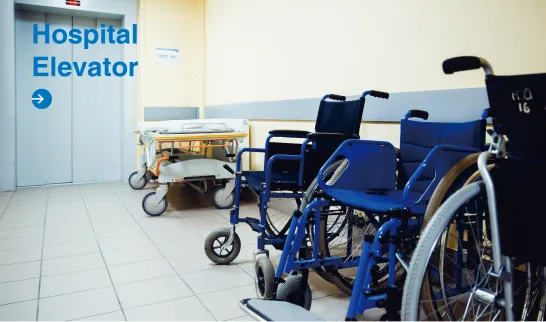
Picture a busy hospital at peak hours: patients being rushed to surgery, critical deliveries arriving at maternity, medical teams crisscrossing buildings. Elevators aren't just convenience here—they're lifelines. Yet we rarely stop to think about what keeps them running when storms knock out power or equipment fails. Today we're pulling back the curtain on the life-saving systems that ensure hospitals never lose vertical mobility.
Hospital elevators represent one of healthcare's most critical infrastructure paradoxes—heavily used yet invisible until failure. The stakes? According to NFPA data, power interruptions contribute to over 65% of elevator entrapments in medical facilities. When minutes dictate survival, redundant power isn't optional engineering—it's moral obligation.
When Regulations Are Just the Starting Line
Most administrators know the fundamentals: NEC Article 517 demands two independent power sources for hospitals. But the real magic happens in the implementation nuances. The Joint Commission doesn't merely want boxes checked—they demand proof of functional resilience through relentless testing protocols. As one facilities director confided, "Compliance documentation gathers dust while operational readiness saves lives."
Consider transfer switches—the silent traffic cops of power systems. For elevators, delayed transition switches create intentional separation between sources, preventing deadly backfeeds. But here's where textbooks fall short: During Houston's Hurricane Harvey crisis, hospitals discovered that switches rated for 10-second transitions failed when submerged in floodwaters. Now, elevated installations and waterproof casings have become unofficial standards beyond code minimums.
The Power Tango: Generators and Elevators in Sync
Everyone talks about generator runtimes (yes, that famous 96-hour diesel reserve requirement). But few discuss the dance between generators and elevator control systems. Older traction elevators create massive inrush currents when restarting—sometimes tripping overload protection. That's why progressive hospitals install:
- Soft-start voltage regulators that "ramp up" elevator motors
- Real-time load monitoring that sheds non-critical equipment first
- Priority sequencing that resumes elevator operation before air handlers
The Minneapolis VA Medical Center's tale remains instructive: After a generator failed during transfer testing, engineers discovered elevator harmonics destabilizing the power waveform. Their solution? Dedicated harmonic filters now accompany all elevator power circuits—a textbook example of hidden failure points.
Beyond Diesel: The Quiet Fuel Revolution
While most hospitals cling to diesel for its reliability, forward-thinking facilities explore alternatives without compromising safety. Consider natural gas-fueled turbines with battery buffering—hybrid systems providing cleaner operation while meeting Type 10 transition requirements through capacitors. Or the San Francisco hospital using hydrogen fuel cells that simultaneously power elevators and produce drinking water as byproduct.
Maintenance horror story: A generator that passed monthly tests failed catastrophically during actual outage because testing protocols didn't simulate the simultaneous startup of elevators, chillers, and surgical suites. Now progressive hospitals run worst-case "all load" tests quarterly, tripling generator exercise time but uncovering flaws before crises.
System Resilience: Designing for the Unthinkable
After Hurricane Maria's devastation of Puerto Rico's medical infrastructure, resilience planning took quantum leaps. The University Hospital now operates elevators using microgrids that integrate solar panels, battery walls, and generators with automatic failover protocols. When grid power vanishes, elevator banks receive staggered restoration—critical care elevators first, administrative last—preventing system crashes from simultaneous demands.
Physical distribution matters more than engineers admit. Miami's Jackson Memorial discovered this when both primary and backup generators were flooded in the same basement. Their solution? Split systems: Primary power sources underground, backups on rooftop mechanical floors. The hospital's facilities manager calls it "geographic divorce for critical systems."
The Human Factor: Training Beyond Compliance
During a Chicago hospital's 14-hour outage, elevators kept running smoothly—not because of superior engineering, but due to veteran electricians manually managing phase load balancing based on experience. "Our techs know these systems like musicians know instruments," the chief engineer noted. This underscores a painful truth: Emergency operations require human intuition no circuit can replace.
Cross-training is becoming critical in emergency management. Maintenance teams at Johns Hopkins routinely train with elevator technicians on entrapment scenarios where both mechanical failure and power issues combine. Their tabletop exercises simulate compound disasters—earthquake damage plus power loss plus communication failures—pushing systems beyond theoretical limits.
Future-Proofing Vertical Mobility
As hospitals expand upward, power demands will intensify. High-rise facilities like NYC's Mount Sinai already encounter voltage drop issues during generator transfer. Their solution? Distributed power architecture with localized UPS units at elevator machine rooms—essentially creating power safety nets at each vertical zone.
The next frontier? Elevators that become power assets. Regenerative drives capturing braking energy now feed excess power back into emergency systems. During a recent Philadelphia brownout, a hospital's elevators actually supported surgical suite power for 37 critical minutes through this feedback loop.
Lessons from the frontlines: Create maintenance partnerships, not contracts. The most successful hospitals don't just hire generator technicians—they embed them. One Boston hospital's maintenance team includes a former submariner who treats power systems "like life support on nuclear vessels." That mindset shift—elevating power reliability to clinical safety status—separates adequate hospitals from truly resilient ones.
Implementation Roadmap
Building real-world resilience isn't about revolutionary leaps—it's evolutionary steps:
| Phase | Action | Human Impact |
|---|---|---|
| Assessment | Load bank testing beyond nameplate ratings | Avoid ICU shutdowns during restoration |
| Design | Zoned vs centralized architecture | Faster restoration for critical care elevators |
| Training | Shared drills with clinical staff | Prevent panic during entrapment incidents |
| Maintenance | Predictive analytics monitoring | 48+ hours notice of component failure |
The elevator emergency power journey transforms from technical compliance to cultural commitment when teams view each generator hum not as mechanical noise, but as the uninterrupted pulse of patient mobility. After all, in hospitals, vertical movement is literally life in transit.










