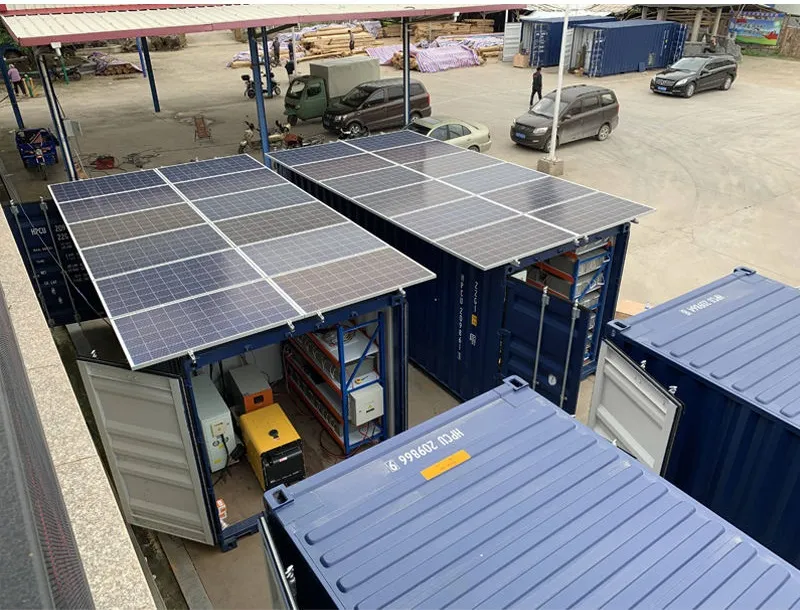
The construction industry is undergoing a fundamental shift. As energy costs rise and sustainability mandates tighten across global markets, project developers and contractors are increasingly looking for ways to integrate renewable energy directly into their building designs. Among all available options,
solar panels solutions have emerged as the most practical and scalable choice for residential, commercial, and industrial projects alike.
Why Solar Panels Are Becoming a Construction Essential
Gone are the days when solar panels were an afterthought — a niche addition reserved for eco-conscious homeowners. Today, architects and developers routinely specify photovoltaic systems at the design stage. This shift is driven by several converging factors: government incentives for green building certification, falling panel costs, and rising expectations from property buyers and tenants who demand energy-efficient spaces.
For any
building material supplier serving the modern construction market, offering solar panels is no longer optional — it is a competitive necessity. Projects that incorporate solar from the outset benefit from lower long-term operating costs, higher property valuations, and compliance with increasingly strict energy codes in markets across the Middle East, Southeast Asia, Africa, and beyond.
Matching Solar Solutions to Different Project Types
Not all solar installations are created equal. The right solution depends heavily on the project type, local climate conditions, and the energy demands of the building. A residential villa in Saudi Arabia has fundamentally different requirements than a commercial office tower in Southeast Asia or an industrial facility in Africa.
Residential Projects: Villas and apartment complexes benefit from rooftop-mounted panels that offset common-area electricity consumption. For single-family homes, a well-sized system can cover the majority of daily energy needs, especially in sun-rich regions. The key considerations are roof orientation, structural load capacity, and aesthetic integration with the building envelope.
Commercial Buildings: Office towers, shopping malls, and hotels have large roof areas and often substantial daytime energy loads that align perfectly with solar generation peaks. These projects can justify larger installations and may also incorporate building-integrated photovoltaics (BIPV) into facades or skylights for maximum surface utilization.
Industrial Facilities: Warehouses, factories, and logistics centers typically feature expansive flat roofs that are ideal for solar arrays. The energy generated can power machinery, lighting, and HVAC systems, significantly reducing operational expenses over the system's 25+ year lifespan.
Key Factors When Selecting a Solar Panel Supplier
Choosing the right
solar panel supplier is a decision that affects project timelines, budget, and long-term performance. Builders and developers should evaluate potential suppliers across several critical dimensions.
Product Range and Specifications: A capable supplier should offer panels with varying wattages, efficiency ratings, and form factors to suit different installation scenarios. Monocrystalline panels deliver higher efficiency for space-constrained roofs, while polycrystalline options provide a cost-effective alternative for larger installations.
Quality Certifications: Look for panels that carry international certifications such as IEC 61215 and IEC 61730. These standards verify that the panels have undergone rigorous testing for performance, durability, and safety under real-world conditions.
Supply Chain Reliability: Construction projects run on tight schedules. A supplier with a proven manufacturing base and consistent inventory ensures that deliveries arrive on time and in full. This is particularly important for large-scale developments where delays can cascade through the entire project timeline.
Technical Support: The best suppliers provide more than just products — they offer guidance on system sizing, installation best practices, and compatibility with inverters, mounting structures, and electrical infrastructure.
The Advantage of a One-Stop Approach
One of the biggest challenges in construction procurement is coordinating multiple suppliers across different material categories. When solar panels come from one vendor, mounting systems from another, and electrical components from yet another, the risk of compatibility issues, delivery misalignment, and warranty disputes increases substantially.
This is where working with an
one-stop architectural solution provider delivers measurable value. COLORIA GROUP, headquartered in Foshan, China, supplies solar panels alongside a comprehensive range of building materials — including walls, flooring, ceilings, pipes and fittings, sanitary fixtures, customized furniture, windows and doors, decorative profiles, elevators, electrical fixtures, cables, and lighting. By consolidating procurement through a single trusted partner, project managers reduce administrative overhead, simplify logistics, and gain a single point of accountability for quality and delivery.
COLORIA GROUP at a Glance
With an agent in Saudi Arabia and headquarters in Foshan — one of China's premier manufacturing hubs — COLORIA GROUP serves clients across the Middle East, Africa, Southeast Asia, and beyond. The company's tagline, "One-Stop Solution For Building Materials," reflects a commitment to simplifying the procurement process for developers, contractors, and project owners worldwide.
Installation Best Practices for Optimal Performance
Even the highest-quality panels will underperform if installed incorrectly. Builders should pay attention to several critical factors during the installation phase.
Orientation and Tilt: In the Northern Hemisphere, panels should face south at an angle roughly equal to the local latitude for maximum annual yield. Adjustable mounting systems can boost output by allowing seasonal angle changes, though fixed-tilt installations remain the most common choice for their simplicity and lower cost.
Shading Analysis: Before finalizing panel placement, conduct a thorough shading assessment. Nearby buildings, trees, chimneys, and even rooftop equipment can cast shadows that disproportionately reduce output. Modern string inverters with maximum power point tracking (MPPT) can mitigate some shading effects, but the best strategy is to avoid shaded areas entirely.
Ventilation and Heat Management: Solar panels lose efficiency as temperatures rise above their rated operating range. A gap of at least 10-15 cm between the panels and the roof surface promotes natural airflow that keeps temperatures in check. Ground-mounted systems naturally benefit from better air circulation.
Structural Integrity: The roof or mounting surface must be assessed for its ability to bear the additional weight of the solar array, including wind uplift forces. For large commercial and industrial roofs, a structural engineer's evaluation is essential before installation begins.
Looking Ahead: Solar in the Future of Construction
The trajectory is clear. As dual carbon targets drive policy changes worldwide and prefabricated construction methods gain adoption, solar panels will become an increasingly standard component of building specifications rather than an optional upgrade. Developers who establish reliable supply chains for solar products now will be positioned ahead of competitors as mandates tighten.
For projects in high-growth regions — particularly the Middle East, where ambitious infrastructure development coincides with abundant solar resources — the business case is especially compelling. Saudi Arabia's Vision 2030, for example, emphasizes sustainable construction and renewable energy integration, creating sustained demand for quality solar products and the building materials that accompany them.
Ready to Power Your Next Project with Solar?
COLORIA GROUP supplies high-quality solar panels as part of a complete building materials portfolio spanning 13 product categories. Whether you are developing a residential community, a commercial complex, or an industrial facility, our team can help you source the right solutions at competitive prices. Contact us today at +86-13630185350 (WhatsApp/WeChat) or visit www.coloriagroup.net to discuss your project requirements. Together we build the future.