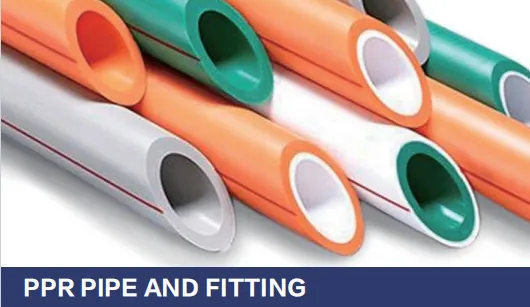
One of the reasons PPR has become so popular is its versatility. Whether you're building a family home, a high-rise office, or a specialized facility like a hospital, PPR pipes and fittings can be tailored to meet your unique needs. Let's explore how our solutions work across different settings:
Residential Applications: Comfort and Reliability for Families
For homeowners, plumbing needs are all about daily comfort and peace of mind. Our PPR systems excel here, with features designed to handle the demands of family life. Imagine a morning rush hour: multiple showers running, the dishwasher on, and someone watering plants outside. With PPR, water pressure remains consistent, even when multiple fixtures are in use, thanks to smooth inner walls that minimize friction and flow resistance.
Hot water systems are another area where PPR shines. In Saudi homes, where hot water is used for everything from bathing to cooking, PPR's heat resistance ensures that water temperature stays steady, and pipes don't degrade over time. We've worked with homeowners in Jeddah who were tired of lukewarm showers due to inefficient copper piping—after switching to PPR, they reported hotter water, faster, with no drop in temperature when other taps are turned on.
Renovations are another common use case. Older homes often have outdated plumbing that can't keep up with modern appliances like tankless water heaters or high-efficiency washing machines. Our PPR pipes are easy to retrofit into existing walls, with flexible lengths that reduce the need for extensive demolition. A recent renovation project in Dammam saw us replace 40-year-old galvanized steel pipes with PPR in just three days—a job that would have taken twice as long with copper.
Commercial Applications: Durability for High-Demand Environments
Commercial projects demand even more from plumbing systems. Take hospitals, for example: they require 24/7 access to hot and cold water, strict hygiene standards, and systems that can withstand constant use. Our PPR pipes are non-porous, which means they don't harbor bacteria—a critical feature for healthcare settings where infection control is paramount. They're also compatible with anti-scald valves and temperature-regulating systems, ensuring patient safety.
Schools present their own challenges, with high water usage during peak hours (think hundreds of students washing hands after recess) and the need for low-maintenance systems that don't disrupt classes with repairs. PPR's durability and leak-proof design make it ideal here. We recently supplied PPR pipes and fittings for a new school in Riyadh, and the facilities manager noted, "In the first year, we've had zero plumbing issues. That's unheard of with the older systems we used in our other buildings."
Office buildings and shopping malls benefit from PPR's space-saving design. With thinner walls than copper pipes, PPR allows for more flexible routing in tight ceilings and walls, making it easier to integrate with other building systems like electrical wiring and HVAC. This flexibility was a game-changer for a recent mall renovation in Khobar, where we needed to install new plumbing without disrupting existing stores or public areas.