
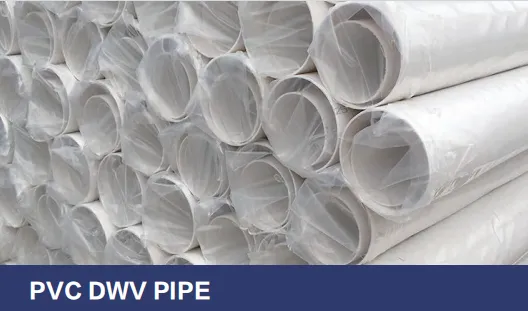
If you're a contractor, you know the phrase "out of sight, out of mind" can be dangerous—especially when it comes to plumbing systems. Behind walls and under floors, drain, waste, and vent (DWV) pipes quietly keep buildings functional, carrying wastewater away and venting harmful gases. But when these systems fail? It's not just a leak; it's mold, structural damage, and angry clients. That's why understanding the industry standards for PVC DWV pipes isn't just a box to check—it's the foundation of a job done right. In this guide, we'll walk through what makes PVC DWV pipes tick, the standards that keep them reliable, and how to choose the right pvc dwv pipe supplier to avoid costly headaches down the line. Whether you're working on a residential renovation in Riyadh or a commercial high-rise in Jeddah, these insights will help you build plumbing systems that stand the test of time.
Let's start with the basics: DWV stands for Drain, Waste, and Vent. These pipes aren't like the ones that bring clean water into a building (those are pressure pipes, often made of UPVC or PPR). Instead, DWV pipes handle two critical jobs: carrying wastewater and gray water away from sinks, showers, and toilets, and venting sewer gases to the outside. Think of them as the building's "sewage respiratory system"—without proper venting, traps under sinks would siphon dry, letting toxic gases like methane seep into living spaces. Not exactly the outcome you want for your clients.
PVC (polyvinyl chloride) has become the go-to material for DWV systems over the past few decades, and for good reason. Before PVC, contractors relied on cast iron, galvanized steel, or even clay pipes. Cast iron was durable but heavy and prone to rust; clay cracked easily; steel corroded. PVC changed the game: it's lightweight, resistant to corrosion and chemicals (like the acids in wastewater), and costs a fraction of traditional materials. Plus, it's easy to cut and install, which saves time on the job site. But here's the catch: not all PVC DWV pipes are created equal. The difference between a pipe that lasts 50 years and one that fails in 5 often comes down to meeting industry standards.
Imagine building a house without a blueprint—chaos, right? Industry standards are the blueprints for PVC DWV pipes. They set minimum requirements for materials, design, and performance, ensuring that pipes from different manufacturers work together and hold up under real-world conditions. For contractors, ignoring these standards isn't just risky—it can lead to failed inspections, project delays, and even legal liability if a system fails. Let's break down the most important standards you need to know.
In the U.S., Canada, and many parts of the Middle East (including Saudi Arabia, where construction booms demand strict quality control), ASTM International's D2665 is the benchmark. ASTM D2665 isn't just a single document—it's a detailed set of specifications for "PVC Drain, Waste, and Vent Pipe and Fittings." What does it cover? Everything from the chemical composition of the PVC resin to the pipe's dimensions, impact strength, and heat resistance.
For example, ASTM D2665 requires that PVC DWV pipes have a minimum wall thickness based on their diameter. A 4-inch pipe, for instance, must be thicker than a 2-inch pipe to handle the increased volume of wastewater. It also mandates that pipes pass impact tests: they're cooled to 0°F (-18°C) and struck with a hammer to ensure they don't shatter—a critical check for regions with cold winters (or even air-conditioned buildings with temperature swings). And it sets standards for how pipes connect to fittings, ensuring a tight, leak-proof seal when solvent-welded.
For international projects, the International Organization for Standardization (ISO) steps in with ISO 1452-2, which covers "Plastics piping systems for soil and waste discharge (low and high temperature) — Unplasticized poly(vinyl chloride) (PVC-U) — Part 2: Pipes." While similar to ASTM D2665, ISO 1452-2 has slight differences in testing methods and tolerances. For example, ISO standards often use metric measurements, while ASTM uses imperial. This might seem minor, but if you're sourcing pipes from a global pvc dwv pipe supplier, mixing metric and imperial parts can lead to misaligned connections—another reason to verify compliance with the standard your project requires.
National and international standards are important, but never overlook local building codes. In Saudi Arabia, for instance, the Saudi Standards, Metrology, and Quality Organization (SASO) has specific requirements for building materials, including PVC DWV pipes. These might include stricter fire resistance ratings, UV stability (since PVC can degrade in intense sunlight), or compatibility with local soil conditions. A pvc dwv pipe supplier based in Saudi Arabia will be familiar with SASO standards, which can save you from importing pipes that don't meet local specs. The same goes for other regions: in the EU, EN 1453 standards apply, while Australia uses AS/NZS 1260. The bottom line? Always check with local authorities before breaking ground—your inspector will thank you.
| Specification | ASTM D2665 (U.S./North America) | ISO 1452-2 (Global) |
|---|---|---|
| Material | Unplasticized PVC (PVC-U) | Unplasticized PVC (PVC-U) |
| Size Range | 1.5" to 15" (nominal diameter) | 32mm to 400mm (nominal diameter) |
| Impact Test Temperature | 0°F (-18°C) | 0°C (32°F) or -10°C (14°F) for cold climates |
| Pressure Rating | Not for pressure systems (DWV only) | Not for pressure systems (DWV only) |
| Joint Type | Solvent cement, push-fit (for some fittings) | Solvent cement, rubber ring (for larger diameters) |
You've heard the phrase "garbage in, garbage out"—nowhere is that truer than with PVC DWV pipe materials. Even if a pipe claims to meet ASTM or ISO standards, the quality of the raw materials and manufacturing process can make or break its performance. Let's dive into what contractors should look for when evaluating pipe quality.
The foundation of any PVC pipe is the resin. High-quality PVC resin is pure, with minimal impurities. Low-quality resin, on the other hand, might include recycled plastic or fillers like calcium carbonate, which weaken the pipe and make it prone to cracking. Ask your pvc dwv pipe supplier for a material safety data sheet (MSDS) or a resin certification—reputable suppliers will happily provide this. Look for "virgin" PVC resin, which is free of recycled content and ensures consistent strength.
Industry standards specify minimum wall thickness for each pipe diameter, and for good reason: thinner walls can't handle the weight of wastewater or resist damage during installation. A 3-inch DWV pipe, for example, should have a wall thickness of at least 0.216 inches (5.5mm) under ASTM D2665. To check this, you can use a caliper on site—if a pipe is under the minimum thickness, send it back. Also, check for uniform diameter along the pipe length; inconsistencies can cause leaks at joints.
Wastewater isn't just water—it's full of chemicals: soaps, detergents, food scraps, and even harsh cleaning agents. PVC is naturally resistant to most of these, but low-quality pipes might degrade over time, especially in commercial settings like restaurants or hospitals where wastewater is more acidic. Standards like ASTM D2665 include tests for chemical resistance, ensuring pipes can handle these conditions for decades. When in doubt, ask your supplier for test reports proving resistance to common household and commercial chemicals.
You could buy the highest-quality, standards-compliant PVC DWV pipes on the market, but if you install them incorrectly, they'll still fail. Installation is where contractors truly earn their keep—attention to detail here prevents callbacks and ensures the system works as intended. Let's walk through the steps that matter most.
First rule: Always cut pipes straight. A crooked cut leads to misaligned joints, which leak. Use a fine-tooth saw or a PVC cutter—avoid hacksaws with coarse teeth, which can leave ragged edges. After cutting, deburr the inside and outside of the pipe with a file or deburring tool. Burrs can catch debris, causing clogs, and prevent proper solvent bonding. Pro tip: Mark the pipe where you'll cut with a pencil and a straightedge to ensure accuracy.
Solvent cement isn't just glue—it actually melts the PVC surfaces, fusing them into a single piece when it dries. But applying it wrong is a common mistake. Here's how to do it right: First, clean the pipe and fitting with a PVC primer (it removes dirt and softens the surface for better adhesion). Apply primer to both the pipe end and the inside of the fitting, then let it sit for 10-15 seconds. Next, apply a thin, even layer of solvent cement to both surfaces—too little, and the joint won't bond; too much, and excess cement can block the pipe. Push the pipe into the fitting with a quarter-turn twist (this spreads the cement evenly) and hold it for 30 seconds to prevent it from slipping. Let the joint cure for at least 24 hours before testing—rushing this step is a recipe for leaks.
DWV pipes rely on gravity to move wastewater, so slope is critical. The general rule is ¼ inch of slope per foot of pipe (for pipes 2.5 inches or smaller) and ⅛ inch per foot for larger pipes. Too little slope, and water sits in the pipe, leading to clogs and odors. Too much slope, and water moves too fast, leaving solids behind (hello, clogs again). Use a level to check slope as you install—most contractors carry a 4-foot level for this. Venting is just as important: every fixture needs a vent pipe that runs to the roof, allowing air to enter the system and equalize pressure. Without vents, water traps under sinks and toilets can siphon dry, letting sewer gases into the building. Always follow local codes for vent size and placement—some areas require vents within 5 feet of a fixture.
PVC DWV pipes might be lightweight, but when full of water, they get heavy. Without proper support, they'll sag, creating low spots where wastewater pools. Industry standards specify support spacing: for horizontal pipes 1.5-2 inches in diameter, supports every 3 feet; for 3-4 inch pipes, every 4 feet. Use PVC-specific hangers (not metal, which can scratch and weaken the pipe) and ensure they're snug but not tight—pipes expand and contract with temperature changes, and rigid hangers can cause cracks. For vertical pipes, use wall brackets every 10 feet to prevent swaying.
Even with the best planning, DWV systems throw curveballs. Let's talk about the issues contractors face most often and how to fix them—because knowing how to troubleshoot can save your project from delays.
Clogs happen, but they're often preventable. The main culprits? Hair in showers, food scraps in kitchen sinks, and toilet paper overload. To minimize clogs, install strainers in sinks and showers, and educate clients on what not to flush (looking at you, wet wipes). If a clog does occur, avoid chemical drain cleaners—they can damage PVC pipes and react dangerously with other cleaners. Instead, use a plunger or a drain snake (auger). For stubborn clogs, a hydro-jetter (high-pressure water) can blast away debris without harming the pipe.
Leaky joints are usually the result of shoddy installation: not cleaning the pipe, applying too little cement, or not holding the joint long enough. If you spot a leak after installation, first check if the joint is fully cured—sometimes cement takes longer to dry in humid weather. If it's cured and still leaking, you'll need to cut out the joint and start over. To avoid this, always double-check that pipes and fittings are clean, apply cement evenly, and hold the joint for the full 30 seconds. Pro tip: Mark the pipe and fitting with a line before assembly so you can align them correctly during the twist.
In outdoor DWV lines (like sewer laterals), tree roots are a common problem. Roots are attracted to the moisture and nutrients in wastewater, and they can grow into tiny cracks in pipes, eventually blocking them entirely. To prevent this, avoid planting trees near sewer lines (especially fast-growing species like willows). If roots have already invaded, use a root cutter attachment on a drain snake to trim them back, then treat the line with a root killer (safe for PVC) to slow regrowth. For severe cases, you might need to replace the damaged section of pipe—choosing a thicker-walled pipe (per ASTM standards) can help resist future root intrusion.
You've nailed the standards, mastered the installation—now, where do you get the pipes? Choosing a pvc dwv pipe supplier is one of the most important decisions you'll make. A good supplier doesn't just sell pipes; they provide pvc dwv pipe solutions that fit your project's needs. Here's what to look for.
First, check if the supplier's products meet the standards you need—ASTM, ISO, SASO, or local codes. Reputable suppliers will have certifications from third-party organizations (like the International Code Council or SASO) proving their pipes pass independent testing. Ask to see these certifications before placing an order—if a supplier hesitates, walk away. You don't want to gamble with untested products.
Look for a supplier that offers a full range of DWV products: pipes, fittings (elbows, tees, couplings), vents, and even accessories like hangers and solvent cement. This saves you from coordinating with multiple vendors, which can delay deliveries. Some suppliers also offer custom solutions, like pre-cut pipes or specialty fittings for unique layouts—handy for complex projects.
A local pvc dwv pipe supplier (like a Saudi Arabia-based supplier for Middle East projects) has two big advantages: faster delivery and on-the-ground support. Shipping pipes internationally can take weeks and risk damage in transit; local suppliers can often deliver within days. Plus, they understand local codes and can help troubleshoot issues specific to your region. For example, a supplier in Riyadh might recommend UV-stabilized pipes for outdoor installations, something an overseas supplier might overlook.
Even the best contractors run into questions: "What's the right slope for a 4-inch pipe?" or "Does this fitting work with ASTM D2665 standards?" A good supplier has knowledgeable staff who can answer these questions and provide technical support. Look for suppliers with a dedicated customer service team or field representatives who can visit your job site if needed. After all, you're not just buying pipes—you're buying peace of mind.
The plumbing industry is always evolving, and PVC DWV pipes are no exception. Here are a few trends that could shape how you work in the coming years.
As the construction industry focuses more on sustainability, expect to see more eco-friendly PVC options. Some manufacturers are developing pipes made with recycled PVC (without sacrificing strength) or bio-based plastics. Others are improving manufacturing processes to reduce energy use and emissions. For contractors, this means more choices to align with green building certifications like LEED or Estidama (in the UAE). Ask your supplier about their sustainability efforts—clients are increasingly prioritizing eco-friendly materials.
Imagine getting an alert on your phone before a pipe clogs or leaks. That's the promise of smart DWV systems. New technologies like inline sensors can monitor flow rates, detect blockages, and even measure pipe integrity. While still in early stages, these systems could revolutionize maintenance, letting contractors address issues before they become emergencies. Keep an eye on this space—smart plumbing might soon be a standard feature in commercial buildings.
Manufacturers are investing in research to make PVC DWV pipes even more durable. This includes adding additives to improve UV resistance (critical in sunny regions like Saudi Arabia), impact strength (to withstand rough handling on job sites), and chemical resistance (for harsh commercial environments). Expect to see pipes with longer warranties—some already offer 50-year guarantees—giving clients more confidence in their plumbing systems.
At the end of the day, PVC DWV pipes might not be the most glamorous part of a construction project, but they're undeniably essential. They keep buildings healthy, functional, and safe for decades. For contractors, success in plumbing comes down to three things: understanding the standards that govern these pipes, mastering proper installation techniques, and partnering with a reliable pvc dwv pipe supplier who provides quality pvc dwv pipe solutions. Whether you're working on a small home renovation or a massive commercial complex, these principles hold true.
So the next time you're standing in front of a stack of PVC pipes, remember: every pipe that meets ASTM D2665, every joint that's solvent-welded with care, and every supplier that prioritizes quality is a step toward a plumbing system that works—today, tomorrow, and for years to come. After all, in construction, the best projects are the ones where the plumbing stays out of sight and out of mind—because it's done right.
Recommend Products












