
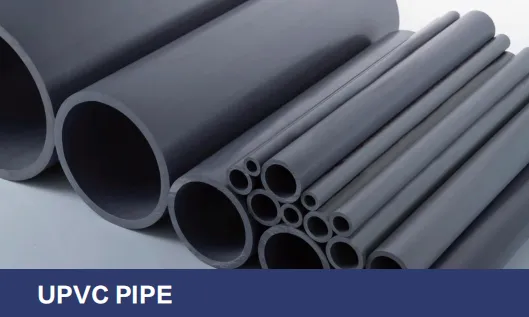
Walk into any manufacturing facility, and you'll be met with a symphony of machines, the hum of production lines, and the constant movement of materials. But beneath the surface—literally—lies a network that keeps everything running: the piping system. These unassuming channels carry water for cooling, chemicals for processing, waste for disposal, and compressed air for tools. They're the circulatory system of the factory, and choosing the right pipes isn't just a matter of cost—it's about reliability, safety, and long-term efficiency. In recent years, one material has emerged as a standout choice for these critical systems: UPVC (Unplasticized Polyvinyl Chloride). Let's explore why industrial UPVC pipe solutions are becoming the backbone of modern manufacturing facilities.
Manufacturing facilities are unforgiving environments. Pipes here face daily stress: high pressure, fluctuating temperatures, exposure to corrosive chemicals, and the constant wear of heavy usage. A single leak can shut down a production line, damage equipment, or even pose safety risks. For example, a burst pipe carrying coolant in an automotive plant could halt assembly for hours, costing thousands in lost productivity. A corroded pipe in a food processing facility might contaminate ingredients, leading to recalls. The stakes? Sky-high. That's why facility managers and engineers spend countless hours evaluating piping materials—seeking a balance between durability, performance, and cost.
Traditionally, metal pipes (steel, copper) were the default. They're strong, but they come with downsides: they rust, they're heavy to install, and they corrode when exposed to chemicals or saltwater. Then there are other plastics, like PPR (Polypropylene Random Copolymer) or PVC DWV (Drainage, Waste, Vent) pipes. Each has its strengths—PPR, for instance, handles higher temperatures well, making PPR pipe and fitting solutions ideal for hot water systems—but they often fall short in versatility. Enter UPVC pipe solutions: a material that checks most boxes for manufacturing needs, and then some.
UPVC isn't new, but its rise in industrial settings is tied to its unique blend of properties. Unlike regular PVC, which is plasticized for flexibility (think garden hoses), UPVC is rigid and dense, thanks to the absence of plasticizers. This rigidity gives it strength, while its chemical composition makes it resistant to corrosion, impact, and wear. Let's break down why these traits matter in a manufacturing context:
Many manufacturing processes involve aggressive substances—acids in battery production, solvents in paint manufacturing, or saltwater in coastal facilities. Metal pipes here are a disaster waiting to happen: rust, pitting, and eventual leaks. UPVC, however, is inert to most chemicals, acids, and alkalis. It won't corrode, pit, or degrade, even after years of exposure. For a pharmaceutical plant mixing active ingredients, or a fertilizer factory handling ammonia-based solutions, this resistance isn't just convenient—it's critical for maintaining product purity and preventing costly shutdowns.
Manufacturing facilities often require extensive piping networks, snaking through ceilings, walls, and tight spaces. Metal pipes, with their heft, require heavy machinery and extra labor to install. UPVC, by contrast, is lightweight—about 1/5 the weight of steel. This makes handling easier: a single worker can carry a 10-foot UPVC pipe, whereas steel would need a team. Installation is simpler too: UPVC pipes use solvent cement or push-fit connections, eliminating the need for welding (which requires skilled labor and fire safety precautions). In a time-sensitive project, like setting up a new production line, this speed can cut installation time by 30-40% compared to metal pipes.
Let's talk numbers. UPVC pipes are generally cheaper to purchase than stainless steel or copper. But the savings don't stop there. Their lightweight nature reduces transportation costs. Their easy installation cuts labor bills. And their corrosion resistance means fewer replacements and repairs over time. A study by the Plastics Pipe Institute found that UPVC piping systems have a lifecycle cost up to 50% lower than metal pipes in industrial settings. For a mid-sized manufacturing facility with 10,000 feet of piping, that's tens of thousands saved over a 20-year span.
The inside of a pipe matters as much as the outside. A rough interior—common in corroded metal or concrete pipes—creates friction, slowing down fluid flow and increasing energy costs (pumps have to work harder). UPVC has an ultra-smooth inner surface, which reduces friction loss by up to 20% compared to steel. In a facility moving large volumes of water (like a paper mill using 10,000 gallons per hour for pulp processing), this efficiency translates to lower energy bills and less strain on pumps, extending their lifespan.
Manufacturing facilities are subject to strict fire safety regulations, and piping materials are no exception. UPVC is inherently flame-retardant and self-extinguishing, meaning it won't spread fire. While it does melt at high temperatures (around 160°C), it releases minimal toxic smoke compared to some plastics. For facilities like textile mills or electronics plants, where fire risks are high, this compliance with safety codes is non-negotiable.
UPVC's versatility means it's not a one-trick pony. It adapts to various systems within a manufacturing facility, from water supply to waste management. Let's explore the most common applications, and why UPVC is the material of choice for each:
Almost every manufacturing process needs water—for cooling machinery, cleaning equipment, diluting chemicals, or even as an ingredient (in food, beverages, or pharmaceuticals). Process water systems demand pipes that are clean, non-toxic, and resistant to scaling. UPVC fits the bill perfectly. Its smooth interior prevents mineral buildup (unlike metal, which can develop limescale), ensuring consistent flow. It's also non-reactive, so it won't leach chemicals into the water, making it safe for use in food-grade facilities. A brewery, for example, relies on UPVC pipes to carry purified water for mash mixing, knowing the water's quality won't be compromised.
Manufacturing generates a lot of wastewater—from rinsing parts to cleaning floors to chemical runoff. This water is often acidic, alkaline, or loaded with solids, making it tough on pipes. Here, UPVC pipe solutions work hand-in-hand with PVC DWV pipe solutions (Drainage, Waste, Vent) to create a robust system. PVC DWV pipes are designed specifically for gravity-fed drainage, with larger diameters and sloped designs to prevent clogs. UPVC, with its corrosion resistance, handles the more aggressive wastewater streams, like those from electroplating shops (laden with heavy metals) or textile factories (dyes and bleaches). Together, they ensure waste is efficiently carried away without leaks or blockages.
In chemical plants, refineries, or pharmaceutical facilities, pipes often carry concentrated acids, solvents, or caustic solutions. A leak here isn't just messy—it's dangerous. UPVC's chemical inertness makes it a top choice. For example, a pesticide plant transferring glyphosate (a common herbicide) can trust UPVC to contain the chemical without degradation. Even in extreme cases, like handling sulfuric acid in battery manufacturing, UPVC pipes maintain their integrity, reducing the risk of spills and protecting workers from exposure.
Many manufacturing tools—pneumatic drills, assembly line actuators, paint sprayers—run on compressed air. These systems require pipes that can handle pressure (typically 80-120 psi) without leaking. UPVC's rigidity and strength make it suitable for low to medium-pressure compressed air lines. Unlike metal, it won't develop pinhole leaks from corrosion, ensuring consistent pressure to tools. A car parts factory using pneumatic wrenches, for instance, can rely on UPVC pipes to deliver steady air flow, preventing tool malfunctions and keeping production on track.
Fire safety is non-negotiable in manufacturing, and sprinkler systems are a frontline defense. UPVC pipes are lightweight, easy to route through tight spaces, and resistant to corrosion (so they won't block sprinkler heads with rust). While they're not suitable for high-temperature zones (like near furnaces), they work well in warehouses, assembly areas, and office sections of facilities. Their low cost also makes them an attractive option for retrofitting older facilities with updated sprinkler systems.
To truly appreciate UPVC's value, it helps to see how it compares to other common industrial piping materials. Let's look at a side-by-side comparison with metal (steel), PPR, and PVC DWV—three alternatives frequently considered:
| Feature | UPVC Pipe Solutions | Steel Pipes | PPR Pipe and Fitting Solutions | PVC DWV Pipe Solutions |
|---|---|---|---|---|
| Corrosion Resistance | Excellent (resists most chemicals, acids) | Poor (rusts easily in wet/chemical environments) | Good (resists mild chemicals) | Good (resists wastewater, mild acids) |
| Installation Cost | Low (lightweight, no welding) | High (heavy, requires welding/labor) | Moderate (heat fusion needed) | Low (similar to UPVC, gravity-fed) |
| Longevity (Lifespan) | 30-50 years | 15-20 years (with corrosion) | 20-30 years | 25-40 years |
| Temperature Range | 0°C to 60°C (not for high heat) | -20°C to 200°C (handles high temps) | 0°C to 95°C (good for hot water) | 0°C to 60°C (similar to UPVC) |
| Weight (per foot) | 0.5-1.5 lbs | 5-10 lbs | 0.8-2.0 lbs | 0.6-1.8 lbs |
| Best For | Chemical transfer, process water, drainage | High-pressure, high-temperature systems | Hot water, food-grade applications | Wastewater, venting, non-pressurized drains |
The table tells a clear story: UPVC excels in versatility, cost, and longevity for most manufacturing needs. Steel wins in high-temperature/pressure scenarios, but at a steep cost. PPR pipe and fitting solutions are great for hot water, but not as robust in chemical environments. PVC DWV is ideal for drainage but lacks the pressure-handling ability of UPVC. For facilities looking for a "jack-of-all-trades" material, UPVC pipe solutions are hard to beat.
To put these benefits into context, let's look at a real-world example: a mid-sized automotive parts manufacturer in Riyadh, Saudi Arabia. Five years ago, the plant relied on galvanized steel pipes for its cooling water and chemical transfer systems. By year three, they were facing frequent issues: rust clogging filters, leaks in chemical lines causing production delays, and skyrocketing maintenance costs (over $50,000 annually in repairs and replacements).
The facility manager, frustrated with the downtime, began researching alternatives. After consulting with a local Saudi Arabia building materials supplier, they decided to replace 80% of their steel pipes with UPVC pipe solutions. The switch took six weeks (done in phases to avoid shutdowns) and cost around $120,000—more upfront than steel, but far less than the projected 10-year maintenance costs of the old system.
The results? Within a year, maintenance costs dropped to under $10,000 annually. Leaks became rare, and the cooling system's efficiency improved (thanks to UPVC's smooth interior reducing pump strain). By year five, the plant had saved over $200,000 compared to the steel pipe lifecycle—and the UPVC pipes showed no signs of degradation. "It was a no-brainer," the facility manager noted. "We should have switched sooner."
No material is perfect, and UPVC has its limitations. Being aware of these helps facilities make informed choices:
UPVC softens at around 60°C (140°F), making it unsuitable for hot water systems above 50°C or high-temperature processes (like steam lines). For these, PPR pipe and fitting solutions or metal pipes are better options.
Exposure to direct sunlight over time can cause UPVC to become brittle. This is rarely an issue indoors, but outdoor piping (like in open-air storage yards) needs UV-resistant coatings or insulation to protect against degradation.
In freezing temperatures (below 0°C), UPVC becomes less flexible and more prone to cracking if struck. Facilities in cold regions should use thicker-walled UPVC pipes or avoid outdoor installations in areas with heavy foot traffic or machinery.
While UPVC handles low to medium pressure well (up to 100 psi for standard pipes), it's not suitable for high-pressure systems (like industrial boilers or hydraulic lines). Steel or fiberglass-reinforced pipes are better here.
These limitations are manageable, though. For most manufacturing systems—cooling water, chemical transfer, drainage, compressed air—UPVC works. Facilities can simply pair it with other materials where needed: PPR for hot water, steel for high pressure, and UPVC everywhere else.
As manufacturing evolves, so do UPVC pipe solutions. Suppliers are developing new formulations and designs to address its limitations. For example, some manufacturers now offer UV-stabilized UPVC for outdoor use, or reinforced UPVC (with fiberglass layers) for higher pressure. There's also a push toward sustainability: UPVC is recyclable, and newer production methods reduce its carbon footprint. Some suppliers are even integrating smart technology—like pressure sensors embedded in UPVC pipes—to monitor flow and detect leaks in real time, allowing predictive maintenance.
Another trend is customization. Facilities with unique needs (unusual pipe diameters, special chemical resistance) can now work with suppliers to create tailored UPVC solutions. A semiconductor factory needing ultra-pure water pipes, for instance, might request UPVC with a food-grade inner lining. This flexibility ensures UPVC remains relevant as manufacturing processes grow more specialized.
Manufacturing facilities are under constant pressure to improve efficiency, reduce costs, and enhance safety. Piping systems, often overlooked, play a pivotal role in meeting these goals. UPVC pipe solutions have emerged as a leader in this space, offering a rare combination of durability, versatility, and affordability. From chemical plants to automotive factories, from cooling systems to drainage networks, UPVC delivers where it matters most: fewer leaks, lower maintenance, and longer lifespans.
Of course, it's not a one-size-fits-all solution. Facilities with extreme temperatures or pressures will still need steel or PPR pipe and fitting solutions. But for the majority of manufacturing needs—especially those balancing cost, performance, and reliability—UPVC stands tall. As the Saudi Arabian automotive plant discovered, the upfront investment in UPVC pipe solutions pays dividends for years to come, freeing up resources to focus on what really matters: producing quality goods efficiently.
In the end, manufacturing is about building something lasting. With UPVC pipe solutions, facilities can build a piping system that lasts too—strong, reliable, and ready to keep up with the demands of tomorrow's factories.
Recommend Products












