
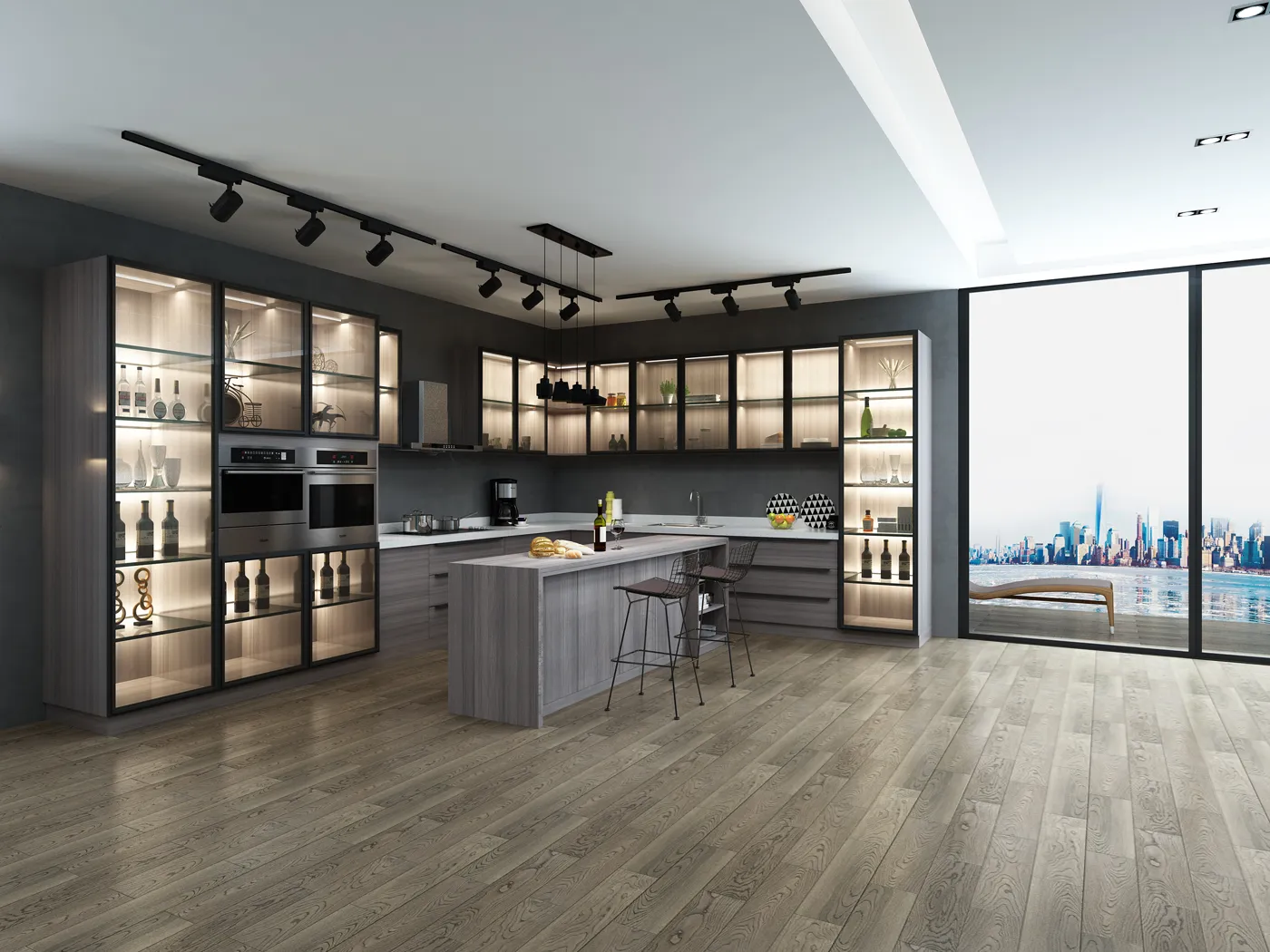
Remember those old factories converted into trendy lofts? That raw, unfinished charm isn't just for living spaces anymore – it's taken over our kitchens too! Industrial-style cabinets have surged in popularity, and honestly? It's easy to see why. They blend history with modern function, giving your kitchen that cool, lived-in vibe while being incredibly durable. But what really makes them tick?
At its heart, industrial design whispers stories of repurposed materials and exposed structures. Picture this: gleaming metal frames hugging reclaimed wood panels, sitting atop sturdy concrete bases. It's that perfect marriage of rugged and refined that somehow feels both timeless and cutting-edge. But don't be fooled – achieving this look isn't just about throwing random materials together. There's an art to balancing these elements so they sing in harmony.
The term "industrial" carries the weight of history – think massive machinery, towering factories, and the shift to mass production. Today's industrial kitchens borrow that same no-nonsense practicality. They're all about stripping things down to their essential forms and celebrating the materials rather than hiding them. But here's the sweet spot: contemporary designers have softened those hard edges just enough to make it livable.
Take those ubiquitous subway tiles – originally designed for quick cleaning in factories and hospitals. Now they're a staple in urban kitchens, bringing that same workhorse mentality to your backsplash. And those exposed pipes? What was once purely functional infrastructure becomes sculptural art when you frame it right. This style isn't about being precious; it's about authenticity wearing its history proudly.
Metal is the unsung hero in this design story. Whether it's sleek stainless steel countertops that handle tomato stains like champs or matte black iron drawer pulls with visible rivets, metal brings toughness to the party. And who doesn't love the contrast of cold steel against warm wood grain?
Designers often mix metals too – brass pendant lights glowing over a zinc-topped island, copper sinks aging gracefully alongside brushed nickel cabinets. It’s that careful curation of finishes that keeps things from feeling sterile. Pro tip: incorporate metal through cabinet frames rather than entire units for balance. That way, you get structural honesty without turning your kitchen into a workshop.
Wood is industrial style's warm hug amidst all the concrete and steel. But we're not talking polished cherry here – think distressed oak with visible knots, reclaimed barnwood with old paint flecks still clinging on, or rough-cut timber slabs acting as open shelving. That visible grain texture is crucial for softening all that metal.
My cabinetmaker friend Sam always says: "Every scratch tells a story." He intentionally incorporates wood's imperfections – those nail holes, saw marks, and color variations become design features, not flaws. And it's sustainable! Using salvaged lumber means your kitchen gets character while keeping materials out of landfills. Just make sure to seal it properly – that beautiful patina shouldn't come at the cost of tomato sauce stains.
Once purely functional and hidden behind walls, concrete has become the darling of industrial kitchens. There's something captivating about its cool, monolithic presence – whether as countertops that develop a unique patina over time or cabinet bases that feel permanently anchored.
Modern techniques let us experiment too. Polymer-infused concrete is thinner and lighter while retaining durability. Acid staining creates mesmerizing marble-like swirls. Textured formwork leaves geometric patterns. And let’s talk color – gone are just gray slabs. Tinted concrete in earthy terracottas or deep charcoals creates moody sophistication. Just remember: proper sealing is non-negotiable unless you want oil spots telling their own stories!
Combining these materials without creating visual chaos requires thoughtful balance. Consider these approaches:
Industrial kitchens aren’t just pretty faces – they're workhorses built for real life:
Durability That Lasts : These materials laugh at the daily battering kitchens take. Metal frames shrug off impacts, dense woods resist scratches, and concrete barely notices hot pans. Your kitchen will look better years later.
Timeless Flexibility : Unlike fleeting trends, industrial designs adapt beautifully. They gracefully incorporate smart appliances or change color schemes without losing their core identity.
Storytelling Elements : Each piece carries history. That salvaged wood lived another life before your kitchen; concrete recalls Brutalist architecture; metal connects to industrial heritage. They spark conversations.
Environmentally Conscious : Reclaimed materials reduce waste, while concrete's thermal mass naturally regulates temperature – cutting energy costs.
Before diving into this style, let’s address the practicalities:
Budget Wisdom : Custom concrete work costs more, but metal framing systems offer savings. Salvaged wood pricing varies wildly – old factory floor planks cost more than barnwood. Focus investment on statement pieces like countertops.
Space Dynamics : Industrial elements can overwhelm small spaces. Solution? Use glass-front upper cabinets for visual lightness. Keep lower cabinets with textured woods or metals to ground the space without heaviness. Clever lighting can make concrete surfaces glow rather than gloom.
Functional Touches : That stunning waterfall concrete counter needs rounded edges for comfort. Metal cabinets look sharp but benefit from integrated handle grooves to avoid snagging sleeves. And here's where the bathroom vanity inspiration comes in handy – many waterproofing techniques for vanities work wonders around kitchen sinks too.
Maintenance Realities : Concrete needs resealing annually. Unsealed woods darken with oils. Some metals show fingerprints. But fans argue that patina adds character – it’s about embracing the journey.
Creating your industrial kitchen is more pilgrimage than project. Start by collecting inspiration beyond kitchens – notice how converted warehouses use materials, how museums display artifacts, how patinas develop naturally. Then:
Find Your Anchor Piece : Maybe vintage factory cart turned island, or reclaimed wood slab counter. Design radiates from there.
Material Layering : Begin with one element (concrete floors?), add complementary textures (metal open shelving), then warmth (wood cabinet doors).
Lighting as Jewelry : Industrial demands dramatic lighting – oversized black pendants, Edison bulbs in wire cages, track lighting following cabinet lines.
Hardware Matters : Cabinet pulls should feel substantial. Think forged iron lever handles or oversized gears repurposed as knobs.
Embrace Negative Space : Not every cabinet needs a door. Open sections display beautiful dishware or colorful ingredients.
Final Polish : Add life with copper pots hanging from racks, terracotta herb planters, or a vintage rug softening concrete floors.
This style keeps evolving. Sustainability now drives innovation – recycled steel alloys, lab-grown timber alternatives, eco-concrete mixtures using recycled aggregate. We're seeing color too – deep forest greens replacing grays, rust-brown metals adding warmth, and experimental resin-infused concretes with unique translucent effects.
The future of industrial kitchens celebrates authenticity through material honesty – understanding each ingredient's history, strengths and limitations. After all, that reclaimed oak didn't survive decades to be hidden under thick paint. That concrete demands to feel like stone. Metal wants to shine. Blend them with intention and watch something magic unfold.
Ultimately, industrial design asks us to appreciate the raw, the textured, the imperfect. It reminds us beauty exists in functionality. It teaches us that materials have stories worth hearing. And when metal, wood, and concrete come together in your kitchen cabinets? That’s where utility becomes poetry.
Recommend Products












