
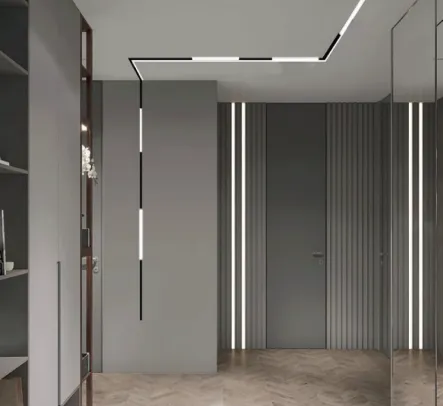
Imagine setting up lighting in a space and being able to effortlessly move, adjust, and reconfigure your lights without tools or electrician visits. That's the game-changing reality magnetic track lighting brings to modern interiors. But not all systems are created equal...
Let's be real - traditional track lighting has always been a hassle. Those clunky connectors? The frustrating installation? The endless tweaking just to get fixtures angled right? Enter magnetic track systems - it's like the designers finally listened to what we all wanted: simplicity meets style.
What many people don't realize is that this isn't just about convenience - there's serious safety innovation here too. Because these systems typically operate on low-voltage power (usually 24V or 48V DC), there's significantly reduced risk of serious electrical accidents. That's peace of mind you can't put a price on, especially in homes with kids.
This is where brands really differentiate themselves. Better systems use aerospace-grade aluminum alloys that maintain perfect magnetic tension without warping. Some like TJ2 Lighting incorporate built-in heat dissipation channels too - crucial for those who plan long lighting sessions.
Track profiles vary dramatically too:
Here's where things get really interesting. When we talk about brand differences, it's not just about color temperature options. Premium lines like 7Colorstek's ultra-thin magnetic modules pack in:
This is the technical powerhouse - literally. Quality transformers mean the difference between flickering annoyance and seamless illumination. Top manufacturers design theirs for:
| Feature | Budget Lines | Mid-Tier | Premium Brands |
|---|---|---|---|
| Track Material | Thin painted steel (prone to warping) | Standard aluminum | Mil-spec aluminum alloys |
| Connection System | Basic magnetic contact | Self-cleaning contacts | Gold-plated contacts, sealed joints |
| Voltage Stability | +/- 15% fluctuation common | +/- 5% | +/- 1% precision |
| Fixture Variety | Limited, basic designs | Good range of styles | Designer collaborations, custom designs |
| Smart Integration | None (manual switches) | Basic app control | Matter/HomeKit certified, scenes & automation |
| Modular Expandability | Fixed configuration | Limited expansion | Infinite reconfiguration |
Here's what design pros notice: premium manufacturers are increasingly focusing on the architectural integration of their systems. Where cheaper tracks look like add-ons, brands like TJ2 create tracks that become intentional design features themselves.
The role of china lighting manufacturers in this space can't be ignored - they've driven significant innovation in miniaturization and wireless control integration. Their mass production capabilities allow for previously impossible price-to-performance ratios.
Let me paint you a scenario: Your living room has artwork lighting tonight? Snap on the gallery-grade spotlights. Tomorrow morning's yoga session? Switch to indirect linear glow modules. Weekend dinner party? Out come the stylish pendant drops. No rewiring, no electricians - just you redefining your space's personality in minutes.
Remember the agony when traditional track lights failed? Finding replacement connectors, fiddling with voltage matches, inevitably needing an electrician? With magnetic systems:
Here's something most salespeople won't emphasize enough: That "24V" specification? It's not always the same. Cheap systems see significant voltage drops, especially when using multiple fixtures. Premium brands maintain:
Brand interoperability doesn't really exist yet, which is frustrating. Once you choose a manufacturer's system, you're locked into their:
Insider tip: Look for systems where the track profile is actually manufactured by the lighting brand, not outsourced. This ensures perfect compatibility and usually means better after-sales support.
Quality matters when electricity is involved. Critical certifications to verify:
Today's cutting-edge systems don't just snap fixtures physically - they automatically recognize them in their control app. Imagine these scenarios:
Forward-thinking manufacturers are approaching track systems like tech platforms where:
Yes, there's sticker shock between the $50 DIY kits and the $1,000+ designer setups. Here's what you're actually paying for:
| Feature | Budget ($) | Professional ($$) | Luxury ($$$) |
|---|---|---|---|
| Track Lifespan | 3-5 years | 10+ years | 20+ years |
| Fixture Recognition | None | Basic ID system | Full parametric awareness |
| Voltage Stability | +/- 15% | +/- 5% | +/- 1% |
| Max Fixture Distance | 8-10 feet | 15-20 feet | 40+ feet |
| Fixture Cost | $15-$30 | $40-$80 | $100-$500+ |
Ultimately, the beauty of magnetic track systems isn't just about technology - it's about liberation. These systems acknowledge that:
As you evaluate brands, look beyond the initial specs sheet. Consider:
The spaces where we live and work deserve lighting that inspires rather than constrains. Magnetic track systems - when chosen well - become not just illumination infrastructure, but launchpads for creativity and constant reinvention.
So whether you're transforming a home kitchen or designing a commercial gallery space, investing in a thoughtfully designed magnetic track system means investing in adaptability. After all, shouldn't your lighting reflect the ever-changing story of your space?
Recommend Products












