
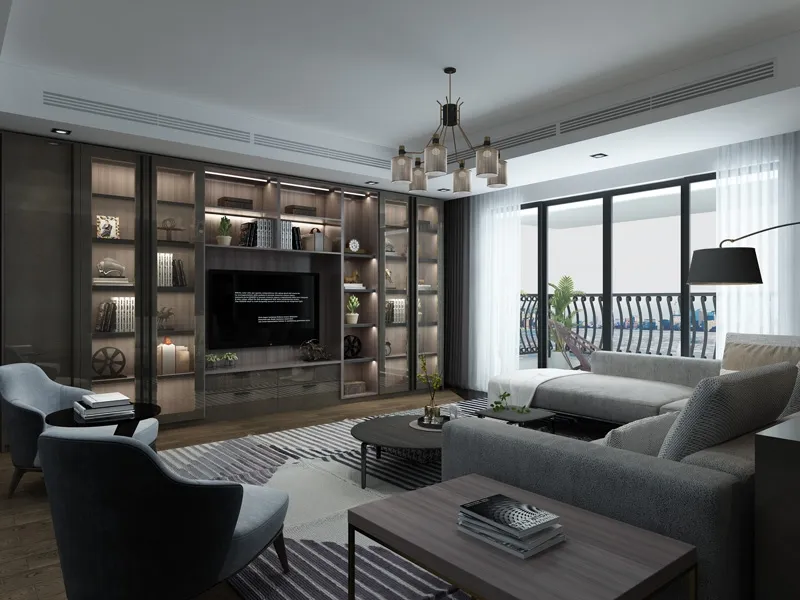
You know that feeling when you're browsing furniture and see a TV cabinet priced at what seems like astronomical numbers? You're not alone if you've ever wondered, "What actually goes into this cost?" Most folks assume it's just wood and nails marked up by retailers, but let me tell you, the reality runs much deeper. Just like those dictionary definitions we explored earlier—where "depth" ranges from physical measurement to profound expertise—your TV cabinet’s quotation sheet contains layered expenses that reveal the true craftsmanship and value.
When you're examining quotes, you're not just pricing furniture—you're paying for someone's craftsmanship, sustainable material sourcing, and engineering precision. These hidden depths transform a simple storage unit into functional art that withstands daily wear while complementing your living space. Let's break down these layers together so you can spot true value beyond mere numbers.
Let's talk timber—not all woods are created equal. High-end TV cabinets use hardwoods like oak or walnut that age beautifully but cost significantly more than particle boards. Then there's finishing: veneers provide that luxurious look without deforestation guilt. For those environmentally conscious consumers, sustainable custom furniture solutions incorporating bamboo composites or reclaimed woods add 15-20% to material costs but pay ecological dividends for decades.
The thickness matters too—18mm panels withstand weight better than flimsy 12mm alternatives. Every extra millimeter requires more raw material and specialized cutting tools. Don't forget finish coatings: that satin sheen involves multiple hand-applied layers of non-toxic lacquer cured under UV lights—a stark contrast to spray-on finishes peeling off discount furniture.
Economy:
Particleboard/MDF (20-30% of cost)
Mid-Range:
Veneered plywood (40-50%)
Premium:
Solid hardwoods (60-75%)
• Sustainable certification fees
• Climate-controlled wood storage
• Waste recycling systems
• Toxicity testing for finishes
Remember how "depth" implies expertise? That’s embodied in your cabinet’s makers. While robots handle cutting precision, humans do the finesse work—joining dovetails by hand, sanding curved edges, aligning grain patterns. Artisans with 20+ years experience command different wages than factory novices.
Machine Operation:
CNC programming & oversight
Assembly:
Frame construction & hardware fitting
Finishing:
Sanding, staining, sealing
Quality Control:
Inspection & adjustments
• Average 18-25 hours labor per unit
• 48-hour curing time for finishes
• 3-4 inspectors per 100 units
• 30-40% of total production cost
Here's the kicker: Proper cable management systems—those hidden channels keeping wires organized—add hours of design and assembly time. It's the difference between a tangled mess and clean lines. When you see "hand-finished edges" on a quote, you're paying for someone physically feeling every corner for smoothness—an artisan literally pouring their expertise into your piece.
Notice what's missing? Profit margin! Retailers embed it in material/labor costs or list separately. Overhead isn't arbitrary—it includes electricity for workshops, tool maintenance, even worker training programs. That "design amortization" item? It means you're helping cover R&D for future innovations. The most ethical quotes break these down; shady ones hide them in inflated material costs.
Unlike the flat descriptions in dictionaries, true quality reveals itself through years of use. That slightly pricier cabinet? Its cost-per-day plummets as it survives toddler collisions, moves between homes, and ages gracefully. Consider modular units allowing future expansions—built-in adaptability saves money long-term.
There's emotional depth too: Handcrafted furniture becomes heirlooms carrying family memories. Unlike disposable pieces, it gathers stories as patina develops. Sustainable materials grow more relevant as environmental consciousness deepens. This intangible ROI deserves consideration alongside dollar figures.
$300 unit:
Lasts 3-4 years
Cost/year: $75-100
$1,200 unit:
Lasts 20+ years
Cost/year: $60
In an age of fast furniture pollution, paying depth-forward costs creates environmental dividends. Manufacturers investing in carbon-neutral facilities pass along slightly higher prices but foster industry change. Your purchasing decisions shape tomorrow's manufacturing standards—a profound impact rarely reflected in quotes.
Recommend Products












