
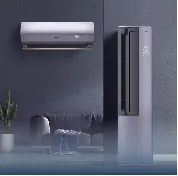
You've probably noticed it - that persistent hum coming from your fridge or AC unit. That sound? It's your energy bill quietly creeping up month after month. But what if I told you there's a revolution happening inside those metal boxes? Variable frequency compressor technology isn't just another industry buzzword—it's changing how we cool our homes, stores, and offices while cutting energy waste.
Across homes and industries, cooling systems swallow roughly 40% of all building energy . In medical centers, shopping malls, and data centers, that percentage climbs even higher. The traditional approach—compressors that simply turn fully on or off—is like driving a car with only two speeds: stop and full throttle. No wonder we've been wasting so much power! Variable frequency technology introduces the subtle sophistication of a dimmer switch to our cooling systems.
At their core, both air conditioners and refrigerators operate on the same principle: a refrigeration cycle where compressors play the starring role. Think of them as the heart pumping refrigerant through the system. Traditional compressors are binary—either working at 100% capacity or completely idle. This constant stop-start cycling creates three major problems:
Here's where the magic happens. Variable frequency drives (VFDs) function like a sophisticated accelerator instead of an on-off switch. By adjusting the frequency of the electrical current powering the compressor motor—typically between 30-50 Hz—the system can operate at precisely the capacity needed for the current load.
In practical terms, this means:
A recent study in medical facilities demonstrated how these principles work together. When doctors cranked up the AC across surgical wings during a heatwave, the VFD systems smoothly increased capacity by increments rather than spiking demand. The compressors behaved more like orchestra musicians adjusting volume together than soloists blasting away independently.
The energy conservation comes from two fundamental laws of physics:
| Component | Energy Saving Potential | Primary Contribution |
|---|---|---|
| Compressor | 9-14% | Adaptive speed control matches exact cooling demand |
| Chilled Water Pump | 8-10% | Maintains pressure gradients efficiently |
| Cooling Tower | 12-18% | Optimizes fan speed based on ambient conditions |
| System Integration | 15-25%+ | Synergistic optimization across components |
In North China's hospitals where cooling is literally life-saving, variable frequency retrofits delivered results that speak for themselves:
But the story continues in modern data centers, where cooling accounts for over 40% of total energy consumption. There's a quiet hum where loud roars used to dominate server rooms after implementing variable frequency solutions:
The ripple effects extend beyond electricity meters:
No technology is magic, and variable frequency compressors require thoughtful installation:
However, these obstacles shouldn't deter implementation:
| Consideration | Traditional Systems | VFD Optimized Systems |
|---|---|---|
| Payback Period | N/A | 1.5-3 years |
| Maintenance Costs | High (component replacement) | Reduced (smoother operation) |
| Peak Demand Reduction | None | 15-30% |
| Comfort Consistency | Variable (±2-3°C) | Precise (±0.5°C) |
What's emerging now are smarter systems that leverage variable frequency fundamentals:
The common home refrigerator—usually overlooked behind kitchen doors—is about to transform:
Variable frequency compressor technology represents more than incremental improvement—it's reshaping how we think about thermal management. From medical facilities maintaining life-saving environments to data centers processing critical information, the combination of efficiency and precision unlocks benefits beyond basic energy savings.
For homeowners, the impact materializes as consistently cooled homes without power bill shock. For businesses, it manifests as cost reductions plus environmental responsibility. For society, it emerges as reduced peak power demands and deferred infrastructure investments. This technology bridges immediate economic benefits with long-term sustainability—a genuinely rare combination in engineering advancements.
Your fridge's soft hum tonight might be more revolutionary than you ever imagined.
Recommend Products












