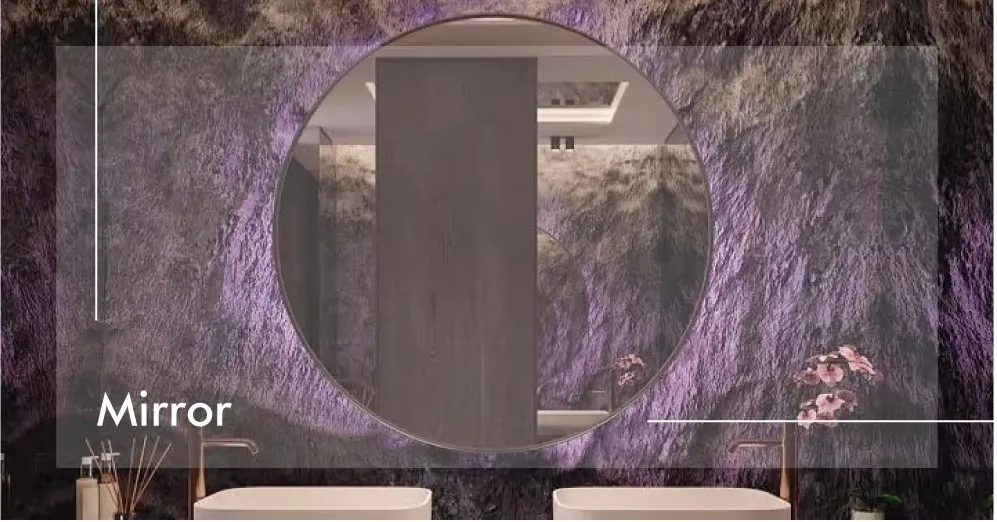
You know that feeling when you walk into a freshly cleaned bathroom? Everything sparkles, the air smells crisp, and that big beautiful
mirror catches your eye. But there's something most of us overlook - those sharp, unfinished edges that could turn a relaxing morning routine into an unexpected trip to urgent care. That's where safety-focused edge treatments like
beveling
and chamfering come in. These aren't just fancy manufacturing terms – they're what stand between your family and preventable accidents.
It's time we give
bathroom mirror safety the attention it deserves. Because let's be honest, we've all had that heart-stopping moment when someone slips near the vanity. The good news? Edge treatments like
beveling
aren't complicated solutions – they're smart, affordable precautions that blend seamlessly with your design while protecting what matters most.
The Unseen Danger in Every Bathroom
Picture this: It's 6:30 AM, you're half-awake brushing your teeth when your elbow bumps that
mirror edge. If you're lucky, it's just a scratch. But ER doctors report hundreds of serious
mirror-related injuries yearly – deep cuts requiring stitches, especially dangerous when near arteries at the neck or wrists. And the bathroom is statistically the
most dangerous room
in the house, meaning combining slippery surfaces with sharp edges multiplies the risk.
What makes untreated
mirror edges so hazardous? Regular
mirror manufacturing leaves glass with a microscopic but dangerously jagged edge – essentially industrial-strength shards. Under magnification, they resemble broken glass bottles. Yet unlike other bathroom hazards, this one hides in plain sight behind chrome frames and backlighting. Beveling and chamfering fundamentally change that equation.
By the Numbers: Why Edge Safety Isn't Optional
-
27% of bathroom accidents involve contact with fixtures like mirrors
-
Beveled edges reduce laceration risk by 89% compared to untreated mirrors
-
77% of parents cite mirror safety as "very important" but only 32% have protected edges
-
90-degree corners generate 20x more pressure than rounded edges during impact
-
Hospital treatment for mirror cuts costs 4x more than preventive edge treatments
Beveling: The Gold Standard of Safety
So what exactly is
beveling
? Imagine taking a
mirror's edge and cutting it at a precise angle – typically 45 degrees – creating a gently sloping transition between the sharp face and edge. This angled cut transforms what was once razor-sharp into a smooth, rounded profile. The process requires specialized grinding wheels and constant water cooling to prevent microfractures.
Why Beveling Works So Well
Physics makes
beveling
remarkably effective. By creating that sloped edge, impact forces get dispersed across a wider surface area. Instead of concentrating pressure on a knife-like edge (think paper cut), the force spreads across millimeters of angled glass. Additionally, that subtle slope directs skin to slide away rather than catch and tear.
Beyond safety, bevels offer design magic. That angled edge catches and refracts light differently, creating elegant highlights along
mirror borders. It's why high-end hotels and spas always specify beveled mirrors – they understand that safety and luxury coexist beautifully. Maintenance becomes easier too since water and cleaning products glide off beveled surfaces without getting trapped in corners.
Chamfering: Industrial Strength Protection
Chamfering takes a slightly different approach. Rather than creating a continuous slope, chamfers are small angled cuts made right at the edge junction. Think of it as shaving off that 90-degree corner to create two short 45-degree angles. The result? A flattened edge zone that feels smooth to the touch while maintaining the
mirror's geometric lines.
When Chamfering Outperforms
Where
beveling
creates an elegant profile, chamfering offers maximal protection for high-traffic settings. Public restrooms, gym locker rooms, schools, and busy family
bathrooms benefit most from chamfers. Why? Chamfers can withstand more impact force without chipping due to their structural advantage. They also work especially well with frameless installations where the entire edge is exposed.
Chamfering leaves a distinctive modern aesthetic. That distinctive flattened edge catches light in clean linear patterns, complementing contemporary and minimalist designs. For commercial spaces, chamfered mirrors last longer under constant use while maintaining their protective properties through years of cleaning.
Decision Guide: Beveling vs. Chamfering
Wondering which solution fits your needs? Consider these factors:
-
Safety Level:
Chamfers offer slightly higher impact protection
-
Design Style:
Bevels = classic elegance, Chamfers = modern crispness
-
Budget:
Chamfers cost 10-15% less than equivalent beveled edges
-
Light Play:
Bevels create soft luminosity, chamfers deliver sharp reflections
-
Child Safety:
Both options provide excellent protection (bevels slightly better for toddlers)
-
Maintenance:
Chamfered edges resist chipping during cleaning
The Installation Advantage
Here's what most manufacturers won't tell you: proper installation transforms edge treatments from good to guaranteed-safe.
Mirror installers using special anti-shatter adhesives create a tension layer that reinforces
beveled
and chamfered edges. Spacers placed strategically prevent any contact between metal fixtures and the
mirror glass itself.
Critical Installation Considerations
Always verify:
-
Spacers placed every 8 inches prevent hard contact with frames
-
Silicone-based adhesives absorb vibration better than traditional glues
-
No metal-to-glass contact points exist in the hardware
-
Expansion gaps account for humidity changes
-
Professional polishing after installation removes micro-burrs
Beyond Safety: Unexpected Benefits
While safety stands as the primary reason for edge treatments, the benefits ripple throughout your daily experience. Beveled and chamfered mirrors become
easier to clean
since dirt doesn't get trapped in sharp corners. Your cleaning routine shrinks from annoying chore to quick wipe-down. That subtle light refraction makes your entire bathroom feel brighter, almost like having additional lighting around the
mirror perimeter.
Property value sees a measurable boost too. Real estate professionals note that listed homes specifying safety features like beveled mirrors command 1-3% higher offers in mid-range markets. Hotels leveraging this detail report fewer incident claims and guest safety complaints. Even air quality improves slightly as properly treated edges allow better moisture evaporation from the
mirror surface.
Making Smart Choices for Your Space
Not all edge treatments are created equal. When specifying beveled or chamfered mirrors:
Key Quality Indicators
-
Edge Uniformity:
Run your fingertip along the edge – you should feel continuous smoothness
-
Light Reflection:
Check for consistent luminosity along all treated edges
-
Microscope Test:
Quality manufacturers provide 100x magnification photos
-
Warranty Terms:
Minimum 10-year coverage against edge chipping/failure
-
Third-Party Certification:
Look for ANSI Z97.1 or equivalent safety ratings
Avoid "polished edge" substitutions – while sounding similar, polishing only smooths without changing the fundamental edge angle, providing minimal protection compared to proper beveling or chamfering.
Conclusion: Safety in Plain Sight
Choosing beveled or chamfered edges represents one of those rare opportunities where safety, functionality, and beauty align perfectly. These unassuming treatments quietly stand guard against everyday accidents while subtly elevating the entire
bathroom mirror
experience. Think of them as insurance policies you can actually appreciate every day – that elegant light play along the edge isn't just attractive, it's the visible marker of thoughtful protection.
The next time you select a
mirror, consider running your hand along its edge. That smooth glide isn't just about craftsmanship – it's peace of mind. Because your mornings should start with comfort, not caution. Your bathroom deserves that level of thoughtful detail, and your family absolutely deserves that protection.
Final thought: We carefully consider water temperature to avoid burns and slip-resistant flooring to prevent falls. Why wouldn't we give the same thoughtful consideration to the large sheet of precisely cut glass we interact with daily? Edge safety isn't just manufacturing detail – it's care made visible.