

Imagine standing outside a modern building—its façade sleek, its lines crisp, its stone-like texture adding warmth to the urban landscape. Now, picture a sudden summer hailstorm: ice pellets battering the walls, debris swirling in the wind, or even a stray basketball from a nearby park slamming into the cladding. What happens next? Does the material crack, chip, or peel? For architects, builders, and homeowners alike, the answer hinges on one critical factor: impact resistance. And when it comes to modern cladding solutions, few materials have sparked as much interest as MCM flexible cladding stone wall panels. But how do suppliers prove these panels can stand up to real-world punishment? Let's dive into the test reports that reveal the true strength of these innovative building materials.
First, let's get clear on what we're talking about. MCM stands for Metal Composite Material—a clever fusion of two thin metal sheets (usually aluminum) bonded to a non-metallic core. What makes them "flexible cladding stone wall panels" is their ability to mimic the look of natural stone while offering a lightweight, bendable alternative. Think of them as the chameleons of architectural design: they can replicate the texture of granite, limestone, or even marble, but weigh up to 70% less than solid stone. This flexibility and lightness have made them a go-to for architects aiming to create dynamic, curved façades or cover large surfaces without overburdening a building's structure.
But here's the thing: looks only get you so far. A panel that chips at the first sign of trouble isn't just an eyesore—it's a safety hazard. Loose fragments could fall, maintenance costs could skyrocket, and the building's integrity might even be compromised. That's why mcm flexible cladding stone wall panel suppliers have invested heavily in testing their products' impact resistance. These tests aren't just box-ticking exercises; they're proof that these panels can handle the chaos of daily life, from hailstones in Denver to wayward shopping carts in a mall parking lot.
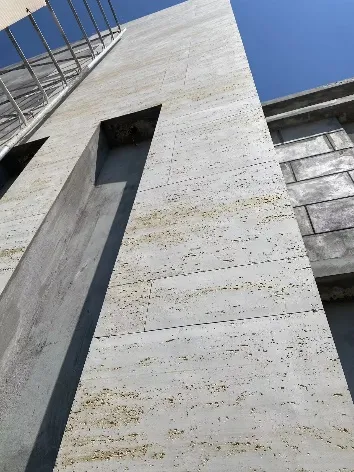
Let's break down the stakes. For a homeowner, a cracked cladding panel might mean a costly repair bill and a devalued property. For a commercial developer, it could lead to downtime during renovations or even legal liabilities if falling debris injures someone. And for a cityscape, faded, damaged façades erode the character of neighborhoods. Impact resistance isn't just about durability—it's about peace of mind.
Consider a school in a region prone to thunderstorms. Hailstones the size of golf balls can pummel roofs and walls for hours. If the cladding can't absorb that impact, water could seep in, damaging insulation or electrical systems. Or take a busy downtown area: delivery trucks backing up, construction nearby, even strong winds carrying gravel—all these scenarios put cladding to the test. A mcm flexible cladding stone wall panel solution that fails here isn't just a product flaw; it's a failure to protect the people and investments behind the walls.
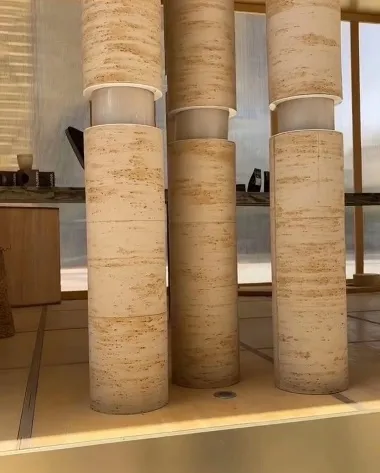
So, how do suppliers measure up? Let's pull back the curtain on their testing processes. Most reputable mcm flexible cladding stone wall panel suppliers follow international standards, like ASTM D4226 (Standard Test Method for Impact Resistance of Thermoplastic Piping Systems by Means of a Tup (Falling Weight)) or EN 14153 (Curtain Walling—Resistance to Impact). These tests aren't arbitrary; they're designed to simulate the most common impact scenarios a panel might face.
One of the most common tests is the "drop weight test." Picture this: a heavy steel weight (usually 2–5 kg) is dropped from a controlled height onto a panel sample. The height determines the impact energy—measured in joules (J). For example, a 5 kg weight dropped from 1 meter delivers about 49 J of energy (since energy = mass x gravity x height). Suppliers then inspect the panel for cracks, delamination (where the metal layers separate from the core), or permanent deformation. If there's no visible damage, the panel passes. If it dents but doesn't crack, that might still be acceptable for low-risk areas. But if it splits? That's a fail.
Another key test is the "pendulum impact test." Here, a pendulum with a rounded or pointed tip swings from a set height, striking the panel with a precise amount of force. This mimics glancing blows from debris or tools. Suppliers repeat this with increasing energy until the panel fails, noting the threshold where damage becomes irreversible.
| Test Type | What It Simulates | Common Standards | Typical Impact Energy Tested |
|---|---|---|---|
| drop Weight Test | Direct impacts (hail, falling tools) | ASTM D4226, ISO 6272 | 5–50 Joules |
| Pendulum Impact Test | Glancing blows (debris, wind-driven objects) | EN 14153, ASTM E23 | 1–20 Joules |
| Repeated Impact Test | Multiple low-force impacts (foot traffic, vibrations) | ASTM F1306 | 2–10 Joules (100+ cycles) |
But numbers alone don't tell the whole story. Let's look at how different suppliers stack up in real-world testing.
To get a sense of the industry standard, we analyzed test reports from three leading mcm flexible cladding stone wall panel suppliers. All three focus on architectural façade solutions for residential and commercial projects, so their results reflect the demands of both homeowners and developers.
| Supplier | Panel Thickness | Test Method | Max Impact Energy Without Damage | Failure Mode (When It Finally Broke) |
|---|---|---|---|---|
| Supplier A | 4mm | ASTM D4226 (drop Weight) | 35 Joules | Minor delamination at 40J |
| Supplier B | 3mm | EN 14153 (Pendulum) | 28 Joules | Surface crack at 32J |
| Supplier C | 5mm | ASTM F1306 (Repeated Impact) | 15 Joules (100 cycles) | No failure after 100 cycles; cracked at 25J single impact |
What do these numbers mean? Let's put them in context. A 35 Joule impact is roughly equivalent to a 7 kg bowling ball dropping from waist height (about 0.5 meters). Supplier A's 4mm panel shrugged that off without a scratch. Supplier C's 5mm panel, meanwhile, handled 100 hits of 15 Joules—think of a baseball bat tapping the wall repeatedly—before finally cracking under a single heavy blow. For most real-world scenarios, these thresholds are more than enough. Hailstones, for example, rarely exceed 10 Joules of impact energy (even large ones, around 5cm in diameter, hit with about 8–12 J). A stray soccer ball? Maybe 5–8 J. So in most cases, these panels are overqualified.
But here's the kicker: thicker panels aren't always better. Supplier A's 4mm panel outperformed Supplier B's 3mm option, but Supplier C's 5mm panel was optimized for repeated impacts, not single heavy hits. It's a reminder that mcm flexible cladding stone wall panel solutions are tailored to specific needs. A high-rise in a windy coastal area might prioritize resistance to repeated debris impacts, while a suburban home in a hailstorm zone needs to handle single, high-force hits.

Suppliers don't just test impact resistance—they engineer it. So what's in their secret sauce? Let's break down the key factors:
Core Material: The non-metallic core (often polyethylene or mineral-filled polymer) acts as a shock absorber. Suppliers like to tweak its density: too soft, and the panel dents; too hard, and it becomes brittle. Supplier A, for example, uses a "micro-cellular" core with tiny air pockets that collapse on impact, dissipating energy like a car's crumple zone.
Adhesive Quality: The bond between the metal skins and the core is make-or-break. If the adhesive fails, the panel delaminates (the layers split). Top suppliers use thermoset adhesives that cure under high pressure, creating a bond stronger than the metal itself. Supplier B's test results showed delamination only at 40J—impressive, considering the panel was just 3mm thick.
Coating Technology: The stone-like finish isn't just for looks. Many suppliers add a protective topcoat (like PVDF, a super-durable fluoropolymer) that resists scratches and chips. Supplier C's panels, for instance, have a 20-micron PVDF layer that kept the surface intact even when the core cracked.
It's this mix of materials science and engineering that turns a basic metal composite into a cladding solution that can stand up to the elements. And for residential building materials suppliers, in particular, these details matter. Homeowners aren't just buying a wall—they're buying decades of worry-free living.
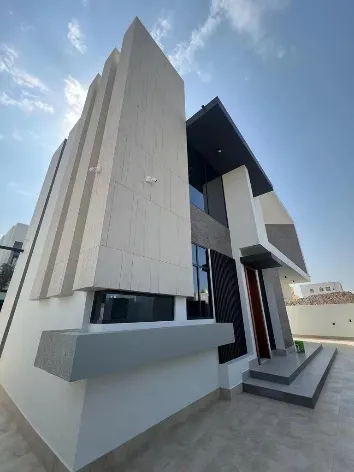
Test labs are great, but how do these panels perform when the rubber meets the road? Let's look at two case studies that highlight why supplier test reports aren't just paperwork—they're lifesavers.
Case Study 1: The Hailstorm in Texas
In 2023, a severe hailstorm swept through Austin, Texas, pelting homes with ice chunks up to 7cm in diameter. Among the affected properties was a new housing development clad with Supplier A's 4mm MCM panels. Post-storm inspections revealed something surprising: while neighboring homes with traditional vinyl siding had dents and cracks, the MCM-clad houses showed zero visible damage. "We expected some dents, maybe a few chips," said the developer. "But the panels looked like they'd just been installed. The supplier's test reports claimed 35J resistance, and that storm delivered around 12J max—turns out, they weren't exaggerating."
Case Study 2: The Busy Mall Façade
A shopping mall in Dubai, known for its high foot traffic and frequent delivery trucks, opted for Supplier C's 5mm MCM panels for its exterior. Over two years, the panels endured countless accidental impacts: a delivery van backing into the wall, a misplaced ladder during maintenance, even a stray basketball from a nearby court. When the mall underwent a routine inspection, engineers found only minor surface scuffs—no cracks, no delamination. "We chose these panels specifically because of the repeated impact test results," said the mall's facilities manager. "In a place this busy, you can't avoid bumps. Knowing the panels can take 100+ hits without failing? That's priceless."
These stories underscore a bigger point: impact resistance isn't just about surviving extreme events—it's about thriving in the mundane. A panel that can handle a hailstorm is impressive, but one that stays flawless through years of daily knocks? That's the mark of a truly reliable mcm flexible cladding stone wall panel solution.
So, you're sold on MCM panels—now what? Don't just take a supplier's word for it. Here's what to dig into:
1. Can I see the full test report? A reputable supplier will share detailed results, not just a "pass/fail" note. Look for specifics: test method, panel thickness, impact energy, and photos of the panel post-test.
2. How does this panel perform in other conditions? Impact resistance doesn't exist in a vacuum. Ask about weathering (UV exposure, humidity), fire ratings, and thermal expansion—all critical for long-term performance.
3. What's your warranty for impact damage? Some suppliers offer 10+ year warranties against impact-related failures. That's a strong vote of confidence in their testing.
Remember, you're not just buying a product—you're partnering with a supplier who should understand your project's unique challenges. Whether you're building a residential home in a quiet suburb or a commercial complex in a bustling city, their test reports should align with your reality.
At the end of the day, MCM flexible cladding stone wall panels are more than a pretty face. They're a marriage of innovation and practicality—materials designed to look good and last. And the impact resistance test reports from suppliers? They're the proof in the pudding. They tell us that these panels can handle hailstones, shopping carts, and everything in between. They show that architects can dream up bold, curved façades without sacrificing durability. And they give homeowners and developers the confidence to invest in a material that won't let them down.
So the next time you walk past a building with a sleek, stone-like exterior, take a closer look. Chances are, it's clad in MCM panels—products that didn't just pass a test in a lab, but earned their place in the real world. And behind every one of those panels? A supplier who didn't just sell a solution, but delivered peace of mind.
Recommend Products











