


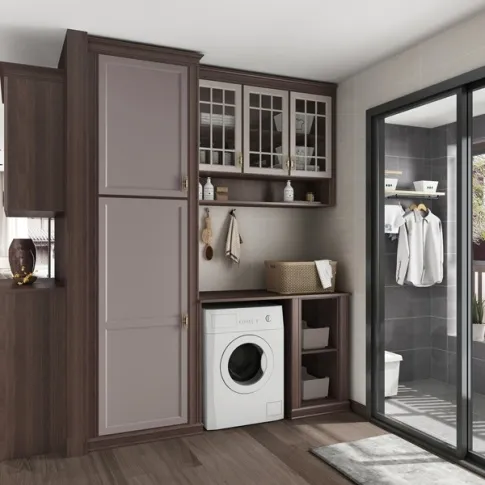
If you've ever wondered how those oversized washers can truly shake things up in your laundry room, you're in the right place. Forget dry definitions—today we're diving deep into the real impact those industrial-sized machines have on everything from water bills to weekend chore marathons. Like that moment you upgrade from a cramped apartment washer to a commercial beast that devours king-size comforters with ease—it’s a game changer that echoes through your entire household rhythm.
More Than Just Extra Space: The Efficiency Revolution
Picture this: you're staring down a mountain of soccer uniforms after tournament weekend. With a standard washer, you'd be doing four separate loads. But with a large-capacity machine ? One cycle, 70% less time , and your Sunday remains sacred. This isn't just about volume—it's about fluid dynamics. Advanced drum designs and sensors create a "waterfall effect" that penetrates fabrics without the clawing agitation that wears out clothes. Hotels learned this years ago—why do you think they never seem overwhelmed by linens? Commercial-grade high-performance capacity wasn't built just for bulk; it was engineered for precision care with ruthless efficiency.
The Ripple Effect
Take laundry facilities that serve condo complexes or communal living spaces. Operators noticed something fascinating: energy consumption didn't scale linearly with size . A 10-pound load uses nearly as much power as a 25-pound cycle in modern machines—meaning fewer cycles slice kWh consumption dramatically. When you add humidity sensors that auto-adjust dry times? Maintenance calls for overheated motors drop faster than coins in a payment slot.
Dollars and Sense: The Hidden Math of Mega-Loads
That first price tag might make you gasp. But let's talk ROI. Traditional washers waste a criminal amount of water—up to 15 gallons per cycle just filling the drum. Large-capacity models use pressure sensors and targeted spray jets, cutting consumption by 40% while delivering cleaner results. And here's where resource flow patterns play out: utilities see demonstrable strain reduction in peak-hour drainage systems when multi-unit housing adopts these systems. It’s not magic; it’s hydronic physics meeting smart design.
65%
reduction in monthly water bills for apartment complexes switching to large-capacity units
18 mo
average ROI period factoring energy savings and increased tenant retention
Beyond the Machine: Designing for Fluid Operations
True optimization extends past the appliance. Consider how hospitality laundries work: ergonomic folding stations adjacent to machines minimize movement waste. At home, integrating waterproof flooring —especially important near utility sinks—creates slip-resistant surfaces while containing spills that would warp traditional materials. This design philosophy transforms spaces from chore zones to efficiency engines. Even loading heights matter—commercial style top-loaders reduce back strain, accelerating turnover without sacrificing accessibility.
The Next Wave: Smart Systems Meet Sustainable Scale
Imagine your washer texting you when detergent runs low, or automatically ordering refills. IoT-enabled models already sync with building management systems to run cycles during off-peak electricity rates. Energy flow coordination isn't sci-fi—it's current reality in premium models. And for eco-warriors? Solar-compatible inverters let laundromats run daytime operations entirely off-grid. The ripple effect is profound: fewer trucks delivering supplies, compressed maintenance schedules, buildings that whisper efficiency.
So what’s the real takeaway? Large-capacity washers aren't appliances—they're efficiency multipliers. From the condo complex slashing utility overhead to the family reclaiming weekends, the physics of scale translates into tangible freedom. It’s less about the spin cycle and more about life’s cycles regained. That’s impact you can measure in both coins and contentment.










