
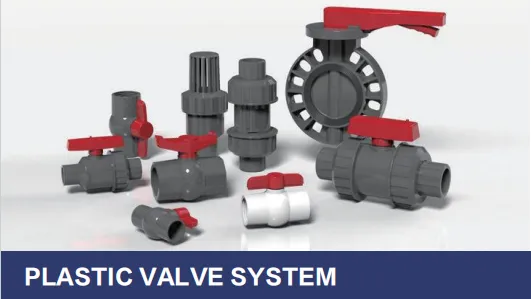
Walk into any modern building—whether it's the bustling mall downtown, the cozy apartment complex around the corner, or the sleek office tower that glows at night—and you'll find two unsung heroes working behind the scenes: the HVAC system and the plastic valve system. These aren't just mechanical parts; they're the lifelines that keep spaces comfortable, functional, and safe. HVAC (Heating, Ventilation, and Air Conditioning) regulates temperature, humidity, and air quality, making sure we stay warm in winter, cool in summer, and breathe easy year-round. Plastic valve systems, on the other hand, control the flow of water, air, and other fluids that power these HVAC systems, ensuring everything runs smoothly without leaks, clogs, or breakdowns. But what makes these two systems truly powerful isn't just their individual roles—it's how they integrate. And at the heart of that integration? Specialized suppliers who don't just sell products, but craft solutions. In this article, we'll dive into the world of HVAC and plastic valve system integration, exploring why it matters, how it works, and the critical role suppliers play in making it all come together seamlessly.
Before we talk about integration, let's get back to basics. HVAC systems are complex networks of components—furnaces, air conditioners, ductwork, fans, and coils—that work in harmony to maintain indoor comfort. Imagine a hot summer day: the AC unit cools refrigerant, which flows through coils to absorb heat from the air, and then a fan blows that cooled air through ducts into rooms. In winter, the furnace heats air (or water, in hydronic systems) and distributes it the same way. But none of this happens without precise control over the flow of fluids—water, refrigerant, or even air. That's where plastic valve systems step in.
Plastic valves are the "traffic controllers" of building systems. They open, close, or throttle to direct flow, adjust pressure, and prevent backflow. Made from materials like PVC (Polyvinyl Chloride), PPR (Polypropylene Random Copolymer), and CPVC (Chlorinated Polyvinyl Chloride), these valves are lightweight, corrosion-resistant, and cost-effective—qualities that make them ideal for HVAC applications. Unlike metal valves, they don't rust, which means fewer repairs and longer system life. And because they're moldable, they can be designed into custom shapes to fit tight spaces or unique system layouts. But to truly shine, plastic valves need to work in tandem with HVAC systems, and that's where the right supplier becomes invaluable. A plastic valve system supplier doesn't just deliver a box of valves; they provide components engineered to meet the specific demands of HVAC—whether it's high-temperature resistance for hydronic heating or chemical compatibility for refrigerant lines.
Think of HVAC and plastic valve systems as a dance partners. The HVAC system leads, setting the rhythm for temperature and airflow, and the plastic valve system follows, adjusting flow rates to match. When the AC kicks on, for example, valves controlling refrigerant flow open wider to increase cooling capacity. When a room reaches the desired temperature, those valves throttle back to conserve energy. In hydronic HVAC systems (which use hot or cold water to heat or cool), plastic valves regulate water flow to radiators, underfloor heating loops, or fan coils, ensuring each zone gets exactly the right amount of heat or cold.
This symbiosis relies on compatibility. The valves must be sized correctly for the HVAC system's flow rate and pressure; the materials must withstand the temperatures and chemicals of the fluids they control; and the design must allow for easy integration with pipes and fittings. Take PPR pipes, for instance. A ppr pipe and fitting supplier specializes in pipes that can handle both hot and cold water, making them perfect for hydronic HVAC systems. PPR is flexible, heat-resistant (up to 95°C for some grades), and has low thermal conductivity, which means less heat loss as water travels from the boiler to the radiators. When paired with plastic valves designed for PPR systems, the result is a closed loop that's efficient, durable, and easy to install.
But it's not just about materials—it's about precision. A small miscalculation in valve size or pipe diameter can throw off the entire HVAC system. Too much flow, and you waste energy; too little, and rooms stay too hot or cold. That's why suppliers spend years refining their products, testing them under real-world conditions, and working with HVAC engineers to ensure every component fits like a puzzle piece. It's this attention to detail that turns separate systems into a unified, high-performing whole.
Integration between HVAC and plastic valve systems isn't magic—it's the result of carefully selected components working together. Let's break down the key players:
Valves come in dozens of types, each suited to specific HVAC tasks:
Pipes carry the fluids that make HVAC work, and plastic pipes are a top choice for their durability and versatility. Two common types in HVAC integration are:
Fittings—elbows, tees, reducers, and couplings—join pipes and valves, ensuring tight, leak-free connections. Like pipes and valves, they're made from plastic (PVC, PPR) to match system materials, preventing corrosion and ensuring compatibility. A good supplier includes fittings in their system packages, so contractors don't have to mix and match components from different brands, reducing the risk of leaks.
To better understand how these components integrate, let's compare two critical pipe types used in HVAC systems: PVC DWV and PPR. The table below highlights their key differences and how a pvc dwv pipe supplier and ppr pipe and fitting supplier tailor their products to HVAC needs:
| Feature | PVC DWV Pipes | PPR Pipes | Supplier Focus |
|---|---|---|---|
| Primary HVAC Application | Condensate drains, ventilation ducts, waste lines | Hydronic heating/cooling lines, hot water circulation |
PVC DWV: Drainage efficiency, clog resistance
PPR: Heat resistance, pressure performance |
| Temperature Resistance | Up to 60°C (ideal for cool condensate) | Up to 95°C (suitable for hot water in hydronic systems) | Testing materials under extreme temps to ensure stability |
| Pressure Rating | Low (designed for gravity flow or low-pressure air) | High (up to 10 bar for some grades, to handle pump pressure) | PPR suppliers: Engineering for consistent pressure performance |
| Installation Method | Solvent cement (glued) connections | Heat fusion (melted and joined, creating a seamless bond) | Providing tools and training for proper installation (e.g., fusion machines for PPR) |
| Key Advantage for HVAC | Cost-effective, lightweight, easy to route in tight spaces | Energy-efficient (low heat loss), durable, leak-free joints | Custom lengths and sizes to reduce waste and speed up installation |
If integration is the goal, then specialized suppliers are the guides. A plastic valve system supplier or pvc dwv pipe supplier brings more to the table than inventory—they bring expertise. Let's say an architect is designing a hospital HVAC system that needs to maintain strict temperature and humidity levels for patient comfort. The system will use hydronic heating, so PPR pipes are a must. But not all PPR is created equal: the hospital needs pipes that can handle continuous hot water flow, resist bacterial growth, and meet healthcare safety standards (like ISO 10508 for drinking water systems). A ppr pipe and fitting supplier with healthcare experience will know exactly which grade of PPR to recommend, provide test reports to prove compliance, and even help calculate the right pipe diameter to ensure each wing gets adequate heat without wasting energy.
Suppliers also act as translators between engineers, contractors, and manufacturers. Engineers speak in specs and performance metrics; contractors speak in installation challenges and deadlines; manufacturers speak in production capabilities. A good supplier bridges these worlds, ensuring the plastic valve system meets the engineer's flow rate requirements, is easy for the contractor to install, and is produced on time by the manufacturer. They might even offer custom solutions—like a valve with a special coating to resist refrigerant chemicals or a PPR pipe with antimicrobial additives for hospitals.
Compliance is another area where suppliers shine. Building codes vary by region (e.g., ASTM standards in the U.S., DIN standards in Europe, SASO in Saudi Arabia), and HVAC systems must meet strict safety and efficiency regulations. A reputable plastic valve system supplier ensures their products are tested and certified to these standards, saving contractors from costly code violations or system failures. For example, a valve used in a school HVAC system must be lead-free (per the U.S. Safe Drinking Water Act) and fire-rated (to prevent spread in case of a fire). Suppliers provide certification documents upfront, so contractors can focus on installation, not paperwork.
Theory is important, but real-world results tell the true story of integration. Let's look at two case studies where specialized suppliers helped HVAC and plastic valve systems work in harmony.
Case Study 1: Commercial Mall in Dubai
A large shopping mall in Dubai needed an HVAC system that could handle extreme summer temperatures (up to 45°C outside) while keeping indoor spaces at a comfortable 24°C. The system would use a hydronic cooling setup: chilled water from a central plant would flow through PPR pipes to fan coil units in each store, absorbing heat and returning to the plant to be re-chilled. The challenge? The mall has over 100 stores, each with unique cooling needs, and the system had to be energy-efficient to keep utility bills low.
The project team partnered with a ppr pipe and fitting supplier and plastic valve system supplier early in the design phase. The suppliers recommended a variable flow system, where pressure-independent control valves (PICVs) would adjust water flow to each fan coil based on the store's cooling demand. They provided PPR pipes with a high-pressure rating (10 bar) to handle the chilled water pump pressure and fittings with heat-fused joints to prevent leaks. For the food court, where temperatures run higher, the supplier customized larger-diameter PPR pipes and higher-capacity valves to ensure adequate cooling.
Result: The mall's HVAC system runs 15% more efficiently than projected, thanks to precise flow control from the plastic valves and low-pressure loss in the PPR pipes. Store managers report consistent temperatures, and the mall has saved over $50,000 annually on energy costs. The heat-fused PPR joints have also meant zero leaks in three years of operation.
Case Study 2: Residential Complex in Jeddah, Saudi Arabia
A 500-unit residential complex in Jeddah required an HVAC system that could handle both cooling (summer) and heating (mild winters) with minimal maintenance. The developer chose a split-system HVAC setup, where each unit has its own air conditioner, but the building uses a centralized hot water system for showers and bathrooms—powered by solar heaters on the roof. The hot water would flow through PPR pipes to each unit, while PVC DWV pipes would handle condensate from AC units and waste water.
The pvc dwv pipe supplier and ppr pipe and fitting supplier worked together to design a coordinated system. For the PPR hot water lines, the supplier recommended a solar-compatible grade (rated for 95°C) with insulation to reduce heat loss between the roof and units. For the AC condensate drains, they provided PVC DWV pipes with a slight slope (1/4 inch per foot) to ensure proper drainage and prevent clogs from dust or mold. They also included check valves in the PPR lines to prevent backflow when the solar heater isn't running.
Result: Residents enjoy consistent hot water and cool air, with no complaints of AC leaks (thanks to the sloped PVC DWV pipes). The developer reports that maintenance calls related to plumbing or HVAC are 30% lower than in similar complexes, and the insulated PPR pipes have reduced hot water energy use by 20%.
Integration doesn't always go smoothly. Even with the best suppliers, challenges can arise. Let's look at common hurdles and how suppliers help solve them:
Mixing components from different suppliers—say, a valve from one brand and a pipe from another—can lead to leaks or poor performance. For example, a valve with a 2-inch outlet might not fit a pipe with a 2-inch inlet if the manufacturers use different sizing standards (e.g., nominal vs. actual diameter). A plastic valve system supplier avoids this by offering "system packages" that include valves, pipes, and fittings from the same manufacturer, ensuring all components fit together perfectly.
Even the best components fail if installed incorrectly. PPR pipes, for instance, require precise heat fusion: too little heat, and the joint leaks; too much, and the pipe warps, restricting flow. Suppliers address this by providing training for contractors—on-site workshops, video tutorials, or even certified installers. Some suppliers even send technical reps to job sites to oversee critical installations, like the PPR lines in the Dubai mall case study.
HVAC systems in harsh climates (like the Saudi Arabian desert) face unique challenges: extreme heat, sand, and high humidity. Plastic valves and pipes can degrade if not designed for these conditions. A pvc dwv pipe supplier in Saudi Arabia might add UV stabilizers to PVC pipes to prevent sun damage, while a plastic valve system supplier could use reinforced plastic (like fiberglass-reinforced PVC) for valves to withstand high ambient temperatures.
Want to ensure your HVAC and plastic valve systems integrate flawlessly? Follow these best practices, with input from industry experts and suppliers:
The future of integration is smart, sustainable, and user-centric. Here's what to watch for, with suppliers leading the charge:
Imagine a plastic valve with a built-in sensor that sends real-time data to a smartphone app: "Valve 3 in the east wing is stuck 10% open—flow rate is 5% below target." That's the future. Plastic valve system supplier are already developing "smart valves" with IoT (Internet of Things) capabilities—sensors that monitor flow, pressure, and temperature, and actuators that adjust settings automatically. In HVAC systems, these valves could sync with thermostats to optimize flow based on occupancy (e.g., reducing cooling to empty offices after hours) or alert maintenance teams to leaks before they cause damage.
As buildings aim for net-zero carbon footprints, suppliers are innovating eco-friendly plastic options. For example, some PPR pipe suppliers now use recycled plastic in their pipes (without sacrificing performance), while others are developing biodegradable valve seals. There's also a push for "circular" systems, where old plastic valves and pipes are recycled into new components, reducing waste.
HVAC systems account for 40% of a building's energy use, so efficiency is key. Suppliers are responding with low-flow plastic valves that reduce pressure loss, and PPR pipes with ultra-smooth inner walls (to minimize friction and pump energy use). Some are even integrating heat-recovery features into valve systems—capturing waste heat from HVAC exhaust and using it to pre-heat water, cutting energy bills further.
HVAC and plastic valve systems are more than just parts of a building—they're the foundation of comfortable, efficient, and sustainable spaces. When integrated properly, they work together to reduce energy use, lower maintenance costs, and improve occupant satisfaction. And at the center of that integration are specialized suppliers: the plastic valve system supplier who engineers valves to HVAC specs, the pvc dwv pipe supplier who ensures condensate drains never clog, and the ppr pipe and fitting supplier who delivers leak-free hot water lines. These suppliers don't just sell products—they build partnerships, offering expertise, customization, and support that turn blueprints into functional, high-performing buildings.
As we look to the future, with smart technology and sustainable materials on the horizon, the role of suppliers will only grow. They'll be the ones translating innovation into real-world solutions, helping buildings become greener, smarter, and more livable. So the next time you walk into a comfortable office or a cozy home, take a moment to appreciate the invisible dance between HVAC and plastic valve systems—and the suppliers who make that dance possible.
Recommend Products












