
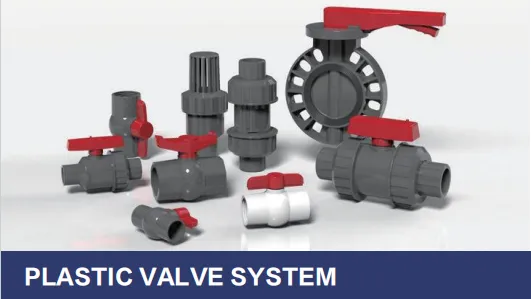
Walk into any modern building—whether it's a bustling hospital, a sleek commercial office, or a cozy residential complex—and you'll find an invisible network working tirelessly behind the walls: plastic valve systems. These unassuming components control the flow of water, gas, and other fluids, ensuring safety, efficiency, and reliability in daily operations. But here's the thing: not all plastic valve systems are created equal. A single subpar valve can lead to leaks, contamination, or even catastrophic failures, putting lives and investments at risk. That's where quality certifications come in. They're not just pieces of paper; they're promises of performance, compliance, and trust. For anyone in the construction industry—from architects to contractors to property owners—knowing how to verify these certifications isn't just a skill; it's a necessity. In this guide, we'll break down the process of checking quality certifications for plastic valve system solutions, helping you avoid pitfalls and partner with suppliers who truly deliver on their claims.
Before diving into verification, let's first understand why these certifications are non-negotiable. Plastic valve systems are the backbone of plumbing, heating, and cooling systems in buildings. They're used in hospitals where sterility is critical, schools where safety is paramount, and commercial spaces where downtime equals lost revenue. A low-quality valve might corrode, crack, or leak over time, leading to water damage, mold growth, or even health hazards. Certifications act as a third-party guarantee that the product has been tested against strict standards for durability, chemical resistance, pressure tolerance, and safety.
For example, consider a class a fireproof cpl inorganic board for hospital and school supplier —their products must meet rigorous fire safety standards to protect lives in emergency situations. Similarly, a plastic valve system supplier serving a hospital needs certifications that ensure their valves won't leach harmful substances into water supplies. Without proper certifications, you're essentially gambling with the integrity of the entire building.
Certifications also play a key role in regulatory compliance. In regions like Saudi Arabia, where construction codes are strict, using uncertified products can result in project delays, fines, or even legal liability. A saudi arabia building materials supplier that cuts corners on certifications isn't just putting their clients at risk—they're putting their own reputation on the line.
Not all certifications are created equal. Some are industry-specific, others are regional, and some are globally recognized. To verify quality effectively, you first need to understand which certifications apply to plastic valve systems. Below are the most critical ones:
ASTM International (formerly the American Society for Testing and Materials) sets standards for materials, products, systems, and services worldwide. For plastic valves, two standards stand out: ASTM D2846 (for CPVC pipe and fittings) and ASTM F891 (for PEX pipe and fittings). These standards outline requirements for dimensions, pressure ratings, chemical resistance, and long-term performance. A cpvc pipe and fitting(astm d2846) supplier should be able to provide certification that their products meet ASTM D2846's strict criteria, including testing for burst pressure at elevated temperatures.
DIN is a German standards organization whose guidelines are widely adopted in Europe and the Middle East. For plastic valves, DIN standard PN10 is common for PVC pipes and fittings, specifying pressure ratings (PN10 indicates a maximum working pressure of 10 bar at 20°C). A pvc/pipe fitting (din standard pn10) supplier should have DIN certification to ensure their products are compatible with European and Middle Eastern plumbing systems, which is especially important for projects in Saudi Arabia.
ISO standards are globally recognized and cover everything from quality management systems (ISO 9001) to product-specific requirements. For plastic valves, ISO 15874 (for PPR pipes and fittings) and ISO 1452-2 (for PVC-U pipes) are key. ISO 9001 certification is also crucial—it shows that the supplier has a documented quality management system in place, from raw material sourcing to production to testing. A ppr pipe and fitting supplier with ISO 9001 certification is more likely to consistently deliver high-quality products than one without.
For projects in Saudi Arabia, the Saudi Standards, Metrology, and Quality Organization (SASO) sets mandatory requirements. SASO 1062/2014, for example, covers PVC pipes for water supply, while SASO 1322/1997 applies to plastic fittings. Any saudi arabia building materials supplier must comply with SASO standards to legally sell products in the country. This includes plastic valve systems, which must pass SASO's testing for durability, safety, and compatibility with local infrastructure.
| Certification | Applicable Products | Key Requirements | Verification Authority | Common Industries |
|---|---|---|---|---|
| ASTM D2846 | CPVC pipe and fittings | Burst pressure, chemical resistance, dimensional stability | ASTM International | Hospitals, schools, commercial buildings |
| DIN PN10 | PVC pipe and fittings | Pressure rating (10 bar), leak testing, material composition | DIN German Institute for Standardization | Residential, industrial plumbing |
| ISO 9001 | All plastic valve systems | Quality management system, process control, customer focus | ISO Certification Bodies (e.g., SGS, Bureau Veritas) | All industries |
| SASO 1062/2014 | PVC pipes (water supply) | Durability, safety, compatibility with Saudi infrastructure | SASO (Saudi Arabia) | Residential, commercial, public projects in KSA |
| ASTM F891 | PEX pipe and fittings | Thermal stability, pressure resistance, kink resistance | ASTM International | Residential heating/cooling, potable water systems |
Now that you know which certifications to look for, let's walk through the process of verifying them. This isn't just about asking for a certificate—it's about ensuring that certificate is legitimate, current, and applies to the specific product you're buying.
Start by asking the plastic valve system supplier for copies of their certifications. Reputable suppliers will have these readily available, often on their website or in a dedicated "Certifications" section. Be specific: if you're buying PPR pipes, ask for ISO 15874 certification; if you're in Saudi Arabia, request SASO compliance documents. Avoid suppliers who say, "We're certified" but can't provide physical or digital copies—this is a major red flag.
When reviewing the documents, check for key details: the certification number, issue date, expiration date (most certifications are valid for 3–5 years), and the name of the certifying body (e.g., SGS, Intertek, or TÜV). The certificate should also clearly list the products covered—if a supplier provides an ISO 9001 certificate for "building materials" but doesn't specify plastic valves, that's not sufficient.
Certificates can be forged, so never take a supplier's word at face value. Instead, verify the certification directly with the issuing authority. Most certifying bodies have online databases where you can enter the certification number to check validity. For example:
If the certification number doesn't show up in the database, or if the certifying body isn't recognized, the certificate is likely fake. For example, a upvc pipe supplier claiming DIN PN10 certification should have a certificate that can be verified on DIN's official website or through a DIN-accredited body.
Certifications are based on testing, so ask the supplier for raw test reports from accredited laboratories. For plastic valves, key tests include:
Test reports should include details like sample size, test conditions, results, and the laboratory's accreditation number. A ppr pipe and fitting supplier should be able to provide hydrostatic test reports showing their pipes can withstand 20 bar pressure at 70°C for 10,000 hours—this is a requirement of ISO 15874.
For large projects or long-term partnerships, consider visiting the supplier's manufacturing facility. This gives you firsthand insight into their quality control processes, from raw material inspection to production to final testing. Look for signs of professionalism: calibrated testing equipment, documented quality checks at each production stage, and trained staff. A one-stop architectural solution provider that values certifications will likely have a dedicated quality assurance team and transparent processes.
During the audit, ask to see where certifications are displayed (e.g., in the factory lobby or on the production floor) and interview quality managers about how they maintain compliance. If a supplier refuses to let you visit their facility, it's worth questioning why.
Even with careful verification, some suppliers will try to cut corners. Here are the most common warning signs to watch for:
If a supplier says, "We have all the necessary certifications" but can't name specific standards (e.g., ASTM, DIN, SASO), be wary. Certifications are specific to products and regions—there's no such thing as a "one-size-fits-all" certification for plastic valve systems. A pex pipe and fitting supplier who claims "ISO certification" without specifying ISO 15874 or ISO 9001 is likely hiding something.
Check the expiration date on every certificate. Expired certifications are useless—they don't guarantee the product meets current standards. Also, watch for signs of alteration: smudged text, mismatched fonts, or logos that look slightly off (e.g., "ASTM" spelled as "ASTN"). Forged certificates often have these telltale signs.
Stick to well-known certifying bodies like SGS, Bureau Veritas, TÜV, or Intertek. If a supplier provides a certificate from a body you've never heard of (e.g., "Global Quality Certifications Inc."), verify the body's accreditation through the International Accreditation Forum (IAF) database. Unaccredited bodies have no authority to issue valid certifications.
A reputable plastic valve system supplier should be happy to share references from past clients, especially in your industry. If they hesitate or say, "We can't share client info," it may mean they don't have satisfied customers—or worse, they've had certification-related issues in the past. Reach out to references and ask about their experience with the supplier's certifications and product quality.
To illustrate why certification verification matters, let's look at a real-world example. In 2023, a construction firm in Riyadh, Saudi Arabia, was tasked with building a new hospital wing. The project required class a fireproof cpl inorganic board for hospital and school solutions and plastic valve systems that met SASO and ASTM standards. The team initially received a quote from Supplier A, a saudi arabia building materials supplier offering significantly lower prices than competitors.
Supplier A claimed to have ISO 9001 certification and SASO compliance, but when asked for documentation, they provided a generic "quality certificate" with no specific standards or test results. The construction firm followed the verification steps: they checked the certificate number with ISO's database (no match), requested test reports (Supplier A provided blurry copies with missing data), and asked for references (none were provided). Alarmed, the team decided to walk away.
They then partnered with Supplier B, a one-stop architectural solution provider with clear ASTM D2846 (CPVC) and SASO 1062 certifications. Supplier B provided test reports from SGS showing their valves passed burst pressure tests at 93°C, and their ISO 9001 certificate was verified through the IAF database. The project was completed on time, and the hospital wing has since operated without plumbing issues—a stark contrast to Supplier A, who was later exposed for selling uncertified valves that failed in a nearby residential complex.
Verifying quality certifications for plastic valve system solutions isn't just a box-ticking exercise—it's a critical step in ensuring the safety, durability, and compliance of your construction projects. By understanding key certifications (ASTM, DIN, ISO, SASO), following a rigorous verification process (requesting docs, cross-checking with authorities, reviewing test reports), and watching for red flags, you can avoid costly mistakes and build trust with suppliers who prioritize quality.
Whether you're a contractor working on a school in Saudi Arabia, an architect specifying materials for a hospital, or a homeowner renovating a bathroom, the time invested in certification verification pays off. It protects your reputation, ensures regulatory compliance, and gives you peace of mind knowing the plastic valve systems in your project are built to last. After all, in construction, the strongest buildings aren't just made of stone and steel—they're built on a foundation of trust, starting with certified materials.
Recommend Products












