
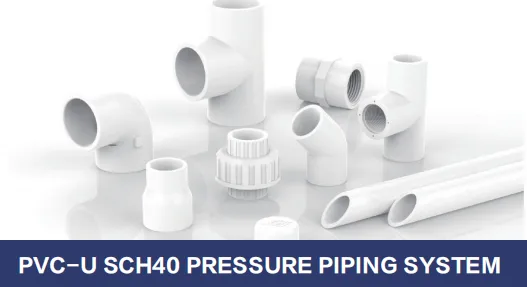
When it comes to building or renovating a property—whether it's a residential complex, a commercial high-rise, or an industrial facility—the infrastructure that lies beneath the surface matters just as much as the visible finishes. Pressure piping systems, in particular, are the unsung heroes of any construction project, responsible for delivering water, gas, and other critical fluids safely and efficiently. Among these, PVC-U SCH40 pressure piping systems stand out for their durability, corrosion resistance, and cost-effectiveness, making them a staple in plumbing, irrigation, and industrial applications. But here's the catch: not all suppliers are created equal. Choosing the wrong PVC-U SCH40 pressure piping system supplier can lead to catastrophic consequences—leaks that damage structures, project delays that inflate budgets, and even safety hazards that put lives at risk. So, how do you separate the reliable partners from the risky ones? Let's dive into a step-by-step guide to verifying suppliers and avoiding common pitfalls.
First, let's clarify what we're dealing with. PVC-U (Unplasticized Polyvinyl Chloride) SCH40 refers to a specific type of rigid plastic pipe designed to handle moderate pressure. The "SCH40" designation indicates its wall thickness and pressure rating, making it suitable for applications like potable water distribution, sewage systems, and industrial fluid transfer. Unlike flexible hoses or thinner piping, PVC-U SCH40 is built to withstand consistent pressure over time, which is why its quality is non-negotiable.
A reputable PVC-U SCH40 pressure piping system supplier isn't just a vendor—they're a partner in your project's success. They should not only provide pipes but also ensure those pipes meet strict industry standards, are manufactured with high-grade materials, and are backed by support that extends beyond the sale. This is especially true in regions like Saudi Arabia, where construction projects demand materials that can withstand harsh climates, or in specialized settings where compliance with local regulations (such as SASO standards) is mandatory. In short, a trustworthy supplier acts as a gatekeeper for quality, ensuring that every pipe, fitting, and valve they deliver is up to the task.
Now that we've established why supplier quality matters, let's break down the critical factors to investigate before signing a contract. Think of this as your checklist—cross off each item, and you'll significantly reduce the risk of partnering with a problematic supplier.
Certifications are the first line of defense against substandard products. A reputable PVC-U SCH40 pressure piping system supplier should hold certifications that prove their products meet global and local standards. Look for ISO 9001:2015 (a benchmark for quality management systems), ASTM D1785 (the standard for PVC pipes in the U.S.), or DIN 8062 (common in European markets). For projects in Saudi Arabia, SASO (Saudi Arabian Standards Organization) certification is often mandatory, ensuring the product aligns with regional safety and performance requirements.
Don't stop at asking for a certificate—dig deeper. Is the certification current? Does it cover the specific product line you're purchasing (e.g., SCH40 pipes vs. thinner SCH20)? A supplier that hesitates to share these documents or provides vague "certificate-like" PDFs is already raising a red flag. Remember, compliance isn't optional; it's the minimum requirement for doing business in this industry.
Quality pipes start with quality manufacturing. Ask the supplier to walk you through their production process: Where do they source raw materials? Do they use virgin PVC resin (the purest form) or recycled plastic (which can weaken the pipe)? How do they test for defects—do they conduct pressure tests, dimensional checks, or chemical resistance assessments in-house? A reliable supplier will be transparent about this. Some even invite clients to tour their factories, giving you a firsthand look at their machinery, quality control labs, and workflow.
For example, a top-tier upvc pipe supplier might use automated extrusion lines to ensure consistent wall thickness, while a subpar one might cut corners with manual processes that lead to uneven pipes. Similarly, a pipes fittings supplier that pairs their pipes with mismatched or poorly made fittings (like cracked elbows or loose couplings) can undermine the entire system—even if the pipes themselves are high-quality. Quality control isn't just about the final product; it's about every step from raw material intake to packaging.
Words are cheap, but actions speak volumes. A reputable supplier will have a portfolio of successful projects to back up their claims. Ask for case studies or references from clients in similar industries—for instance, if you're working on a hospital, find out if they've supplied piping for healthcare facilities before. Reach out to those clients: Was the delivery on time? Did the pipes perform as expected? How did the supplier handle issues like damaged shipments or design changes?
Social proof matters, too. Check online reviews, industry forums, or trade association listings. If multiple contractors mention that a plastic valve system supplier consistently delivers faulty valves, or that a pipes fittings supplier ghosted them after a complaint, take note. On the flip side, suppliers with long-term partnerships (5+ years) with reputable construction firms are likely doing something right.
A great supplier doesn't just sell pipes—they offer a ecosystem of solutions. For example, a PVC-U SCH40 pressure piping system supplier that also acts as a pipes fittings supplier and plastic valve system supplier can streamline your procurement process. Instead of juggling multiple vendors for pipes, elbows, valves, and couplings, you can source everything from one partner, ensuring compatibility and reducing the risk of mismatched components. This is especially valuable for large projects where coordination is key.
But convenience shouldn't come at the cost of quality. Even if a supplier offers a "one-stop shop," verify that all their products meet the same high standards. A supplier that skimps on plastic valve system quality while excelling in pipes is still a liability—valves are the gatekeepers of pressure, and a faulty one can cause just as much damage as a weak pipe.
Purchasing pipes is just the start. What happens if you need help with installation? Or if a batch of pipes arrives with a defect? A reputable supplier offers more than a invoice—they provide technical support, installation guidance, and a clear warranty policy. For example, a supplier might send an engineer to your site to advise on pipe layout, or offer a 10-year warranty against manufacturing defects. Conversely, a supplier that disappears after delivery—ignoring calls about leaks or refusing to honor returns—is a red flag.
Ask about their after-sales process: How quickly do they respond to issues? Do they have a dedicated support team? What's their policy on replacements or refunds? A supplier that prioritizes long-term relationships will have robust answers to these questions.
Now that you know what to look for, let's talk about what to run from. These red flags are telltale signs that a supplier is either cutting corners, hiding flaws, or simply not invested in your success. If you spot any of these, proceed with extreme caution—or better yet, walk away.
If a supplier says, "We don't have those documents handy" or "Our products don't need certifications," that's a dealbreaker. Legitimate suppliers keep certifications (like ISO, ASTM, or SASO) readily available—often on their website or in a digital portfolio. Certifications aren't just paperwork; they're proof that an independent third party has verified the product's quality. Without them, you're gambling with untested materials.
Take a close look at sample pipes: Do they have uneven coloring, visible cracks, or rough edges? Are the dimensions (diameter, wall thickness) consistent across the batch? A supplier that can't provide detailed specifications (like pressure ratings or chemical resistance data) is either uninformed or hiding something. For example, a PVC-U SCH40 pipe should clearly state its pressure rating (e.g., 150 psi at 73°F) and material composition. If that info is missing, be wary.
We all love saving money, but piping systems are not the place to pinch pennies. If a quote is 30-40% lower than the market average, ask: How are they able to undercut everyone else? Chances are, they're using recycled plastic instead of virgin resin, skipping quality tests, or sourcing from unregulated factories. A few thousand dollars saved upfront could cost tens of thousands in repairs later when the pipes fail.
Does the supplier take days to reply to emails? Do they dodge questions about delivery times or manufacturing locations? Communication is key in construction—delays happen, but a trustworthy supplier will keep you in the loop. If they're vague about lead times, can't tell you where their raw materials come from, or refuse to share client references, they're not worth the hassle.
A supplier that offers a "no returns, no refunds" policy or a warranty that lasts only 6 months is showing you exactly how much they believe in their products. Reputable suppliers stand behind their work—look for warranties of 5 years or more, and clear processes for handling claims.
To make this even more concrete, let's compare a hypothetical reputable supplier with a problematic one across key criteria. Use this as a template when evaluating your own options:
| Criteria | Reputable PVC-U SCH40 Pressure Piping System Supplier | Problematic Supplier |
|---|---|---|
| Certifications | Provides ISO 9001, ASTM D1785, and SASO certifications upon request. | Claims "certifications are in progress" or refuses to share documents. |
| Quality Control | Conducts in-house pressure tests, uses 100% virgin PVC resin, and shares test reports. | Uses recycled plastic, no testing records, and samples have visible defects. |
| Pricing | Quotes are 5-10% above the lowest market rate but justify with quality guarantees. | Quotes are 30% lower than average, with no explanation for the discount. |
| Client Feedback | References include 3+ long-term clients in construction and manufacturing. | No references available; online reviews mention "leaky pipes" and "late deliveries." |
| After-Sales Support | Offers a 10-year warranty and 24/7 technical support hotline. | Warranty is 6 months; support emails go unanswered. |
| Product Range | Offers pipes, fittings, and valves (e.g., plastic valve system supplier) for a complete solution. | Only sells pipes; recommends third-party fittings of unknown quality. |
While our focus here is on PVC-U SCH40 pressure piping, it's worth noting that many reputable suppliers offer more than just pipes. For example, a supplier that also serves as a class a fireproof cpl inorganic board for hospital and school supplier might be a valuable partner for projects that require specialized materials (like fire-resistant boards for healthcare or educational facilities). Similarly, a one-stop provider that offers flooring solutions, wall panels, or even sanitary fixtures can simplify procurement, reduce logistics costs, and ensure compatibility across products. Just remember: even in a one-stop shop, the same verification rules apply—don't assume all products are high-quality because one line is.
Choosing a PVC-U SCH40 pressure piping system supplier isn't just a purchasing decision—it's an investment in your project's safety, efficiency, and long-term success. By verifying certifications, inspecting manufacturing processes, checking track records, and watching for red flags, you can separate the reliable partners from the risky ones. Remember, a reputable supplier will welcome your questions, transparency, and due diligence—they know their quality speaks for itself. So take the time to research, ask tough questions, and trust your instincts. Your pipes (and your peace of mind) will thank you.
Recommend Products












