
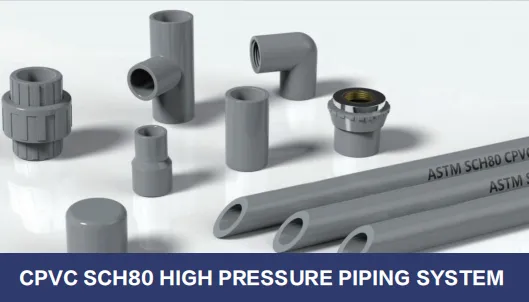
The Middle East is in the midst of an unprecedented construction boom. From the towering skyscrapers of Dubai to the ambitious infrastructure projects of Saudi Arabia's Vision 2030, every corner of the region is buzzing with development. At the heart of these projects—whether they're state-of-the-art hospitals, sprawling commercial complexes, or cutting-edge industrial facilities—lies a critical component that often goes unnoticed but never fails to impact long-term success: the piping system. Among the various materials available, CPVC SCH80 high pressure piping has emerged as a top choice for its durability, resistance to corrosion, and ability to withstand the region's extreme temperatures. But with dozens of suppliers vying for attention, how do you separate the reliable partners from the rest? This guide will walk you through the essential factors to consider when selecting a CPVC SCH80 high pressure piping system supplier in the Middle East, ensuring your project gets the quality, support, and peace of mind it deserves.
Before diving into supplier selection, let's first understand why CPVC SCH80 has become a staple in Middle Eastern construction. Unlike traditional materials like galvanized steel or standard PVC, CPVC (Chlorinated Polyvinyl Chloride) is engineered to handle high pressure and temperature extremes—two constants in the region. SCH80 refers to the pipe's thickness and pressure rating, making it ideal for applications where water, chemicals, or gases flow under significant pressure, such as HVAC systems, industrial process lines, and even medical gas pipelines in hospitals.
In places like Riyadh, where summer temperatures regularly exceed 45°C (113°F), or Dubai, where humidity can spike, CPVC SCH80 maintains its structural integrity. It resists corrosion from saltwater (critical for coastal projects), doesn't rust or scale, and minimizes the risk of leaks that can derail timelines and inflate costs. For project managers and contractors, choosing the right CPVC SCH80 supplier isn't just about buying pipes—it's about investing in a system that will stand the test of time in one of the world's harshest construction environments.
The Middle East's construction landscape is unique, with its own set of challenges, regulations, and project demands. A supplier with years of experience in the region will understand these nuances far better than an international company with no local footprint. Look for a saudi arabia building materials supplier (or one with strong presence in key markets like the UAE, Qatar, or Kuwait) that has a track record of delivering CPVC SCH80 systems for projects similar to yours—whether that's a hospital, a shopping mall, or an industrial plant.
Ask about their history: How long have they operated in the Middle East? What major projects have they supplied? A supplier that can reference partnerships with leading contractors or government initiatives (like Saudi Arabia's NEOM or Abu Dhabi's Masdar City) is likely to have the expertise to navigate local logistics, paperwork, and cultural expectations.
Not all CPVC SCH80 is created equal. The best suppliers prioritize quality at every stage, from raw material sourcing to manufacturing. Start by checking for certifications that validate compliance with global and local standards. For CPVC pipes and fittings, the ASTM D2846 certification is non-negotiable—it sets requirements for dimensions, pressure ratings, and material performance. Additionally, look for certifications from local bodies, such as the Saudi Standards, Metrology and Quality Organization (SASO) in Saudi Arabia or the Emirates Authority for Standardization and Metrology (ESMA) in the UAE.
Request samples and technical data sheets. A reputable supplier will gladly provide details on pressure tolerance (typically 200 psi at 73°F for SCH80), temperature resistance (up to 93°C for continuous use), and chemical compatibility. Don't hesitate to ask about third-party testing—independent labs can verify claims about durability and performance, giving you confidence that the product will meet your project's needs.
Construction projects rarely rely on a single type of pipe or fitting. A supplier that offers a one-stop architectural solution can simplify your supply chain, reduce lead times, and ensure compatibility across components. Beyond CPVC SCH80, do they provide complementary products like PPR pipes for hot water systems, UPVC pipes for drainage, or ASTM D2846-compliant fittings that seamlessly integrate with their CPVC lines?
For example, a hospital project might need CPVC SCH80 for high-pressure lines, Class A fireproof CPL inorganic boards for wall panels (another key product in the Middle East's healthcare sector), and PEX pipes for radiant heating. A supplier that can deliver all these under one roof eliminates the hassle of coordinating with multiple vendors, reducing the risk of delays or mismatched components.
In the Middle East, where construction timelines are tight and material shortages can halt projects, a supplier's ability to deliver on time is critical. Evaluate their logistics network: Do they have local warehouses in major hubs like Riyadh, Dubai, or Doha? Can they handle bulk orders for large-scale projects, such as a new airport or industrial park?
A supplier with a regional presence can respond faster to urgent requests, minimize shipping costs, and navigate customs delays—common issues when importing materials from overseas. For instance, a saudi arabia building materials supplier with a warehouse in Jeddah can deliver CPVC SCH80 pipes to a project in Mecca within 48 hours, whereas an international supplier might take weeks. Ask about their inventory management system: Do they use real-time tracking to prevent stockouts? Can they adjust deliveries based on your project's changing needs?
Every project has unique requirements. Maybe your design calls for non-standard pipe lengths, specialized fittings, or color-coded systems for easy identification. A top-tier supplier will offer customization options to meet these needs. Additionally, look for technical support services: Do they provide on-site consultations to help with installation? Can their engineers assist with system design, ensuring optimal flow rates and pressure management?
For example, a data center in Kuwait might require CPVC SCH80 pipes with thermal insulation to maintain cooling efficiency. A supplier with in-house technical expertise can recommend the right insulation materials, calculate pressure drops, and even train your team on proper installation techniques—all of which reduce the risk of errors and improve long-term performance.
While cost is always a factor, the cheapest option rarely provides the best value. A supplier with rock-bottom prices might cut corners on material quality, skip certifications, or offer minimal after-sales support—all of which can lead to higher costs down the line (think leaks, replacements, or project delays). Instead, focus on pricing transparency : Does the quote include all fees (shipping, taxes, customs)? Are there hidden charges for customization or rush orders?
Compare quotes based on the total cost of ownership, not just the upfront price. A slightly higher initial investment in certified CPVC SCH80 from a reputable supplier will likely save you money on maintenance, repairs, and replacements over the system's lifespan.
Sustainability is no longer a buzzword in the Middle East—it's a regulatory requirement. Projects like Saudi Arabia's Vision 2030 prioritize eco-friendly construction, and suppliers are expected to align with these goals. Ask about the supplier's manufacturing processes: Do they use recycled materials in their CPVC production? Do they minimize waste or reduce carbon emissions during manufacturing?
CPVC itself is a sustainable choice, as it's recyclable and requires less energy to produce than metal pipes. A supplier that emphasizes sustainability not only helps you meet green building standards (like LEED or Estidama) but also demonstrates a commitment to long-term responsibility—an important trait in a region grappling with climate change and resource scarcity.
A supplier's reputation speaks volumes. Look for customer reviews, testimonials, or case studies from clients in the Middle East. Did they deliver on time for a high-profile project? How did they handle a crisis, like a sudden increase in demand or a supply chain disruption?
For example, a case study might detail how a supplier provided CPVC SCH80 pipes for a luxury hotel in Bahrain, overcoming logistical challenges to meet a tight deadline. Pay attention to recurring themes: Are clients praising their communication, product quality, or after-sales service? Conversely, red flags like frequent delays or unresponsive support should give you pause.
The relationship with your supplier shouldn't end after delivery. A reliable partner offers robust after-sales support, including technical assistance, warranty coverage, and access to replacement parts. What's their warranty policy for CPVC SCH80 pipes? Do they cover defects in materials or workmanship? How quickly can they resolve issues, such as a batch of faulty fittings?
In the event of a leak or system failure, you need a supplier that will stand behind their product. A warranty that lasts 10+ years (common for high-quality CPVC) indicates confidence in their materials. Additionally, check if they offer training programs for your team to ensure proper installation—this can prevent warranty-voiding mistakes and extend the system's lifespan.
The Middle East has strict construction codes, and non-compliant materials can lead to project shutdowns or legal penalties. Ensure your supplier's CPVC SCH80 pipes meet local standards, such as SASO in Saudi Arabia, ESMA in the UAE, or QS in Qatar. For specialized projects like hospitals or schools, they should also comply with international standards like ISO for healthcare facilities or ASTM for fire safety.
For example, Class A fireproof CPL inorganic boards (used in hospitals and schools) must meet rigorous flame resistance standards to protect occupants in case of a fire. A supplier that understands these regulations can guide you through the certification process, ensuring your project passes inspections without delays.
| Evaluation Criteria | Supplier A (Local Middle East-Based) | Supplier B (International with Regional Office) | Supplier C (One-Stop Solution Provider) |
|---|---|---|---|
| Industry Experience in Middle East | 15+ years; supplied 500+ projects in KSA/UAE | 8 years; 200+ projects across GCC | 12 years; 300+ projects, including hospitals/airports |
| Key Certifications | ASTM D2846, SASO, ISO 9001 | ASTM D2846, CE, ISO 14001 (sustainability) | ASTM D2846, SASO, Class A Fireproof (CPL boards), ISO 9001/14001 |
| Product Range | CPVC SCH80, UPVC, PPR pipes/fittings | CPVC SCH80, PEX pipes, valves | CPVC SCH80, PPR, UPVC, CPL boards, flooring, wall panels |
| Regional Warehouses | Riyadh, Dubai, Doha | Dubai (hub for GCC) | Riyadh, Jeddah, Dubai, Abu Dhabi |
| After-Sales Support | 10-year warranty, 24/7 technical hotline | 5-year warranty, on-site support (limited) | 15-year warranty, free installation training, dedicated account manager |
| Sustainability Initiatives | Recyclable packaging, energy-efficient manufacturing | Carbon-neutral production, 100% recycled raw materials | Eco-friendly production, LEED-certified products, waste reduction programs |
In 2023, a leading construction firm in Riyadh was tasked with building a 500-bed hospital as part of Saudi Arabia's Vision 2030 healthcare expansion. The project required high-pressure piping for medical gases, HVAC systems, and sterile water lines—all of which needed to comply with strict healthcare regulations and withstand the city's extreme temperatures.
The firm initially considered three suppliers: a local pipe specialist, an international CPVC manufacturer, and a one-stop architectural solution provider with a broad product range. After evaluating the options, they chose the one-stop supplier for several reasons:
The result? The hospital opened six weeks ahead of schedule, with zero leaks or piping-related issues during the first year of operation. The one-stop supplier's ability to streamline the supply chain and provide end-to-end support proved invaluable in delivering a project that met both technical and regulatory requirements.
Even with careful planning, it's easy to fall into pitfalls when selecting a CPVC SCH80 supplier. Here are some common mistakes to steer clear of:
Selecting the best CPVC SCH80 high pressure piping system supplier in the Middle East is more than a transaction—it's about choosing a partner invested in your project's success. From product quality and certifications to regional logistics and after-sales support, every factor plays a role in ensuring your piping system is reliable, compliant, and built to last.
By prioritizing suppliers with local expertise, a one-stop product range, and a proven track record of delivering in the region's unique conditions, you'll not only streamline your construction process but also protect your project from costly delays and failures. Whether you're building a hospital in Riyadh, a mall in Dubai, or an industrial facility in Qatar, the right CPVC SCH80 supplier will be with you every step of the way—turning pipes and fittings into a foundation for long-term success.
Recommend Products












