
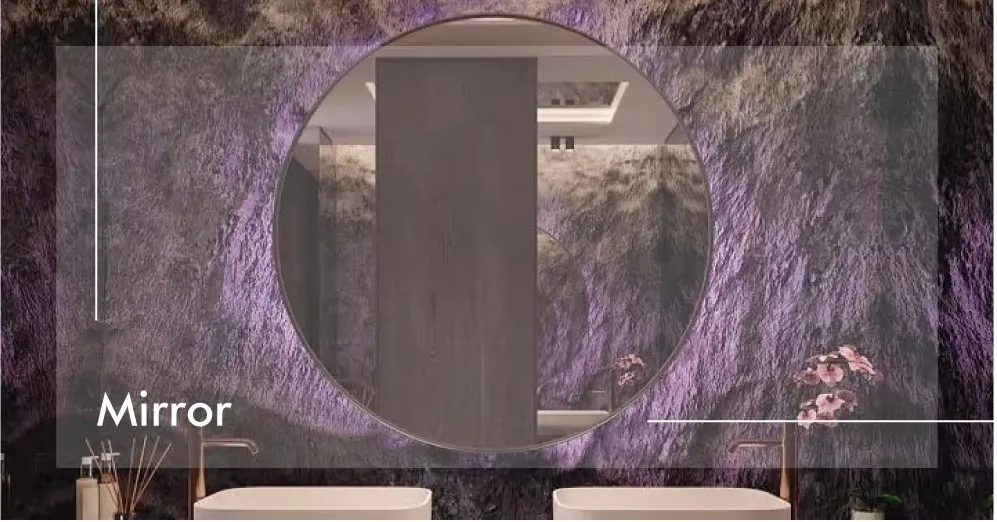
A complete guide to securely installing heavy mirrors in your home or business space - protecting your investment while keeping everyone safe
Let's start with a truth bomb: that gorgeous full-length mirror or stunning decorative wall mirror you've been eyeing isn't just a design statement—it's a potential safety hazard waiting to happen if installed improperly. We don't say this to scare you, but to highlight why doing it right matters so much.
Large mirrors add elegance, depth, and light to any space. Whether it's a bathroom mirror giving you that spa-like feel, an accent mirror in the entryway, or that dramatic floor-to-ceiling piece in your living room, they transform spaces. But here's the thing few designers mention: that beauty comes with weight and risk. A standard 60"x80" mirror can easily weigh over 100 pounds—imagine that falling on a child, pet, or your prized furniture collection.
Real Talk: Emergency rooms see thousands of mirror-related injuries annually. Most happen because people underestimate what it takes to install heavy mirrors safely. We're not just talking about scratches or chips - improperly mounted mirrors can cause serious lacerations, broken bones, and worse.
Before you even think about hanging that beautiful mirror, let's gather our tools. This isn't a time for shortcuts or improvisation. Trust me, I've seen too many "quick fixes" that ended in disaster. Here's your non-negotiable safety arsenal:
When selecting hardware, always choose options rated for at least twice your mirror's weight. This gives you a crucial safety margin. Remember that decorative moldings or trim aren't weight-bearing structures - only solid framing matters.
Pro Insight: The most overlooked tool? Extra hands! Never try to install large mirrors alone. Even professionals work with a partner. Grab a friend, promise them pizza afterwards, and turn it into a fun safety-conscious project.
Time investment: 60 minutes | Critical Step: DO NOT SKIP
1. Measure your mirror precisely - include the frame if it has one
2. Clear the installation area completely - create a safe zone
3. Locate studs using a reliable stud finder (check multiple times!)
4. Mark stud centers with painter's tape
5. Scan wall for hidden wires/pipes using a wall scanner
6. Double-check mirror hardware compatibility
Time investment: 90-120 minutes | Safety First: Wear protective gear
1. Position mirror clips at top/bottom based on mirror dimensions
2. Pre-drill pilot holes at marked locations
3. Install anchors securely (listen for that "click" of toggle bolts)
4. Securely fasten clips/brackets using appropriate screws
5. Carefully lift mirror into position with help
6. Engage top clips first, then bottom
7. Use shims for minor adjustments to ensure level positioning
Time investment: 15 minutes | Non-negotiable Step
1. Conduct a "gentle pressure test" - apply slight pressure to top corners
2. Check all fasteners with a screwdriver - re-tighten if needed
3. Verify mirror is level using two different methods (laser level and bubble level)
4. Test stability daily for first week - especially important for new construction
5. Install edge protectors if near walkways (great safety addition!)
Here's where it gets real: Not all walls are created equal. Your installation approach must adapt to different wall materials. Understanding your wall's composition isn't just helpful—it's essential for safety. Whether you're working with drywall, brick, concrete, or plaster, each presents unique challenges that we'll navigate together.
Mounting Strategy:
Must hit studs
Anchor Choice:
Toggle bolts rated for 2x mirror weight
Risk Factor:
High failure potential if not mounted properly
Mounting Strategy:
Masonry anchors required
Anchor Choice:
Heavy-duty sleeve anchors
Special Note:
Requires impact driver and carbide bits
Mounting Strategy:
Extreme caution needed
Anchor Choice:
Specialized plaster anchors
Pro Tip:
Pre-drill carefully to avoid cracking
Mounting Strategy:
Avoid grout lines
Anchor Choice:
Diamond-tip drill bits essential
Warning:
High risk of cracking if done improperly
Remember to choose wall materials wisely when designing spaces where heavy installations will be mounted.
If you have curious toddlers or energetic pets (or live in seismic zones), standard installation isn't enough. These situations demand military-grade security measures. Let's talk about adding layers of protection:
For earthquake-prone areas:
Your safety journey doesn't end once the mirror's on the wall. Regular maintenance checks are crucial for preventing accidents months or years after installation. Here's your maintenance schedule:
• Visual inspection for cracks or chips
• Verify no excessive vibration when nearby doors close
• Check that brackets show no signs of stress or bending
• Test bracket tightness with appropriate screwdriver
• Examine wall surrounding anchors for stress marks
• Confirm level status using laser level
• Clean with proper mirror-safe products only
• Have mounting system evaluated by professional
• Verify wall integrity behind mounting points
• Consider hardware replacement if signs of fatigue
• Re-apply anti-tip security features if used
Golden Rule: Never ignore minor issues - small vibrations become big problems over time. A slightly loose bracket today could mean a shattered mirror tomorrow. Always err on the side of caution.
Sometimes standard methods won't cut it. Maybe you're dealing with an unconventional space, an extra-large custom mirror, or a unique architectural feature. Here's how professionals handle tricky installations:
1. Use French cleat system with heavy-duty aluminum cleats
2. Install mounting plates directly to wall studs
3. Adhere industrial-strength mirror mastic in zigzag pattern
4. Engage cleat system with additional adhesive bond
5. Support with temporary blocking during curing period
• Mandatory structural engineer consultation
• Install steel support framework attached to ceiling joists
• Use aircraft cables in redundant safety configuration
• Incorporate vibration-dampening isolation mounts
• Regular cable tension inspections required
While DIY spirit is admirable, safety trumps pride every time. Recognize when a job requires professional expertise:
Professionals bring specialized equipment like vacuum lifters, laser alignment systems, and engineering expertise. Their insurance coverage also protects you from liability - well worth the investment for high-risk installations. Many offer free consultations - take advantage to understand the scope before deciding.
True safety extends beyond mounting hardware. Creating a mirror-safe environment involves daily habits and design choices:
• select laminated safety glass where possible
• Consider using acrylic mirrors in high-risk settings
• Position mirrors perpendicular to door swings
• Avoid placement opposite staircases
• Incorporate architectural framing into wall structure
The Last Word: Mirror safety is about mindfulness as much as mechanics. Notice vibration patterns in your home. Pay attention to temperature fluctuations that stress glass. Notice children's growing reach. Regularly reassess your safety measures. That beautiful mirror should only bring light and joy to your space, never anxiety or harm.
Recommend Products












