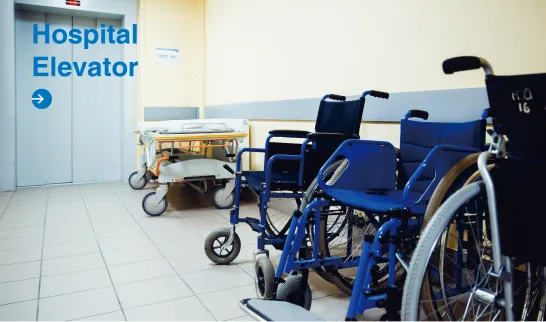
Imagine this: A critical patient needs immediate transfer to surgery, but the elevator stops mid-floor. Alarms blare, nurses scramble for alternatives, and valuable medical minutes tick away. This isn't just inconvenient—it's life-threatening. Hospital elevators aren't conveniences; they're circulatory systems pumping life through healthcare facilities. Yet many administrators treat them as afterthoughts until crisis strikes.
Healthcare environments require fail-proof vertical transportation. Poor elevator reliability leads to delayed surgeries, stressed staff, and lawsuits. That's why smart facility managers don't just fix elevators—they build prevention into their DNA through strategic selection and maintenance. Getting this right means fewer panicked "code blues" for elevator failures and more resources for patient care.
The Hidden Costs of Elevator Failures in Hospitals
Reactive maintenance might seem cheaper until you tally these hidden costs:
-
Patient safety risks:
Delayed critical care during outages can have fatal outcomes
-
Staff burnout:
Nurses transporting beds via stairs lose 45+ minutes per outage
-
Reputation damage:
78% of patient complaints stem from facility issues like elevator failures
-
Emergency repair premiums:
After-hours service calls cost 3-5x scheduled maintenance
-
Contamination hazards:
Mechanical failures can compromise sterile equipment transport
At Memorial Regional Hospital, switching from corrective to preventive strategies reduced elevator-related incident reports by 62% in one year. Their secret? Choosing high-quality equipment paired with predictive maintenance.
What "High-Quality" Really Means for Hospital Elevators
Not all elevators are created equal. Hospital-grade elevators require specific features often missing in commercial models:
Non-Negotiable Specifications
-
Medical emergency override systems:
Priority access during codes
-
Bacteriostatic surfaces:
Copper-nickel alloys that reduce pathogen transmission
-
1.5x standard weight capacity:
Accommodates ICU beds with multiple staff
-
Vibration dampening:
Protect sensitive monitoring equipment
-
Emergency power resilience:
72+ hours backup operation
-
Advanced sensor arrays:
Predictive maintenance capabilities
Investing in these
building materials for commercial projects
with healthcare-specific adaptations pays dividends. Boston General saw a 41% drop in maintenance costs after installing elevators with real-time performance analytics.
Proven Maintenance Strategies That Actually Work
Preventive vs. Predictive Showdown
|
Approach
|
Hospital Impact
|
Cost Ratio
|
Best For
|
|
Corrective (Reactive)
|
High risk, high disruption
|
$1 spent = $3 in hidden costs
|
Non-critical service elevators
|
|
Preventive Maintenance
|
70% failure reduction
|
1:1.3 ROI
|
Main patient/staff elevators
|
|
Predictive (IoT-enabled)
|
90% failure prediction
|
1:4 ROI
|
Surgical/ICU elevators
|
Total Productive Maintenance (TPM) Implementation Roadmap
-
Cross-train staff:
Nurses report unusual sounds through mobile app
-
Standardize procedures:
QR codes in cabs link to reporting protocols
-
Predictive sensors:
Monitor vibration, alignment, temperature 24/7
-
KPI dashboards:
Real-time status displays in facilities offices
-
Maintenance scheduling:
AI coordinates service during low-traffic periods
Mayo Clinic's "Elevator Health Index" combines these tactics, extending equipment life by 40% while cutting costs.
KPIs That Matter for Elevator Performance
Mean Time Between Failures (MTBF)
Health system target: >5,000 operating hours
Downtime Percentage
Keep below 0.5% - equivalent to 44 hours/year maximum
Preventive Maintenance Ratio
85% scheduled vs. 15% corrective maintenance
Cost Per Ride
Calculate: (Annual costs) ÷ (Daily trips × 365). Target <$0.15
The Financial Case for Elevator Investment
Cost Comparison: Short-Term vs. Long-Term Thinking
Installing cheaper elevators results in:
-
Year 1:
$45k savings on purchase
-
Year 3:
$120k higher maintenance costs
-
Year 7:
$400k early replacement + $85k patient transfer costs
Contrast premium elevators with predictive systems:
-
Year 1:
$75k higher purchase
-
Year 3:
$220k maintenance savings
-
Year 10:
Still operational with 60% lower MTTR
Spare Parts Optimization in Healthcare Facilities
Critical parts inventory for hospital elevators:
-
Always in stock:
Control boards, door sensors, emergency communication systems
-
Vendor-managed:
Hoist cables, counterweight assemblies
-
3D-printed on demand:
Custom gaskets, sensor mounts
Johns Hopkins saves $90k/year using AI-powered inventory prediction that accounts for:
-
Seasonal humidity impacts on components
-
Construction vibration effects during facility expansions
-
Usage patterns by department (e.g., higher oncology floor wear)
Case Study: Turning Elevator Disasters to Reliability
Metropolitan Hospital Challenge:
-
16 elevators averaging 42 failures/month
-
$560k annual repair costs
-
2 malpractice suits related to outages
Implemented Solution:
-
Replaced 4 critical units with hospital-grade models
-
Installed IoT sensors on all elevators
-
Trained facilities staff in vibration analysis
-
Created redundancy routing protocols
Results after 18 months:
-
93% failure reduction in new elevators
-
67% maintenance cost decrease
-
Zero outage-related care delays
-
17% energy savings from optimized operation
Future-Proofing Your Vertical Transportation
Emerging technologies changing hospital elevators:
Self-Diagnosing Systems
AI predicts bearing failures 200+ operating hours before occurrence using:
-
Harmonic resonance pattern recognition
-
Thermal gradient mapping
-
Electrical signature analysis
Post-COVID innovations include:
-
UV-C light cycles between transports
-
Antimicrobial copper surfaces (proven 99.2% pathogen reduction)
-
Touchless destination dispatch
Modular Designs
Hospitals like Cedars-Sinai use components enabling:
-
8-hour motor swaps instead of 3-day replacements
-
In-place upgrades without shaft access
-
Predictive maintenance for elevators is no longer luxury—it's standard of care.
Implementation Checklist: Your 90-Day Action Plan
-
Days 1-15:
Audit current elevator MTBF/downtime costs
-
Days 16-30:
Evaluate critical vs. non-critical transport routes
-
Days 31-45:
select 1-2 high-impact units for upgrade pilot
-
Days 46-75:
Install predictive monitoring systems
-
Days 76-90:
Train cross-functional response team
Remember: The best hospitals treat elevator reliability like medication safety protocols—with precision, documentation, and constant improvement. Patients might never compliment working elevators, but they'll definitely notice when they fail.