
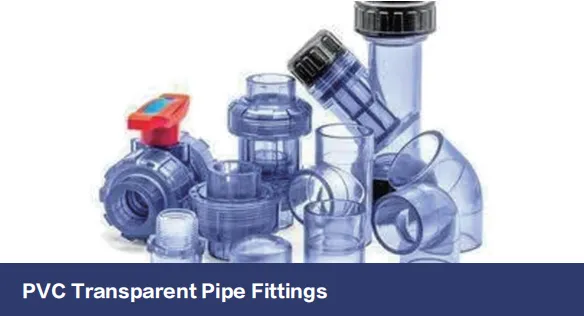
Imagine being able to see exactly what's flowing through your pipes – whether it's crystal-clear water, vibrant chemicals, or even tiny particles. That's the superpower PVC transparent pipe fittings give engineers, plumbers, and facility managers. But here's the catch: not all fluids play nice with transparent PVC. Choosing the right fittings isn't about grabbing whatever's on the shelf – it's a thoughtful dance between what's flowing and what's containing it.
Like pairing wine with food, matching pipes to fluids requires understanding how they interact. Your fluid's personality – whether it's corrosive, hot, abrasive, or volatile – determines whether your PVC transparent system will be a success story or a maintenance nightmare.
Clear PVC isn't just about looks – it's pure functionality. In pharmaceutical labs, technicians can spot contamination instantly. Food processors monitor color consistency without opening lines. Maintenance crews identify blockages visually. This visibility factor makes PVC transparent fittings invaluable for troubleshooting and quality control in critical applications.
Chemical resistance separates PVC heroes from PVC tragedies. Acetic acid? Fine. Ketone-based solvents? Disaster. Always consult chemical compatibility charts – don't guess. Weak acids, alkalis, and alcohols typically play well with PVC clear pipe fittings. But watch out for:
PVC transparent pipe fittings become flexible like noodles at 140°F (60°C) and brittle as glass below 33°F (1°C). Real-world implications:
Reality Check: Pressure ratings drop 50% when temperatures approach the upper limit. A fitting rated for 200 PSI at 70°F handles just 100 PSI at 130°F.
| Flow Characteristic | PVC Clear Pipe Impact | Solutions |
|---|---|---|
| High Pressure (>150 PSI) | Potential joint failure, cracking | Use Schedule 80 fittings; reinforce support points |
| Water Hammer | Sudden cracking at weak points | Install shock arrestors; use gradual valves |
| Abrasive Particles | Internal scratching reduces clarity | Limit velocity to 5 ft/sec; install filters |
| High-Viscosity Fluids | Increased pressure drop; clogs | Increase diameter; use gentle bends |
Sunlight turns crystal-clear PVC into a foggy mess. Chemical degradation leads to yellowing and brittleness – bad for both looks and function. Solutions:
Best for:
Ultra-clarity labs
Fluid compatibility:
Mild chemicals
Weakness:
Brittle; expensive
Best for:
High-impact zones
Fluid compatibility:
Wider chemical range
Weakness:
Scratches easily; costs 3x PVC
Best for:
Extreme chemical labs
Fluid compatibility:
Nearly universal
Weakness:
Fragile; installation hassle
Pro Tip: For caustic soda solutions above 25% concentration or temperatures exceeding 150°F, even specialty PVC fails – upgrade to glass-lined steel or PTFE systems.
Rough cuts create micro-cracks where chemicals concentrate. Always:
PVC transparent pipes telegraph every support mistake. Follow these rules:
| Pipe Size | Support Spacing | Hanger Type |
|---|---|---|
| 1/2" - 1" | 3 feet | Plastic-lined clamps |
| 1.5" - 2" | 4 feet | U-brackets with neoprene pads |
| 3" + | 5 feet | Cradle supports |
Never use metal straps without cushioning – thermal expansion causes scraping that ruins clarity.
A craft brewery used Schedule 80 PVC clear pipes visible flow fittings to monitor wort transfer. By selecting fittings with chemical resistance to caustic cleaners and maintaining 90°F maximum temperatures, they reduced contamination incidents by 80% while allowing visual QC checks.
PVC clear pipe fittings were mistakenly installed in a nitric acid vent line at a semiconductor plant. UV exposure combined with acidic condensate caused catastrophic failure within 6 months. Lesson: Never assume "clear PVC = chemical-proof" – verify with engineers.
What's next for PVC transparent pipe systems? Innovations are coming:
And for environmental compliance? Recycled PVC content now exceeds 30% in premium clear pipe fittings while maintaining clarity standards – a win for both visibility and sustainability.
As one of the most competitive pipe fittings manufacturers, companies like Coloria Group are pioneering these advancements, ensuring that clear PVC solutions remain practical in modern fluid systems.
Selecting PVC transparent pipe fittings based on fluid characteristics isn't a checkbox exercise – it's systems thinking. That beautiful visual access comes with responsibility:
The reward? Piping systems where what you see is what you get – reliable, maintainable, and transparent in every sense. Because in the world of fluid handling, visibility isn't just convenient... it's often the clearest path to success.
Recommend Products












