
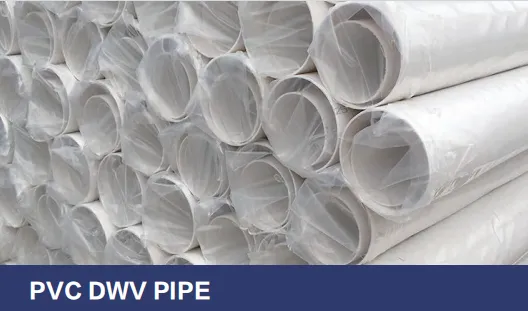
Large-scale construction projects—whether hospitals, schools, commercial complexes, or residential towers—are intricate puzzles where every component matters. Among the most critical pieces is the plumbing system, and at its core lies the Drain-Waste-Vent (DWV) network. PVC DWV pipes, known for their durability, corrosion resistance, and cost-effectiveness, are the backbone of modern plumbing. But choosing a PVC DWV pipe supplier isn't just about ordering products; it's about building a partnership that ensures reliability, compliance, and seamless project execution. In this guide, we'll walk through the ins and outs of forging such a partnership, from understanding your project's unique needs to evaluating suppliers, managing logistics, and future-proofing your collaboration.
Before diving into supplier partnerships, let's clarify why PVC DWV pipes are non-negotiable for large projects. DWV systems are responsible for removing wastewater, venting sewer gases, and preventing pressure buildup in plumbing lines. In high-occupancy spaces like hospitals or schools, a faulty DWV system can lead to backups, health hazards, or costly downtime. PVC (Polyvinyl Chloride) DWV pipes are preferred here for several reasons: they resist chemical corrosion from cleaning agents (critical in hospitals), have smooth interiors to reduce clogs, and meet strict fire safety standards—qualities that align with the demands of "class a fireproof cpl inorganic board for hospital and school supplier" solutions, where safety is paramount.
But not all PVC DWV pipes are created equal. Projects may require different diameters, wall thicknesses, or custom lengths to fit unique layouts. For example, a commercial kitchen in a shopping mall might need larger-diameter pipes to handle high-volume waste, while a school bathroom renovation could prioritize space-saving, flexible designs. This variability is where a reputable "PVC DWV pipe supplier" steps in—not just as a vendor, but as a problem-solver offering tailored "PVC DWV pipe solutions" that align with your project's specs.
In large-scale projects, delays or subpar materials can derail timelines and inflate costs. A 2023 industry report found that 68% of construction delays stem from supply chain issues, with 42% linked to poor supplier communication. This is why viewing your PVC DWV pipe supplier as a partner—rather than a transactional vendor—is game-changing. A strong partnership ensures:
Now that we've established the "why," let's focus on the "how" of choosing a supplier. Not all suppliers have the bandwidth or expertise to support large-scale projects. Below are critical factors to assess, followed by a comparison table to streamline your evaluation.
Pro Tip: Look for suppliers that operate as a "one-stop architectural solution provider." These companies don't just sell PVC DWV pipes—they offer complementary products like "sanitary fixtures/bathrooms supplier" items, flooring solutions, or even wall panels. This integration reduces coordination efforts, as you'll work with a single point of contact for multiple materials.
Certifications are non-negotiable. For PVC DWV pipes, key standards include ASTM D2665 (U.S.), BS EN 1451 (Europe), or SASO 1645 (Saudi Arabia, if your project is in the region). A supplier should readily provide certificates from accredited bodies (e.g., ISO 9001 for quality management) and test reports for burst pressure, impact resistance, and fire rating. For projects in hospitals or schools, ensure their pipes meet local health codes—aligning with the same rigor as "class a fireproof cpl inorganic board for hospital and school supplier" certifications.
Large projects demand large volumes. Ask suppliers about their production capacity (e.g., tons of PVC resin processed monthly) and lead times for custom orders. A supplier with multiple manufacturing facilities or backup production lines is less likely to face delays due to machinery breakdowns or raw material shortages. For example, if your project requires 5,000 meters of 6-inch PVC DWV pipe within 8 weeks, a supplier with a 10,000-meter monthly capacity can deliver without cutting corners.
Off-the-shelf pipes may not fit unique project needs. Does the supplier offer custom lengths, colored pipes (for easy system identification), or specialty fittings like offset bends for tight spaces? Equally important is technical support: can their engineers collaborate with your team to design DWV layouts, or provide training for installers on proper jointing techniques? A supplier that offers "PVC DWV pipe solutions" rather than just products will add value here.
Large-scale projects often have strict delivery windows. A supplier with a dedicated logistics team can coordinate just-in-time (JIT) deliveries, reducing on-site storage costs and the risk of material damage. Ask about their track record in delivering to remote or high-security sites (e.g., hospital construction zones with restricted access). Do they use GPS-tracked vehicles? Can they handle bulk shipments via sea, rail, or road, depending on your project's location?
Even the best materials can face issues post-installation. A partner should stand behind their products with a clear warranty (e.g., 10-year coverage for manufacturing defects) and responsive after-sales support. This includes on-site inspections if leaks occur, replacement of faulty products, or troubleshooting assistance. Avoid suppliers that vanish once the invoice is paid—look for those that assign a dedicated account manager to your project for ongoing communication.
| Factor | What to Ask | Red Flag | Ideal Response |
|---|---|---|---|
| Certifications | "Can you provide ASTM D2665 and ISO 9001 certificates?" | "We don't have those on hand—we can get them later." | Certificates are emailed within 24 hours, with test reports from a third-party lab. |
| Production Capacity | "What's your maximum monthly output for 4-inch PVC DWV pipes?" | "We can produce 1,000 meters, but it might take 12 weeks." | "We can deliver 5,000 meters in 6 weeks, with a backup facility if needed." |
| Customization | "Can you produce 12-meter lengths instead of the standard 6 meters?" | "We only sell standard sizes." | "Yes, with a 2-week lead time and no extra cost for bulk orders." |
| Logistics | "Can you deliver to our site in Riyadh, Saudi Arabia, within 48 hours of order?" | "We ship via third-party carriers—delivery times vary." | "We have a local warehouse in Riyadh with 24/7 delivery teams for urgent orders." |
| After-Sales | "What's your process for handling warranty claims?" | "Warranty claims take 6–8 weeks to process." | "We assign a claims specialist who visits the site within 48 hours of notification." |
To illustrate the impact of a strong supplier partnership, let's look at a real-world example. In 2024, a leading construction firm in Riyadh undertook a $120M renovation of King Faisal Hospital, aiming to upgrade patient rooms, operating theaters, and plumbing systems. The project required 8,000 meters of PVC DWV pipe, along with "sanitary fixtures/bathrooms supplier" products and "class a fireproof cpl inorganic board for hospital and school supplier" solutions for wall panels.
The firm initially considered three suppliers: a local vendor with low prices but limited certifications, a national distributor with strong logistics but no customization, and a "one-stop architectural solution provider" that offered PVC DWV pipes, fireproof boards, and sanitary fixtures. They chose the latter for several reasons: the supplier provided ASTM D2665-certified pipes with a 15-year warranty, collaborated with the hospital's engineering team to design noise-reducing DWV layouts (critical for patient recovery areas), and coordinated JIT deliveries to avoid disrupting hospital operations. When a batch of pipes arrived with minor cosmetic defects, the supplier replaced them within 24 hours—no questions asked. The project was completed 2 weeks ahead of schedule, with the DWV system passing all inspections on the first try.
This case highlights a key point: the best suppliers don't just fill orders—they become an extension of your team, invested in your project's success.
Once you've selected a supplier, the work of maintaining the partnership begins. Here's how to keep the collaboration strong:
Set up regular check-ins (weekly or biweekly) with your supplier's account manager and technical team. Use shared project management tools (e.g., Trello, Asana) to track orders, delivery schedules, and issues. For critical updates (e.g., a delay in raw materials), agree on escalation protocols—who to contact, and by when. Transparency is key: if your project timeline shifts, communicate this early so the supplier can adjust production or logistics.
A watertight contract protects both parties. Include clauses for: delivery deadlines and penalties for delays; quality standards and inspection procedures; payment terms (e.g., 30% upfront, 50% on delivery, 20% post-acceptance); and liability for defective products. For custom orders, specify tolerances (e.g., ±2mm for pipe length) and approval processes for samples. If the supplier is a "one-stop architectural solution provider," outline which products are included and how changes to the scope will be handled.
Even the most reliable suppliers face disruptions—raw material shortages, natural disasters, or labor strikes. Work with your supplier to create a contingency plan: identify backup suppliers for critical components, agree on minimum safety stock levels, or negotiate flexible delivery windows for non-urgent orders. For example, if your project requires "PVC DWV pipe solutions" and the primary supplier's factory is down, a backup with compatible products can step in to avoid delays.
No partnership is without hurdles. Here are common challenges and solutions:
The construction industry is evolving, and your supplier partnership should evolve with it. Stay ahead by discussing these trends with your supplier:
Partnering with a PVC DWV pipe supplier for large-scale projects is about more than transactions—it's about trust, collaboration, and shared success. By prioritizing certifications, production capacity, technical support, and communication, you'll find a supplier that doesn't just meet your needs but anticipates them. Whether you're building a hospital, school, or commercial complex, this partnership will be the foundation of a plumbing system that's safe, efficient, and built to last. And as the industry evolves, a strong supplier relationship will ensure you're always at the forefront of innovation, with access to the latest "PVC DWV pipe solutions" and beyond.
So, take the time to vet potential suppliers, ask tough questions, and invest in communication. The result? A project that stays on track, within budget, and ready to stand the test of time.
Recommend Products












