


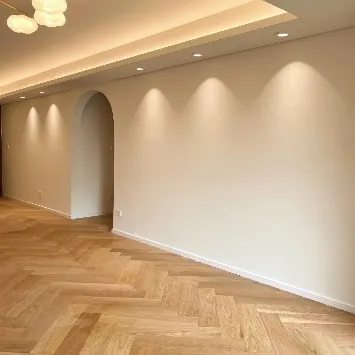
Ever stood in a lighting aisle feeling utterly lost? You're not alone. LED terminology sounds like technical gibberish to most people—beam angle this, lumens that, Kelvin something-or-other. But here's the secret: these aren't just specs on a box. They're your toolkit for transforming a room from "meh" to magnificent.
Whether you're lighting a cozy reading nook or designing architectural lighting solutions for a commercial space, understanding these three parameters changes everything. We'll break them down like we're chatting over coffee—no jargon, just practical wisdom you can use immediately.
I. Beam Angle: The Spotlight Maestro
What Beam Angle Really Means
Picture a flashlight beam. A tight beam creates a focused circle of light—that's a narrow beam angle. Now imagine unscrewing the flashlight head so the light floods everywhere—that's a wide beam angle. Measured in degrees (°), this controls how light spreads in your space.
Real talk: Choosing beam angle isn't about numbers—it's about storytelling. A narrow beam (15-30°) whispers "look at this beautiful vase." A wide beam (45-120°) announces "this whole dining area is bathed in welcoming light."
The Goldilocks Principle: Matching Angle to Purpose
• Narrow (15-30°): Your drama creator. Perfect for highlighting artwork, sculptures, or that vintage wine cabinet you're proud of. Creates intimate pools of light.
• Medium (30-45°): The versatile middle child. Kitchen countertops, bathroom vanities—where tasks meet ambiance. Lights surfaces without blinding you.
• Wide (45-120°): The social butterfly. General room lighting, hallways, retail spaces. Eliminates dark corners and creates an inviting atmosphere.
Pro Move: Layer angles in the same room! Use narrow beams to spotlight architectural details, medium for seating areas, wide for overall illumination. Depth and dimension? Achieved.
II. Lumens: The Brightness Truth-Teller
Lumens vs. Watts: The Great Deception
For decades, we shopped for bulbs by watts (W)—a measure of energy consumption, not brightness. LED revolution changed everything. Lumens (lm) measure actual light output. That "60W equivalent" label? Roughly 800lm. But here's why you should care:
A 10W LED can output more light (800+ lm) than a 60W incandescent while using 85% less energy. Your wallet and planet thank you.
Lumen Cheat Sheet for Real Spaces
• Intimate dining: 300-500 lm/m² (soft ambiance)
• Home office: 500-750 lm/m² (prevents eye strain)
• Art studio/garage: 750-1000 lm/m² (high-detail tasks)
Key insight: Brighter isn't always better. Over-lit rooms feel sterile. Use dimmers to adapt lumens to mood and time of day—a game-changer for residential lighting.
Color Temperature's Secret Influence
Here's what manufacturers don't tell you: lumens feel different based on color temperature. 800lm at 2700K (warm white) feels softer than 800lm at 5000K (cool daylight). Why? Cooler light appears brighter to human eyes.
Practical trick: If a room feels dim despite "enough" lumens, try increasing color temperature slightly before adding more fixtures. Often solves the problem instantly.
III. Color Temperature: Your Mood Conductor
| Kelvin Range | Light Character | Best Applications | Psychological Effect |
|---|---|---|---|
| 2700K - 3000K | Warm White | Living rooms, bedrooms, restaurants | Cozy, relaxing, intimate |
| 3500K - 4000K | Neutral White | Kitchens, offices, bathrooms | Balanced, alert, natural |
| 5000K+ | Cool Daylight | Garages, hospitals, retail displays | Energetic, focused, clinical |
Temperature Blending Secret: Stick to ±500K within a room to avoid visual chaos. But between rooms? Transition intentionally. Example: 2700K in living areas → 3000K in kitchen → 4000K in home office. This creates a natural "light journey."
IV. Advanced Synergy: When Parameters Collide
The Gallery Wall Formula
Spotlighting art? Combine narrow beam (25°) + medium brightness (500lm) + high CRI (>90). Why? Narrow beam focuses attention, moderate lumens prevent glare on frames, high color rendering makes pigments pop.
Bonus: Use 2700K-3000K for oil paintings (enhances warmth), 3500K-4000K for photography (truer neutrals).
Retail Magic Equation
Product displays thrive on contrast: wide-beam ambient (120°/300lm/3000K) + accent narrow spots (24°/700lm/4000K). Customers subconsciously follow these light "breadcrumbs" to featured items. Conversion rates love this trick.
V. Future-Proofing Your Choices
Beyond the Big Three: Emerging Smart Parameters
1.
TM-30 Metrics:
The new CRI. Measures color fidelity (Rf) AND saturation (Rg). Values >85 = exceptional color truth.
2.
Flicker Percentage:
<1% prevents eye strain and migraines—critical for offices.
3.
Beam Uniformity:
"Flat" beams avoid hot spots—look for U0 < 0.5 specification.
Insider Tip: Dimmability isn't just a switch—it's compatibility. Ensure drivers work with your system (0-10V, DALI, Triac). True architectural lighting solutions integrate this flawlessly.
VI. 5 Fixes for Common Lighting Fails
Problem: "My kitchen feels like an interrogation room."
Diagnosis:
Overlapping narrow beams + excessive blue-light lumens
Fix:
replace 40° spots with 60° floodlights at 3500K. Add dimmers to reduce intensity during evenings.
Problem: "Artwork looks flat/uninteresting."
Diagnosis:
Broad wash lighting instead of targeted accent
Fix:
Install 24° adjustable spotlights at 2700K (for warm art) or 3500K (cool palettes), 700lm, minimum 90 CRI.
Golden Rule Reset: When lighting fails, check beam angle first (is light landing right?), then color temperature (does mood feel off?), finally lumens (is it simply too bright/dim?). Sequence matters.
VII. Your Lighting Recipe Book
| Space Type | Beam Angle | Lumens (per fixture) | Color Temp |
|---|---|---|---|
| Bedroom Ambient | 90°+ | 400-600lm | 2700K |
| Home Office Task | 40° | 600-800lm | 3500K-4000K |
| Jewelry Display | 15°-24° | 900lm | 4500K |
| Restaurant Table | 30° | 500lm | 2700K |
Final Wisdom: Light Is Emotional Architecture
These numbers on boxes? They're not cold technical specs. They're the emotional blueprint for spaces where people connect. A narrow beam at 3000K across a dining table makes conversations feel warmer. The precise 4000K spotlight in a gallery creates awe.
So next time you choose LEDs, think beyond illumination. With beam angle, lumens, and color temperature as your allies, you're not just installing lights—you're curating experiences. And that? That's how ordinary spaces become unforgettable.










