
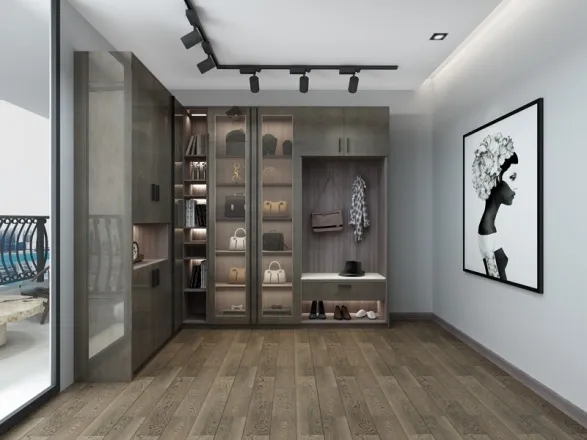
Sourcing a shoe cabinet supplier in China for custom orders can feel overwhelming, especially if you are new to international procurement. With thousands of factories spread across manufacturing hubs like Foshan, Guangzhou, and Dongguan, finding the right partner requires a clear strategy. This guide walks you through the key steps to identify, evaluate, and work with a shoe cabinet manufacturer that can deliver precisely what your project needs — from material selection to tailored dimensions and finishes.
China remains the world's largest furniture exporter, and for good reason. The country's well-established supply chain for wood, engineered panels, hardware, and finishing materials means manufacturers can produce at scale without sacrificing quality. For custom shoe cabinets, Chinese factories offer flexibility that many domestic manufacturers cannot match — whether you need a specific wood species, a unique stain color, or a non-standard cabinet depth to fit a narrow hallway.
Foshan, in particular, stands out as a major furniture production center. The city is home to thousands of factories specializing in everything from solid wood cabinetry to modern panel-based designs. A shoe cabinet solutions provider based in Foshan benefits from direct access to raw material markets, skilled labor, and efficient logistics through nearby ports like Guangzhou and Shenzhen. This translates into shorter lead times and more competitive pricing for buyers.
Before reaching out to any supplier, prepare a detailed specification sheet. This document should include the cabinet's overall dimensions (height, width, depth), the number of shelves or compartments, preferred materials (solid wood, MDF, plywood, or a combination), door style (swing, sliding, or flip-up), finish type, and hardware preferences such as handle style and soft-close hinges. If you have reference images or sketches, include them — they help bridge language barriers and reduce misinterpretation.
Also specify your target quantity. Some factories set a minimum order quantity (MOQ) that may be higher than what you need, while others are willing to negotiate on smaller trial runs. Being upfront about your volume expectations saves time for both parties.
Online B2B platforms like Alibaba and Made-in-China.com are common starting points, but they are not the only options. Trade shows such as the Canton Fair and the CIFF (China International Furniture Fair) in Guangzhou offer face-to-face opportunities to inspect products and build relationships. Industry directories, LinkedIn searches, and referrals from other importers can also lead to reliable manufacturers that may not have a strong online presence.
When evaluating potential suppliers, look beyond their product listings. Check how long they have been in business, whether they hold relevant certifications (such as ISO 9001 for quality management), and if they have experience exporting to your target market. A supplier with a track record of shipping to your region will already understand the applicable packaging standards, labeling requirements, and import regulations.
Send your spec sheet to at least three to five manufacturers and request formal quotations. A proper quote should break down the unit price, tooling or mold fees if applicable, packaging costs, and estimated shipping charges. Be cautious of quotes that are significantly lower than the average — they may indicate lower-grade materials, rushed assembly, or hidden costs that appear later.
Pay attention to how each supplier communicates. A manufacturer that asks clarifying questions about your design is likely more detail-oriented than one that simply sends a price. Responsiveness and professionalism during the quoting stage often reflect how they will handle your order once production begins.
Never skip the sampling stage. A well-produced sample tells you more about a factory's capabilities than any catalog photo or video call. Examine the joinery, the smoothness of drawer slides, the consistency of the finish, and the overall sturdiness. If possible, have the sample shipped to your location so you can assess how it holds up during transit — this also gives you a preview of the packaging quality.
Keep the approved sample as a reference standard. If a future shipment arrives with noticeable deviations in color, material thickness, or assembly quality, you can point to the control sample as the agreed benchmark. This practice is standard in the furniture industry and is respected by reputable manufacturers.
Working with a single factory for shoe cabinets is one approach, but working with a customized furnitures supplier that also handles other product categories can simplify your entire procurement process. If your project involves more than just shoe cabinets — for instance, kitchen cabinets, wardrobes, TV cabinets, or bathroom vanities — a one-stop provider can consolidate production, reduce coordination overhead, and often secure better shipping rates through consolidated container loading.
COLORIA GROUP, headquartered in Foshan, offers exactly this kind of integrated approach. As a one-stop building materials and furniture supplier, the company covers customized furniture alongside walls, flooring, sanitary ware, doors and windows, lighting, and more. For buyers sourcing multiple categories for residential or commercial projects, this eliminates the need to manage separate factories, timelines, and quality standards across different vendors.
Before finalizing your decision, make sure you have clear answers to these questions:
Even with a trusted supplier, third-party inspection is a worthwhile investment. Agencies like SGS, Bureau Veritas, and TÜV Rheinland can conduct in-process and pre-shipment inspections on your behalf. They check for dimensional accuracy, structural integrity, surface finish consistency, and packaging adequacy. A detailed inspection report gives you confidence before the container leaves the factory.
Discuss the defect policy with your supplier before placing the order. Clarify who bears the cost of replacement units, who covers return shipping if needed, and what constitutes an acceptable defect rate. Putting these terms in writing protects both parties and sets clear expectations.
Finding a shoe cabinet supplier in China for custom orders is a process that rewards patience and thoroughness. By defining your specifications upfront, searching through multiple channels, comparing quotes carefully, and insisting on samples, you significantly reduce the risk of receiving products that do not meet your expectations. Choosing a supplier that offers broader customization capabilities — such as a full-service provider like COLORIA GROUP — can further streamline your sourcing, especially when your project spans multiple furniture or building material categories. With the right partner, custom shoe cabinets sourced from China can deliver excellent value, quality, and design flexibility for your business.
Recommend Products












