
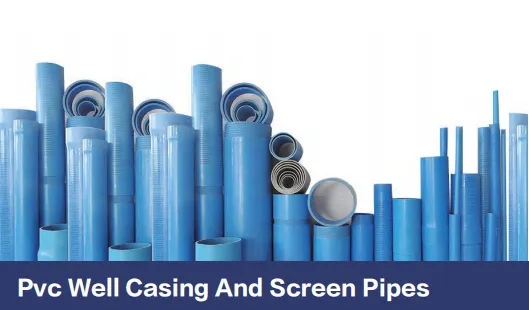
A water well is a long-term investment. The casing and screen you install today will sit underground for decades, quietly deciding how clean your water is, how much it yields, and how often you have to pull the pump for repairs. That is why the choice of a pvc well casing and screen pipes supplier deserves more than a quick price comparison. Get it right, and the well serves you for a lifetime. Get it wrong, and you are looking at sand infiltration, collapsed walls, and costly re-drilling.
This guide walks you through what actually matters when evaluating suppliers for drilling projects, from the technical details of the pipe itself to the less obvious signs of a manufacturer you can trust.
Before looking at suppliers, it helps to understand why PVC (more precisely uPVC) has become the default material for well casing and screen in most shallow and medium-depth wells. Compared with traditional steel or concrete, PVC well casing and screen pipes offer a combination of properties that matter on a drilling site:
These advantages are exactly why contractors and drilling companies keep returning to PVC for domestic wells, irrigation systems, and industrial boreholes.
A reliable supplier will be able to talk about specifications in concrete numbers, not vague promises. When you evaluate casing and screen pipes, ask about these points:
The pipe should be made from unplasticized PVC (uPVC), which keeps its rigidity and pressure resistance underground. Ask what stabilizer system is used, especially if the well supplies drinking water, and whether the material meets the relevant sanitary standards of your country.
Casing and screen are available in a wide range of outside diameters, from small domestic sizes up to large-diameter boreholes. Wall thickness and working pressure must match the depth of your well and the hydrostatic pressure it will face. A supplier that publishes clear dimension and pressure tables for each size is usually one that controls its production tightly.
The screen section is what lets water in while holding back sand and gravel. Slot width, slot pattern, and open area all affect how much water the well can deliver and how well it filters. The right slot size depends on the grain size of the aquifer, so a good supplier should be willing to discuss slot options rather than pushing a single standard product.
Threaded connections are the most common for well casing because they are fast to assemble and create a secure, watertight joint. Check whether threads are precision-machined and whether the supplier offers the matching couplings, reducers, and end caps you will need on site.
Certifications are the fastest way to separate a serious manufacturer from a trader. Depending on your market, look for evidence of quality management systems such as ISO 9001, product compliance marks for the regions you export to, and testing reports from independent laboratories. For drinking-water applications, check that the pipe meets the sanitary standards required in your country. A supplier that can produce certificates and test reports on request is far more likely to deliver consistent quality than one that only has photos.
Beyond the product itself, the way a supplier operates tells you a lot about how your project will go. Here are the practical checks that experienced drilling contractors use:
Some warning signs should end the conversation immediately. Be cautious of a supplier who cannot provide specifications in writing, refuses to send samples, has no verifiable factory or certifications, quotes prices far below the market for no clear reason, or cannot explain the difference between casing and screen. If a supplier is vague about the product, they will be vague about delivery and after-sales service too.
COLORIA GROUP is a one-stop building materials supplier based in Foshan, China, with years of experience serving residential, commercial, and infrastructure projects around the world. Within its pipes and fittings line, the company supplies pvc well casing and screen pipes solutions designed for drilling projects, alongside a full range of uPVC, PPR, PEX, and CPVC piping systems and fittings.
What makes COLORIA GROUP different is the breadth of its catalog. Instead of coordinating with several vendors for casing, fittings, valves, and the rest of the project, you can source them together, which simplifies logistics and keeps specifications consistent across the whole build. The company also maintains an overseas agent in Saudi Arabia, a sign of its commitment to supporting international clients on the ground. Whether you are equipping a single domestic well or planning a larger drilling program, the team can discuss sizing, slot options, and delivery terms directly.
Finding a reliable PVC well casing and screen pipes supplier comes down to three things: understanding the technical details of the product, verifying the supplier's manufacturing and quality credentials, and working with a partner who communicates clearly from the first inquiry. Take the time to ask the right questions, request samples, and check certifications. The effort you invest before ordering is nothing compared with the cost of a well that fails after installation.
If you are planning a drilling project and want to compare specifications and pricing, contact COLORIA GROUP through the website. Their team can help you select the right casing and screen for your well depth and aquifer conditions, and support you from quotation to delivery.
Recommend Products












