


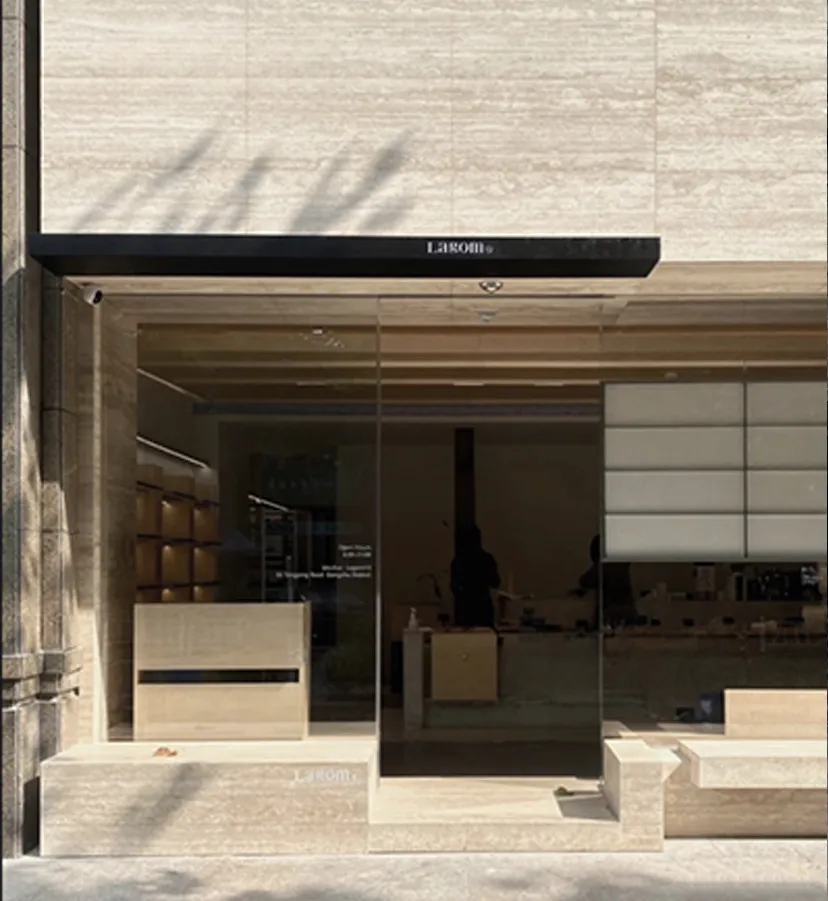
A large hotel is not a single job. It is a chain of hundreds of decisions running from the lobby floor to the last guest bathroom, and stone sits at the very start of that chain. When you are choosing a travertine supplier for a project of this scale, the unit price on a quotation tells you only a fraction of what you actually need to know. The real questions are about capacity, consistency, documentation and support under pressure. This article walks through the criteria that separate a dependable partner from a one-off vendor.
Why supplier evaluation matters more for hotels than for small orders
Natural stone varies naturally, so shade ranges from slab to slab and tile to tile. In a small renovation that variation is easy to absorb. In a hotel the same material covers lobbies, corridors, reception counters, stair treads and dozens of en-suite bathrooms. If two batches do not match, the mismatch shows up in the most visible spaces of the building and becomes expensive to fix once installed. The supplier you choose therefore needs a formal process for keeping appearance and dimension consistent across a large order, not a promise that the stone will simply look right.
There is also an operational side. A hotel opens on a fixed date with rooms that must be finished in sequence. Delays in one material cascade into furniture fitting, mechanical works and handover. Evaluating a supplier is effectively a risk-management exercise: can this organization hold its promise on quality, timing and documentation across a multi-phase delivery?
Confirm real manufacturing capacity, not just a trading desk
The first distinction to draw is between a direct producer and an intermediary. A factory-linked exporter can normally answer precise questions about raw block availability, finish options, custom sizes and lead times because those decisions sit inside its own process. A trading company relays the answer from someone else, which adds a layer of uncertainty when your order mixes tiles, slabs, mosaics and cut-to-size pieces.
Capacity matters as much as sourcing. Ask directly whether production can scale if the project grows, or whether the order will be subcontracted to a third party whose standards you cannot verify. A building material supplier with broad category coverage and stable production is better positioned to absorb a phased hotel order without a drop in quality.
Check quality control and batch consistency in detail
The quality-control conversation should be specific, not general. Ask what inspections happen before dispatch: incoming block inspection, dimensional checks for thickness and edge squareness, and a final surface check before packing. Dimensionally consistent stone is essential for a hotel because even small deviations translate into fitting problems across hundreds of identical wall and floor areas.
Batch matching deserves its own question. Request current lot photos and a sample tied to the exact material you will order, and ask how slabs that fall outside acceptable variation are flagged and separated. A supplier able to walk you through its inspection stages step by step is running a repeatable system; one that answers only with "we check quality" is likely relying on informal judgment.
Define the material before comparing prices
"Travertine" is too broad for a reliable comparison. Before requesting pricing, lock the specification in operational terms: vein cut or cross cut, filled or unfilled surfaces, and finishes such as honed, brushed, tumbled or polished. For hotel bathrooms and spa areas, slip resistance and finish type become priorities; for lobbies and facades, visual consistency and refined edges carry more weight.
A precise specification lets you benchmark several suppliers on the same basis instead of comparing a vague low number that turns into revisions later. It also helps the production team plan layouts, numbering and cut-to-size accuracy so the installers receive pieces that fit and match.
Look beyond the stone for a coordinated hotel package
A hotel procurement team rarely buys only stone. The same building needs flooring and wall finishes, bathroom sanitary ware, custom furniture, lighting and appliances, all working together visually and logistically. Coordinating a dozen separate vendors multiplies the risk of mismatches in tone, timing and specification.
This is where a one-stop covering of travertine, flooring, walls, decorative profiles, sanitary fixtures and hospitality lighting becomes valuable. A supplier that controls a unified range can match the stone's tones with the surrounding materials, consolidate container loading across categories, and reduce the number of coordination points on your side. That integration is often worth more than a marginal saving on one line item.
Assess packaging, logistics and phased delivery
Stone is durable in service but fragile in transit, especially on long sea routes to a busy jobsite. Ask about crate design, edge protection, and how slabs are separated to prevent surface-to-surface contact and chipping. Ask what documents accompany the shipment for customs clearance, because delays at customs are a common and avoidable cause of installation slippage.
For a large hotel, delivery sequencing is as important as total volume. Rooms are fitted in phases, so the ability to schedule arrivals so that material reaches the site when each zone is ready keeps the opening date intact. Ask how the supplier plans container loading and whether it can mix products in one shipment without creating counting or breakage errors.
Confirm documentation, certifications and inspections
Commercial and infrastructure work carries stricter documentation demands than residential work. Request technical specifications, test reports and compliance documents relevant to the project's jurisdiction and to the application, whether flooring, cladding or bathroom surfaces. Verify independently which certifications your market actually requires rather than relying on a supplier's claims at face value.
Where the order is large enough, a factory visit, video walkthrough or third-party inspection report reduces the guesswork. Photos and catalogs reveal the catalogue, not the discipline of a production line. A supplier that welcomes a closer look is usually more confident in its process.
A short set of questions to ask every candidate
- How do you maintain batch consistency across an order of this size?
- What inspections happen before the stone leaves the factory?
- How are damaged or out-of-spec slabs handled once identified?
- What technical documentation can you provide for a commercial project?
- How do you manage multi-phase delivery against a fixed opening date?
- Can you coordinate the stone with surrounding materials and finishes?
The value of these questions is not only in the answers, but in how specifically and confidently they are answered. Vague responses from one candidate often reveal more than polished answers from another. Asking two or three suppliers the same questions will usually bring out gaps a single conversation would miss.
Common mistakes in sourcing for a hotel build
- Choosing only on price, ignoring packaging, replacement lead times and QC depth.
- Ignoring production capacity until the supplier is forced to subcontract.
- Comparing only FOB price instead of the full landed cost including freight, duty and breakage risk.
- Skipping factory quality verification and relying on catalogue claims.
- Overlooking how material will reach the project site and whether phases can be sequenced.
Building for repeatability, not one shipment
A hotel relationship should be built to last beyond the first container. Document the approved specification, keep production records organized, and clarify how repeat orders will be handled if raw material or size mix changes. Strong suppliers structure the process from inquiry and sampling through production approval, loading and delivery, which keeps the experience predictable across every phase of a multi-year project.
Conclusion
Selecting a travertine supplier for a large-scale hotel is a strategic decision, not a purchasing transaction. The material matters, but the organization behind it matters more: its production capacity, quality-control discipline, logistics planning, documentation and willingness to coordinate a broader hotel package. The right partner keeps a complex build on schedule and on budget, and the right questions, asked early and answered specifically, are the clearest evidence of whether that partner is a vendor or an extension of your project team.










