
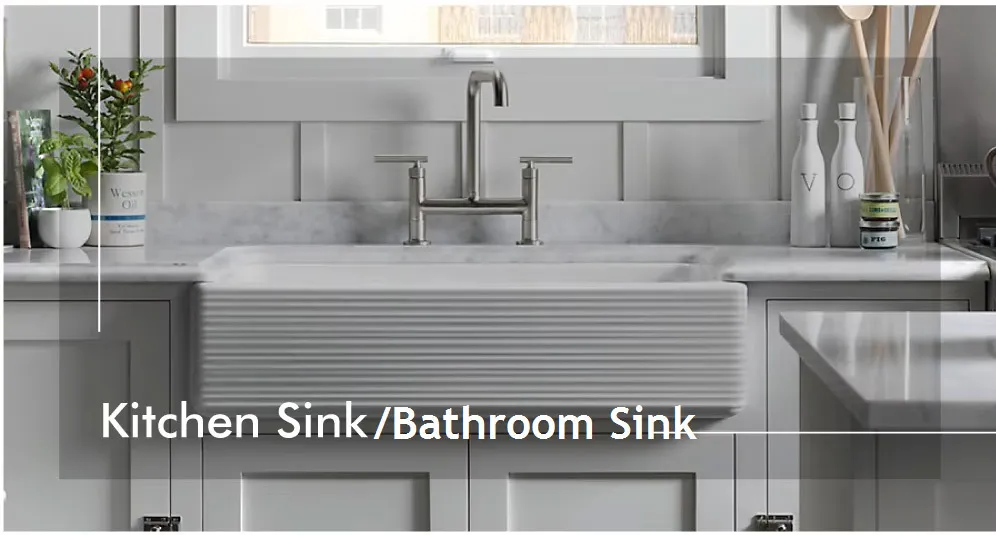
For importers, distributors, contractors, and kitchen cabinet makers, choosing a kitchen sink/bathroom sink supplier is rarely a decision you get to make twice in a season. A sink is delivered, installed, and lived with for years. If the material is too thin, the finish chips, or the drain holes do not line up with the faucet, the problem comes back to whoever placed the order. That is why quality assessment has to happen before the purchase order, not after the container arrives. A few practical checks, done at the right stage, tell you far more about a supplier than a price list ever will.
A sink is a functional plumbing item, not a decorative curiosity. It is exposed to water every day, hit by falling cookware and glassware in the kitchen, and loaded with cleaning chemicals in the bathroom. If the supplier cannot state the material grade, keep the finish consistent across a batch, and pack the item so it survives transit, the buyer absorbs that risk. Weak sourcing shows up later as returns, customer complaints, and repeated fixing of the same problem. A supplier that can prove quality at the source removes that burden before it begins.
The value of a one-stop supplier is also practical here. When a single partner supplies the sink, the matching vanity, the faucet, and the drainage fittings together, compatibility is settled at the factory instead of being worked out at the job site. For building-materials buyers juggling a full project list, this coordination matters as much as the price on a single SKU.
Different sinks use different base materials, and the grade decides most of the quality story. Kitchen and bathroom sinks are most often either stainless steel, ceramic, granite composite, or a solid-surface material. Each has a meaningful quality question attached to it.
For stainless steel sinks, the grade is the first thing to confirm. SUS304, sometimes described as 18/10 because of its chromium and nickel content, resists corrosion and handles daily kitchen use well. Lower grades such as 201 save money but are easier to mark, pit, and discolor, and they suit a different, cost-driven market. A supplier that cannot or will not state the grade it uses should be treated with caution, since the grade is one of the cheapest things to document and one of the easiest to swap for a cheaper substitute in production.
Ceramic sinks are evaluated differently. Dense, well-fired glaze resists staining and cracking; a low-quality ceramic body can be porous and prone to hairline cracks over time. Ask the supplier how the body is fired and whether they can share glaze and absorption data. Granite composite and solid-surface sinks are judged by the resin content and the consistency of the mix, which affect resistance to heat, impact, and everyday scratches. Regardless of material, the supplier should be able to name the grade or class without hesitation.
Thickness is where a lot of corners get cut. In stainless steel sinks it is commonly expressed as a gauge; a thicker sheet is stiffer, quieter, and less likely to flex or deform, while an overly thin sheet picks up dents and rings when used. Ask for the panel thickness and the actual bowl thickness, and check whether the stated number matches the delivered product rather than just the sample. In ceramic, thickness matters less than the density of the body; but the rim should feel substantial and the edges should be even. In composite and solid-surface products, look at the corner radius and the wall uniformity, both of which are hard to get right with shortcuts.
It is also worth confirming the construction detail that buyers most often forget: the sound-deadening pads and the drain placement. Well-made stainless steel sinks carry damping undercoats that cut noise, and the drain hole should sit exactly where the outlet system needs it. In a bathroom vanity sink, the overflow position and the tap hole arrangement determine whether the piece actually works once installed. A supplier that can walk you through these details is usually operating with real engineering behind the catalog.
The finish is the part of a sink customers actually see, so consistency matters as much as appearance. A brushed stainless bowl should show an even grain with no visible swirls or patchiness. A ceramic surface should be uniform in color with a clean glaze and no bubbles or orange-peel texture. Colored and PVD finishes need uniform application, because a color that differs subtly from one batch to the next is a genuine problem for projects that install hundreds of units in one building.
When assessing a supplier, check how they control batch-to-batch variation. Samples are useful, but the real test is whether the production run matches them. A serious supplier documents the finish and texture, keeps color records, and is willing to show you how a just-finished production batch compares with the sample you approved. Vague answers about this point are a warning sign.
Even a high-quality sink is close to useless if it does not fit the space. Before committing, confirm the overall length and width, the bowl dimensions and depth, and the installation type: top-mount, which sits on the countertop, or under-mount, which is fitted beneath it. For bathroom sinks, the decision between a countertop basin and an integrated vanity matters, because installation compatibility affects the surrounding cabinetry.
The matching parts are just as important. Faucet holes, the drain hole position, and any accessory openings must line up with the hardware the project intends to install. A practical advantage of working with a sanitary fixtures/bathrooms supplier is that the sink, the faucet, the overflow, and the drainage can be specified together, so the buyer is not left chasing compatible parts across several factories.
Quality control is only worth as much as it is actually exercised. Ask what is inspected before shipment and, just as importantly, how. Good suppliers check material and thickness, overall dimensions and bowl depth, surface finish, drain and faucet holes, and packaging condition before the goods leave the factory. Ask whether inspections are done on every unit or on a sample, and what happens to items that fail.
Documentation is the buyer's best defense. A supplier that can provide material certificates, specification sheets, and relevant test reports for the exact product being ordered is showing real control. Compare the paperwork against the sample and the production batch carefully, because the most common quality failures in imported sinks come from the delivered goods quietly differing from the approved sample.
For many buyers the sink is only one item in a larger order, and the supplier's flexibility affects how the whole deal goes. Confirm whether they can handle size customization, choice of finish, private-label packaging, and the changes that come up when a project needs a specific configuration. A supplier that discusses these options realistically, including the minimum order quantity and lead time each change requires, is easier to plan around than one that says yes to everything and delivers something else.
After-sales support reflects long-term intent. Ask how product problems are handled, whether spare or replacement parts can be supplied later, and how quickly questions get answered during production and shipping. Buyers who plan to sell sinks year after year, or supply them across ongoing hotel and residential projects, are better served by a partner they can rebuild an order with than by a supplier chasing only the first low-price shipment.
A few red flags appear again and again with careless suppliers. Watch for a seller that talks only about price and never about material grade, thickness, or finish. Be wary of unclear or shifting answers about specifications, of samples that are noticeably better than the delivered batch, and of suppliers who cannot explain their quality-control steps or their test documentation. Difficulty confirming packaging, minimum order quantities, or realistic lead times is another sign. A professional supplier should be comfortable putting these details in writing before production.
When you sit down with a prospective supplier, work through these questions rather than relying on first impressions:
- Can the supplier state the material grade or class for each sink type, without hesitation?
- Do they specify panel and bowl thickness, and can they prove the delivered batch matches?
- Are dimensions, bowl structure, drain and faucet holes, and installation type clearly documented?
- Is the finish consistent across the batch, and is batch-to-batch color variation controlled?
- Do they supply material certificates and test reports for the exact items ordered?
- Can they coordinate the sink with the matching vanity, faucet, and drainage fittings?
- Do they offer realistic customization, packaging, and after-sales support?
- Do they answer product and shipping questions clearly and in writing?
The best quality signal of all is a supplier that invites this kind of scrutiny. A diversified building-materials group such as COLORIA GROUP supplies kitchen and bathroom sinks alongside vanities, taps and shower sets, and a full range of sanitary fittings, backed by engineering and quality-control practices across the whole product portfolio. Because the company coordinates the sink with the matching bathroom vanity and the faucets and drains around it, buyers can verify material, dimensions, finish, and compatibility in a single place rather than chasing information across multiple factories.
Evaluating a sink supplier for quality comes down to a handful of honest questions about material, thickness, finish, fit, and testing. Ask them early, confirm the answers against samples and production batches, and check the paperwork. A kitchen sink/bathroom sink supplier that answers those questions clearly is far more likely to deliver sinks that perform the way they should, year after year.
Recommend Products












