
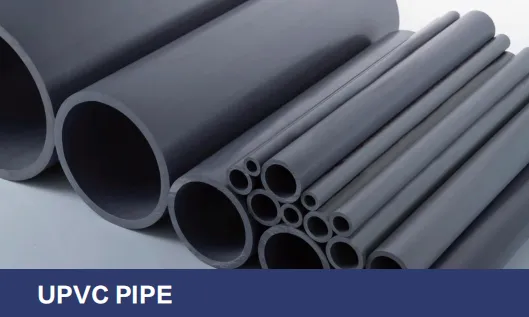
Picture this scenario: A project manager signs off on a new plumbing system, confident that every detail has been checked—only to receive frantic calls a month later. The kitchen sinks are draining slowly, and the water pressure in the upstairs bathrooms is so low that residents are complaining. What went wrong? More often than not, the culprit is something surprisingly simple: incorrectly sized UPVC pipes. Whether you're working on a residential renovation, a commercial complex, or an industrial facility, choosing the right size for your UPVC pipe solutions isn't just a technicality—it's the backbone of a functional, efficient, and long-lasting system. In this guide, we'll walk through everything you need to know to avoid sizing mishaps, from understanding the basics of UPVC pipes to collaborating with your upvc pipe supplier for tailored solutions.
Before diving into sizing, let's take a moment to appreciate why UPVC (Unplasticized Polyvinyl Chloride) pipes have become a go-to choice for so many projects. Unlike their plasticized PVC counterparts, UPVC pipes are rigid, strong, and resistant to corrosion, chemicals, and UV rays—qualities that make them ideal for both indoor and outdoor use. They're lightweight, easy to install, and cost-effective compared to metal alternatives like copper or steel. But what truly sets them apart is their versatility. From residential water supply lines to commercial drainage systems, and even industrial chemical transport, UPVC pipes deliver reliable performance. And when you partner with a trusted upvc pipe supplier, you're not just getting pipes—you're accessing upvc pipe solutions that include everything from technical support to installation guidance, ensuring your project runs smoothly from start to finish.
Common applications for UPVC pipes include potable water distribution, irrigation systems, sewage and drainage (often referred to as DWV, or Drain-Waste-Vent systems), and even industrial processes where chemical resistance is key. Each of these applications has unique demands, which is why sizing isn't a one-size-fits-all process. A pipe that works perfectly for a small residential water line might fail miserably in a high-pressure industrial setting—and vice versa.
You might be thinking, "How big of a deal can pipe size really be? Can't I just go with the most common size and call it a day?" Unfortunately, underestimating the importance of sizing can lead to a cascade of problems that cost time, money, and peace of mind. Let's break down the risks:
Consider the case of a mid-sized apartment complex in Riyadh, where the contractor opted for 1-inch UPVC pipes for the main water supply, assuming it would be sufficient. Within weeks of occupancy, residents on the top floors reported barely a trickle from their taps. The issue? The 1-inch pipes couldn't handle the flow rate required for 50 units. The solution? Tearing out walls to replace the pipes with 1.5-inch ones—a costly mistake that could have been avoided with proper sizing. This is where partnering with an experienced upvc pipe supplier becomes invaluable; they can help you avoid these pitfalls by providing upvc pipe solutions tailored to your project's specific needs.
Choosing the right size isn't about guessing—it's about considering a mix of technical factors and real-world demands. Let's break down the most critical ones:
Flow rate, measured in gallons per minute (GPM) or liters per second (L/s), is the amount of fluid that needs to move through the pipe. This depends on the number of fixtures or outlets connected to the system. For example, a residential bathroom with a toilet, sink, and shower will have a lower flow rate than a commercial kitchen with multiple sinks, dishwashers, and ice machines. To calculate flow rate, you'll need to sum the "fixture units" of all connected fixtures. A fixture unit is a standard measure of how much water a fixture uses—for instance, a toilet might be 4 fixture units, a sink 1, and a shower 2. Your upvc pipe supplier can provide a fixture unit chart to simplify this process.
Pressure is another critical factor. Static pressure is the pressure when water is not flowing (e.g., the pressure in a water tank), while dynamic pressure is the pressure when water is moving. UPVC pipes are rated for specific pressure classes (e.g., PN10, PN16, PN20), which indicate the maximum pressure they can handle. If your system operates at high pressure (common in tall buildings or industrial settings), you'll need thicker-walled pipes (like Schedule 80) to avoid bursts. Conversely, low-pressure systems (like gravity-fed drainage) can use thinner-walled Schedule 40 pipes.
The type of fluid and its purpose drastically affect sizing. For example:
Even if you calculate the right flow rate and pressure, friction loss can throw off your sizing. Friction occurs as water rubs against the pipe's interior walls, reducing pressure over distance. Longer pipes mean more friction loss, so you may need a larger diameter to compensate. The Hazen-Williams equation is a common tool for calculating friction loss, but don't worry—your upvc pipe supplier can help run these numbers for you. They'll consider factors like pipe material (UPVC has a smooth interior, which minimizes friction) and the number of bends, valves, and fittings, which also increase friction.
Never overlook local building codes. Most regions have strict regulations on pipe sizes for different applications—for example, a minimum 2-inch diameter for DWV pipes in residential buildings or specific pressure ratings for potable water systems. Ignoring these codes can lead to failed inspections, fines, or even legal liability if a system failure causes damage. Reputable upvc pipe suppliers stay up-to-date on local codes and can ensure their upvc pipe solutions comply with all requirements.
UPVC pipes come in a range of sizes, typically measured by nominal pipe size (NPS) in inches or millimeters (mm). Below is a table of common sizes and their typical applications to give you a starting point. Keep in mind that these are general guidelines—always verify with your upvc pipe supplier for your specific project.
| Nominal Size (Inches) | Nominal Size (mm) | Schedule | Typical Application | Estimated Flow Rate (GPM) |
|---|---|---|---|---|
| 1/2" | 15mm | Sch40 | Residential fixtures (sinks, toilets) | 5-10 |
| 3/4" | 20mm | Sch40 | Residential showers, small appliances | 10-15 |
| 1" | 25mm | Sch40/Sch80 | Main residential water lines, light commercial use | 15-25 |
| 1.5" | 40mm | Sch40/Sch80 | Commercial kitchen sinks, small industrial lines | 25-40 |
| 2" | 50mm | Sch40/Sch80 | DWV systems (residential/commercial), irrigation main lines | 40-60 |
| 3" | 80mm | Sch40/Sch80 | Large commercial DWV, industrial drainage | 60-100 |
| 4" | 100mm | Sch40/Sch80 | Industrial water supply, municipal drainage | 100-150 |
Note that Schedule (Sch) refers to wall thickness—Sch40 is standard for most low-pressure applications, while Sch80 is thicker and used for higher pressure or more demanding environments. Your upvc pipe supplier can help you choose the right schedule based on your pressure requirements.
Now that you understand the factors involved, let's walk through a simplified process to calculate the right size for your project. While this is a basic overview, always consult your upvc pipe supplier for a precise calculation, especially for large or complex systems.
Start by defining the application (water supply, drainage, etc.) and calculating the total flow rate. For water supply systems, use fixture units: list all fixtures, assign their fixture unit values (check with your supplier for a chart), and sum them. For drainage systems, use the number of drainage points and their expected flow. For example, a 10-unit apartment building with 2 fixtures per unit (sink and toilet) might have a total of 20 fixtures, each with an average of 2 fixture units, totaling 40 fixture units. Convert fixture units to GPM using a conversion chart (e.g., 40 fixture units might equal 25 GPM).
Velocity is the speed at which water flows through the pipe, measured in feet per second (fps). For water supply systems, a safe velocity range is 2-5 fps—too low, and sediment can build up; too high, and friction loss increases. Use the formula: Velocity (fps) = Flow Rate (GPM) / (0.4085 * Pipe Diameter² (inches)). For example, if you need a flow rate of 25 GPM, solving for diameter gives you a pipe size of roughly 1.5 inches (since 25 / (0.4085 * 1.5²) ≈ 25 / 0.92 ≈ 27 fps—wait, that can't be right. Oops, let me correct that: the formula is actually Velocity = Q / (A), where A is the cross-sectional area (πr²). Converting GPM to cubic feet per second (CFS): 1 GPM = 0.002228 CFS. So 25 GPM = 0.0557 CFS. Area = πr², so r = √(A/π). For 1.5-inch pipe, radius is 0.75 inches = 0.0625 feet. Area = π*(0.0625)² ≈ 0.01227 sq ft. Velocity = 0.0557 / 0.01227 ≈ 4.54 fps, which is within the 2-5 fps range. That works! So a 1.5-inch pipe would be suitable for 25 GPM.
Friction loss increases with pipe length and velocity. Use the Hazen-Williams equation: hf = (10.67 * Q^1.852 * L) / (C^1.852 * D^4.87), where hf is friction loss in feet, Q is flow rate in GPM, L is pipe length in feet, C is the Hazen-Williams coefficient (140-150 for UPVC), and D is pipe diameter in inches. If the calculated friction loss is too high (e.g., more than 4 feet per 100 feet of pipe), you'll need to increase the pipe size.
Finally, ensure the selected pipe size and schedule meet the system's pressure requirements and local codes. For example, if your system operates at 10 bar (145 psi), you'll need a pipe rated for PN16 (16 bar) or higher. Your upvc pipe supplier can provide pressure rating charts for their upvc pipe solutions.
At this point, you might be thinking, "This sounds complicated—how do I make sure I get it right?" The answer is simple: partner with a knowledgeable upvc pipe supplier. A reputable supplier isn't just someone who sells pipes—they're a partner who provides upvc pipe solutions that include technical support, sizing guidance, and even on-site assistance if needed. Here's how they can help:
When vetting suppliers, ask about their experience with projects like yours. Do they work with residential, commercial, or industrial clients? Can they provide references? Do they offer after-sales support, like help with troubleshooting or maintenance? The right supplier will go above and beyond to ensure your project's success.
A homeowner in Jeddah decided to renovate their kitchen and add a second bathroom, doubling the number of fixtures. They reused the existing 1-inch UPVC pipes, assuming they'd be sufficient. After the renovation, the kitchen sink drained slowly, and the new shower had weak pressure. A plumber diagnosed the issue: the 1-inch pipes couldn't handle the increased flow rate. The solution? Upgrading to 1.5-inch pipes for the main line. The homeowner incurred extra costs for labor and materials—expenses that could have been avoided by consulting an upvc pipe supplier before starting the project.
A restaurant chain in Riyadh was building a new location with a large kitchen featuring 6 sinks, 2 dishwashers, and 3 ice machines. They partnered with a local upvc pipe supplier early in the planning phase. The supplier calculated the total flow rate (60 GPM) and recommended 3-inch Sch40 UPVC pipes for the DWV system and 2-inch Sch80 pipes for the water supply. After installation, the kitchen ran smoothly—no clogs, no pressure issues, and the health inspector signed off without a hitch. The restaurant opened on time, and the manager later commented, "Working with the supplier from the start saved us from so many headaches. Their upvc pipe solutions were spot-on."
Even with the right size, proper maintenance is key to ensuring your UPVC pipes perform well for decades. Here are a few tips:
Choosing the right size for your UPVC pipes is a critical step in ensuring your project's success. It's not just about avoiding leaks or low pressure—it's about creating a system that's efficient, reliable, and cost-effective for years to come. By understanding the factors that influence size selection, calculating flow rates and pressure, and partnering with a trusted upvc pipe supplier, you can avoid costly mistakes and ensure your project runs smoothly.
Remember, upvc pipe solutions are more than just pipes—they're a combination of technical expertise, tailored recommendations, and ongoing support. So the next time you start a project, don't overlook the importance of sizing. Reach out to an experienced upvc pipe supplier early, share your project details, and let them guide you to the right size. Your future self (and your budget) will thank you.
Recommend Products












