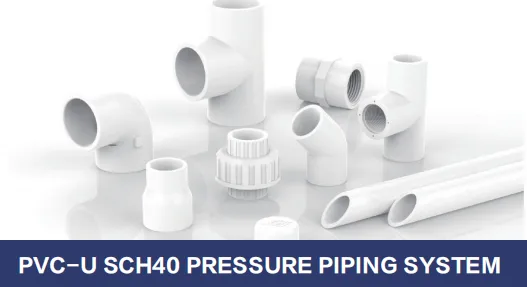
For anyone involved in construction, infrastructure, or industrial projects, the choice of building materials can make or break a project's success. When it comes to piping systems—especially those carrying pressurized fluids—cutting corners is never an option. PVC-U SCH40 pressure piping systems are a staple in water supply, industrial processing, and municipal projects, valued for their durability, corrosion resistance, and cost-effectiveness. But even the most reliable material is only as good as the supplier behind it.
Imagine partnering with a supplier who delivers subpar pipes that crack under pressure six months into use, or one who misses delivery deadlines, leaving your project stuck in limbo. These scenarios aren't just frustrating—they're costly, dangerous, and damaging to your reputation. On the flip side, a trusted supplier acts as a partner, ensuring your project runs smoothly, stays within budget, and meets all safety standards.
In this guide, we'll walk through the critical factors to consider when selecting a
PVC-U SCH40 pressure piping system supplier. From evaluating product quality to assessing after-sales support, we'll cover everything you need to know to make an informed decision. We'll also touch on related components like fittings and valves, as a holistic approach to piping ensures compatibility and performance. Let's dive in.
Understanding PVC-U SCH40 Pressure Piping Systems
Before we jump into supplier selection, let's clarify what makes PVC-U SCH40 piping unique. PVC-U (Unplasticized Polyvinyl Chloride) is a rigid, strong plastic pipe known for its chemical resistance and long service life. The "SCH40" designation refers to the pipe's wall thickness, which directly impacts its pressure rating. SCH40 pipes are designed to handle moderate to high pressure, making them ideal for applications like potable water distribution, irrigation, industrial fluid transport, and even some HVAC systems.
Unlike thinner-walled SCH20 pipes, SCH40's robust construction minimizes the risk of bursts or leaks, even in demanding environments. This durability is why they're a go-to choice for projects where safety and reliability are non-negotiable—think hospitals, schools, commercial buildings, and municipal water networks. But none of these benefits matter if the pipes themselves are poorly manufactured. That's where choosing the right supplier becomes critical.
1. Industry Experience and Reputation
Experience isn't just about how long a company has been in business—it's about
what
they've accomplished in that time. A reputable
PVC-U SCH40 pressure piping system supplier should have a track record of serving projects similar to yours. For example, if you're working on a municipal water project, a supplier with 10+ years in municipal infrastructure is far more valuable than one that primarily serves small residential jobs.
Start by researching their portfolio: Do they list case studies or client testimonials? Have they worked on high-profile projects (e.g., city water mains, large commercial complexes)? Online reviews and industry forums can also reveal red flags—consistent complaints about delayed shipments or poor quality are warning signs.
"We once consulted with a contractor who chose a new supplier for a hospital's water system to save costs. The supplier had only been in business a year and lacked experience with medical-grade piping. Six months later, leaks developed due to inconsistent wall thickness, requiring emergency repairs that disrupted hospital operations. A supplier with 15+ years in healthcare projects would have avoided this."
2. Product Quality and Certification
When it comes to pressure piping, quality is non-negotiable. A top-tier supplier will prioritize materials and manufacturing processes that meet or exceed international standards. Look for certifications like ASTM D1785 (the standard for PVC pipe for pressure applications), ISO 9001 (quality management), and local regulatory approvals (e.g., SASO in Saudi Arabia, NSF for potable water in the U.S.).
Ask for documentation: What raw materials do they use? Virgin PVC resin is preferable to recycled materials, as recycled content can introduce impurities that weaken the pipe. How do they test their products? Reputable suppliers conduct rigorous testing—pressure testing, impact resistance tests, and dimensional checks—to ensure each batch meets specifications. Avoid suppliers who can't provide clear certification or testing reports.
3. Range of Solutions and Compatibility
Piping systems aren't just pipes—they're a network of components that need to work together seamlessly. A great
PVC-U SCH40 pressure piping system supplier won't just sell you pipes; they'll offer a full suite of
PVC-U SCH40 pressure piping system solutions, including compatible fittings, valves, and accessories. This is where partnering with a supplier who also acts as a
pipes fittings supplier or
plastic valve system supplier adds value.
For example, mismatched fittings (even from different batches of the same supplier) can lead to leaks or pressure loss. A supplier that controls the entire production process—from pipes to fittings—ensures compatibility. They should also offer custom solutions for unique project needs, like odd-sized pipes or specialized coatings for corrosive environments. If a supplier only offers "one-size-fits-all" products, they may not be able to adapt to your project's specifics.
4. Technical Support and After-Sales Service
Even the best products can underperform if installed incorrectly. That's why technical support is a make-or-break factor. A reliable supplier should provide more than just a product—they should offer guidance on installation, system design, and troubleshooting. Do they have a team of engineers available to answer questions? Can they provide CAD drawings or installation manuals tailored to your project?
After-sales service is equally important. What happens if a pipe arrives damaged, or you notice defects after installation? A trustworthy supplier will stand behind their products with a clear warranty (10+ years is standard for high-quality PVC-U SCH40), and a responsive customer service team that resolves issues quickly. Avoid suppliers with vague warranty terms or unresponsive support—you don't want to be stuck with faulty pipes and no recourse.
5. Supply Chain Reliability
In construction, time is money. A supplier that can't deliver on schedule can derail your entire project. Ask about their manufacturing capacity: Do they have multiple production facilities to avoid delays from shutdowns or shortages? What's their lead time for large orders? Can they stockpile materials for long-term projects to ensure a steady supply?
Global events (like the recent supply chain disruptions) have highlighted the importance of resilience. A supplier with strong relationships with raw material providers and a diversified logistics network is far less likely to face unexpected delays. For example, a supplier with warehouses in key regions (e.g., the Middle East for Saudi Arabia-based projects) can reduce shipping times and costs compared to one that ships from a single overseas location.
6. Pricing and Value, Not Just Cost
It's tempting to opt for the lowest bid, but "cheap" often translates to "low quality." A slightly higher upfront cost from a reputable supplier can save you thousands in the long run by reducing maintenance, repairs, and replacements. When comparing quotes, consider the
total cost of ownership
: What's the pipe's expected lifespan? What's the warranty coverage? Will you need to hire extra labor for installation due to poor product quality?
For example, Pipe Supplier A offers SCH40 pipes at $10/foot with a 5-year warranty, while Supplier B charges $12/foot but offers a 15-year warranty and free technical support. Over 15 years, Supplier B's pipes cost $12/foot, while Supplier A's would require replacement (and labor) halfway through, costing far more. Always weigh price against quality and service.
Comparing Suppliers: A Sample Evaluation Table
To put these criteria into practice, let's compare three hypothetical suppliers. Use a similar framework when evaluating your own options:
|
Criteria
|
Supplier X (Established Leader)
|
Supplier Y (Mid-Range Competitor)
|
Supplier Z (Budget Option)
|
|
Industry Experience
|
20+ years; municipal, commercial, and industrial projects
|
8 years; primarily commercial and small municipal
|
2 years; residential and small-scale only
|
|
Certifications
|
ASTM D1785, ISO 9001, NSF-61 (potable water)
|
ASTM D1785, ISO 9001 (pending renewal)
|
No third-party certifications; self-declared "compliant"
|
|
Solutions Offered
|
Full range: pipes, fittings, valves, custom designs; also a pipes fittings supplier and plastic valve system supplier
|
Pipes and standard fittings; limited custom options
|
Only pipes; fittings sold separately (third-party)
|
|
Technical Support
|
In-house engineering team; 24/7 hotline; on-site training
|
Email support only; 48-hour response time
|
No technical support; "install at your own risk" policy
|
|
Warranty
|
15-year warranty on materials and workmanship
|
5-year warranty (materials only)
|
1-year warranty (no labor coverage)
|
|
Lead Time for Large Orders
|
2 weeks (local warehouse stock)
|
4–6 weeks (manufactured to order)
|
8+ weeks (imported from overseas)
|
|
Price (per foot of 6" SCH40 pipe)
|
$14.50
|
$11.20
|
$8.75
|
In this example, Supplier X is clearly the strongest choice for large, critical projects, despite the higher upfront cost. Supplier Y might work for smaller, less complex jobs, while Supplier Z poses significant risks (no certifications, poor support, long lead times) that could derail your project.
Common Pitfalls to Avoid
Even with careful evaluation, it's easy to fall into traps when selecting a supplier. Here are three to watch for:
-
Overlooking Compatibility:
Assuming all SCH40 pipes are the same. Different suppliers may use slightly different dimensions or materials, leading to leaks when mixed with third-party fittings. Always ask if their products work with your existing systems.
-
Ignoring Local Regulations:
A supplier may meet international standards but fail local requirements. For example, in Saudi Arabia, ensure they comply with SASO standards; in the EU, CE marking is mandatory. Non-compliance can lead to project delays or legal issues.
-
Believing "More is Better" in Certifications:
A supplier with 20 certifications isn't necessarily better than one with 5 relevant ones. Focus on certifications that matter for your project (e.g., NSF-61 for drinking water, ASTM D1785 for pressure rating).
Conclusion: Your Supplier is Your Partner
Choosing a
PVC-U SCH40 pressure piping system supplier isn't just a transaction—it's a partnership that impacts your project's safety, timeline, and budget. By prioritizing experience, quality, comprehensive solutions, support, and reliability, you'll avoid costly mistakes and ensure your piping system performs for decades.
Remember: The best supplier isn't just selling pipes—they're selling peace of mind. Take the time to research, ask tough questions, and compare options. Your project (and your reputation) will thank you.