
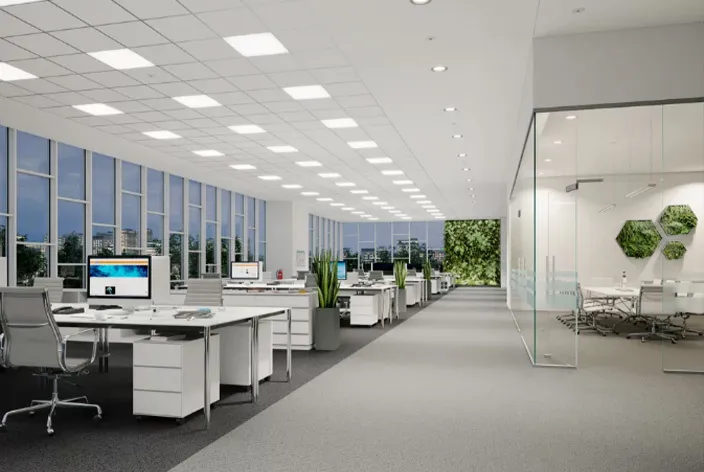
Office lighting does more than just illuminate a room. The right lighting setup can significantly boost employee productivity, reduce eye strain, and shape how clients perceive your brand the moment they walk through the door. Yet many project managers and business owners overlook one critical factor: finding a reliable office lighting supplier who can deliver consistent quality, competitive pricing, and on-time delivery. Whether you are outfitting a single floor or an entire commercial complex, choosing the right partner makes all the difference between a smooth project and a logistical headache.
This guide covers everything you need to know about selecting office lighting solutions — from understanding fixture types and design principles to evaluating suppliers and managing long-term maintenance. If you are sourcing lighting for a new office build, a renovation, or a multi-site commercial project, the insights below will help you make informed decisions.
Research consistently shows that workplace lighting directly affects cognitive performance, mood, and overall well-being. Poor lighting — whether too dim, too harsh, or poorly positioned — leads to headaches, fatigue, and decreased focus. On the other hand, well-designed office lighting creates an environment where people feel energized and engaged.
Beyond employee wellness, lighting influences how visitors and clients perceive a business. A law firm with warm, elegant lighting communicates trust and professionalism. A creative agency with dynamic, adjustable lighting signals innovation and flexibility. The aesthetic impact of lighting on brand identity is substantial, and it starts with sourcing the right products from a qualified lights supplier.
Key takeaway: Office lighting is not a commodity purchase. It is a strategic investment that affects employee health, energy consumption, and brand image. Getting it right requires working with a supplier who understands both technical specifications and design requirements.
Before you start evaluating suppliers, it helps to understand the main categories of office lighting. Most modern workspaces combine multiple fixture types to create layered, functional illumination.
These are the most common type of office lighting, installed flush with the ceiling grid. Recessed LED panels provide uniform, glare-free illumination ideal for open-plan offices, conference rooms, and corridors. They are energy-efficient and easy to maintain.
Suspended linear fixtures hang from the ceiling and are often used over workstations, long desks, or collaborative areas. They offer both direct and indirect lighting, creating a modern, architectural look while reducing shadows and screen glare.
Adjustable track lights and spotlights are perfect for highlighting specific areas — reception desks, feature walls, artwork, or product displays. They give designers flexibility to change focus points as the office layout evolves.
Wall sconces, decorative pendants, and chandeliers add character to executive offices, lobbies, and breakout areas. While they serve a functional purpose, their primary role is aesthetic — reinforcing brand identity and creating memorable spaces.
Every commercial building must comply with local safety codes. Emergency exit signs, backup lighting, and stairwell illumination are non-negotiable. A professional supplier should be able to provide code-compliant options alongside decorative fixtures.
Not all suppliers are created equal. The following checklist will help you separate reliable partners from vendors who may cause delays, quality issues, or budget overruns.
A strong supplier carries a comprehensive catalog — from standard LED panels to custom decorative fixtures. This is especially important for large-scale projects where you need consistency across multiple fixture types. Ask whether the supplier can handle custom sizes, finishes, and color temperatures to match your design specifications.
Look for suppliers whose products meet international standards such as CE, RoHS, UL, or SAA. These certifications indicate that the products have undergone rigorous testing for safety, performance, and environmental compliance. A supplier unwilling to share certification documents should raise red flags.
Understanding a supplier's production capacity is critical. Can they handle a bulk order of 500 panels within your timeline? Do they have contingency plans for peak seasons? A supplier with in-house manufacturing and dedicated quality control teams is far more reliable than a trading company that merely resells products from unknown factories.
If you are importing lighting fixtures, the supplier's export experience matters. They should understand international shipping documentation, Incoterms, packaging standards for fragile goods, and customs clearance procedures. Experienced exporters also know how to minimize freight costs through optimized pallet loading and container consolidation.
Lighting fixtures are long-term investments. A reputable supplier offers clear warranty terms — typically 3 to 5 years for LED products — and responsive after-sales service. Ask about their process for handling defective units, replacement parts, and technical support.
A supplier's track record speaks volumes. Ask for case studies, project photos, or client references from similar office projects. This gives you confidence that they have delivered comparable solutions before and understand the challenges of commercial projects.
LED technology has become the standard for office lighting, and for good reason. Compared to fluorescent tubes or halogen bulbs, LED fixtures use up to 60% less energy, last 3 to 5 times longer, and contain no hazardous materials like mercury. They also offer better light quality with higher Color Rendering Index (CRI) values, which means colors appear more natural and accurate under LED light.
Beyond the energy savings, LED lighting supports smart building integration. Dimmable LED panels, occupancy sensors, and daylight harvesting systems can be connected to a centralized building management platform, allowing facility managers to optimize energy usage in real time. For businesses pursuing green building certifications like LEED or BREEAM, LED lighting is essentially a requirement.
When you source from a professional office lighting supplier, you should expect guidance on selecting the right LED color temperature — typically 3500K to 4000K for offices, which provides a neutral white light that promotes alertness without causing eye strain.
A well-designed office lighting scheme follows a layered approach, combining three types of light in a single space:
Another important consideration is glare control. In offices with extensive computer use, direct glare from overhead lights reflecting off screens is a common complaint. The solution is to use fixtures with appropriate diffusers, indirect lighting configurations, and proper placement relative to workstations. A knowledgeable supplier can help you select fixtures with Unified Glare Rating (UGR) values below 19, which is the recommended threshold for office environments.
For project managers, architects, and procurement professionals, sourcing office lighting from multiple vendors is time-consuming and risky. Fragmented supply chains lead to inconsistent quality, mismatched color temperatures, and logistical complications. This is where working with a one-stop architectural solution provider like COLORIA GROUP becomes a strategic advantage.
COLORIA GROUP, headquartered in Foshan, China, offers a comprehensive range of office lighting solutions alongside 13 other building material categories — from walls and flooring to sanitary fixtures, customized furniture, and elevators. For a single office project, this means you can source recessed panels, decorative pendants, wall sconces, and even emergency exit signs from one trusted supplier, eliminating the need to coordinate with multiple vendors.
With an established agent network in Saudi Arabia and decades of industry experience, COLORIA GROUP understands the requirements of international commercial projects. The company's lighting catalog covers:
As a professional lights supplier, COLORIA GROUP provides quality-assured products with international certifications, competitive factory-direct pricing, and dedicated export support. Whether you need a single product category or a complete building material package, the company's one-stop model saves you time, reduces procurement complexity, and ensures consistent quality across your entire project.
Q: What color temperature is best for office lighting?
For most office environments, a neutral white color temperature between 3500K and 4000K is recommended. This range provides a balanced light that promotes alertness and focus without being too harsh. Warmer tones (2700K–3000K) work well in lounge areas and executive offices, while cooler tones (5000K) are suitable for technical or inspection areas.
Q: How many lumens per square meter does an office need?
General office areas typically require 300–500 lux (lumens per square meter). For detailed workstations, conference rooms, and design studios, 500–750 lux is recommended. Corridors and storage areas can function with 100–200 lux. A professional lighting design will calculate the exact fixture count and placement to achieve these levels uniformly.
Q: Can LED office lighting be dimmed and automated?
Yes. Most modern LED office fixtures support dimming capabilities and can be integrated with building automation systems. Features like motion sensors, daylight harvesting, and scheduled dimming not only save energy but also improve occupant comfort. When selecting a supplier, confirm that the fixtures are compatible with the control systems you plan to use.
Q: What certifications should office lighting products have?
At minimum, products should carry CE and RoHS certifications for the European market, UL or ETL for North America, and SAA for Australia. These certifications verify that the products meet safety, electromagnetic compatibility, and environmental standards. Additional certifications such as DLC (DesignLights Consortium) can qualify products for energy rebate programs.
Q: How long does it take to receive a bulk order of office lighting from an overseas supplier?
Lead times vary depending on order size, product complexity, and shipping method. A standard order of LED panels typically takes 15–30 days for production plus 15–25 days for sea freight, depending on the destination port. Custom or made-to-order fixtures may require 30–45 days of production. Always confirm the supplier's current lead time before placing an order and factor in potential delays during peak seasons.
Choosing the right office lighting supplier is one of the most impactful decisions you will make for your commercial project. From improving employee productivity and reducing energy costs to reinforcing your brand identity, the benefits of professional lighting design and quality fixtures are undeniable.
COLORIA GROUP is a trusted one-stop architectural solution provider with a comprehensive range of office lighting, decorative lighting, and commercial lighting products. With factory-direct pricing, international quality certifications, and experienced export support, the team is ready to help you source the right fixtures for your project — whether you are outfitting a single office floor, a corporate headquarters, or a multi-site development.
Visit COLORIA GROUP Office Lighting to explore the full product catalog, or contact the team directly to discuss your project requirements and request a quotation.
Recommend Products












