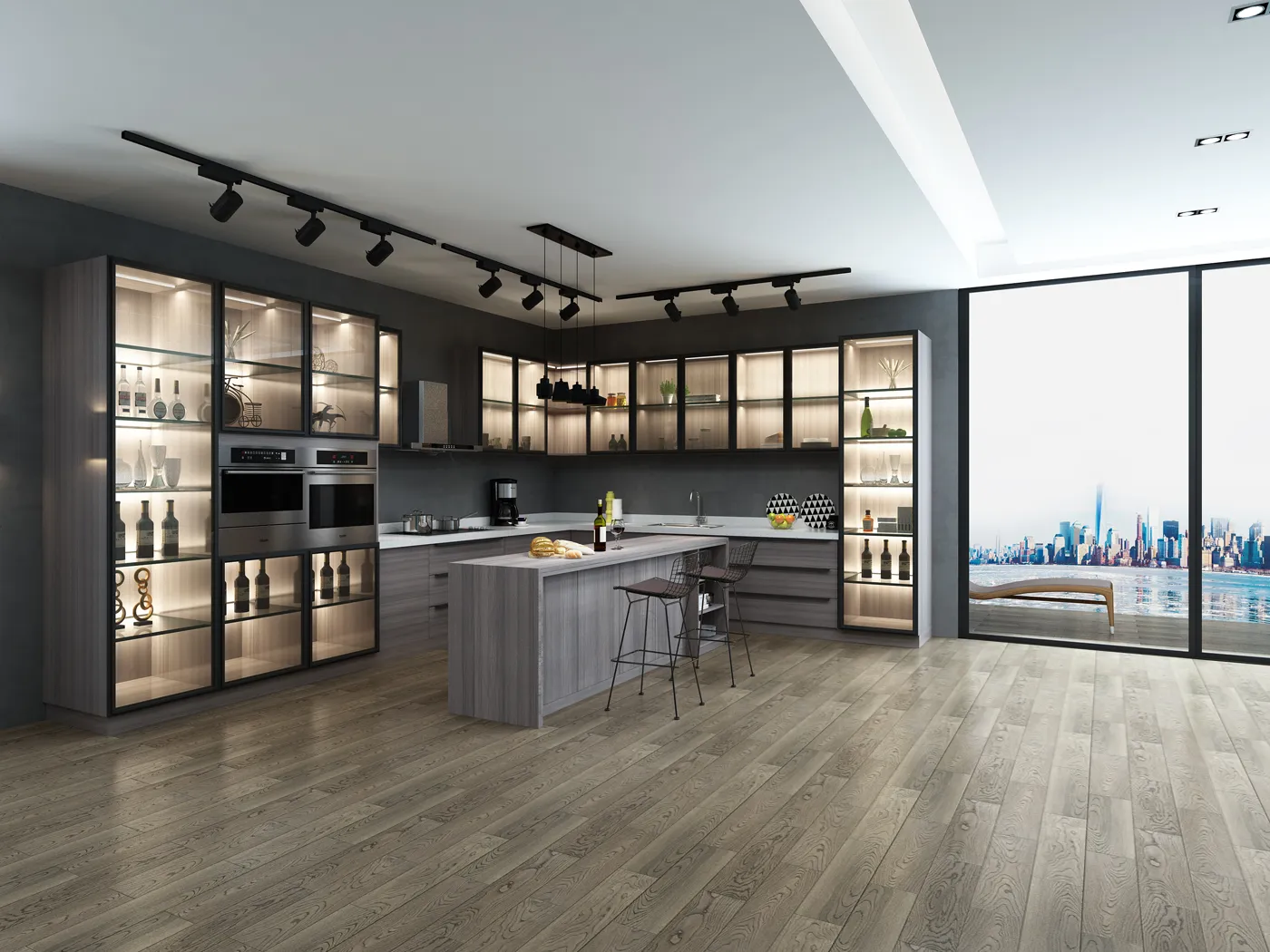
How to Choose the Right Kitchen Cabinet Supplier for Your Project
July 28, 2026 | Building Materials
Kitchen cabinets are one of the most significant investments in any residential or commercial project. Whether you are renovating a single-family home, outfitting a hotel, or completing a large-scale apartment development, the cabinets you choose will define the functionality, aesthetics, and long-term value of the space. Yet many builders, contractors, and project managers overlook a critical factor: the choice of the right
kitchen cabinet supplier. Sourcing from the wrong partner can lead to inconsistent quality, missed deadlines, and budget overruns that ripple through the entire project timeline.
This guide walks you through the key considerations when selecting a kitchen cabinet supplier, from evaluating product quality and customization capabilities to understanding logistics and after-sales support. It also explains why working with a comprehensive
one-stop architectural solution provider can simplify your procurement process and deliver better results across your entire project.
Understanding Kitchen Cabinet Types and Materials
Before you begin evaluating suppliers, it is important to understand the different types of kitchen cabinets available on the market. Cabinets generally fall into three categories: stock cabinets, semi-custom cabinets, and fully custom cabinets. Stock cabinets are pre-manufactured in standard sizes and finishes, offering the fastest turnaround but limited design flexibility. Semi-custom cabinets allow for modifications in dimensions, finishes, and storage configurations, providing a good balance between cost and personalization. Fully custom cabinets are built to your exact specifications, giving you complete control over every detail from material selection to hardware placement.
Material selection also plays a central role in cabinet quality. Solid wood cabinets\u2014such as oak, maple, and cherry\u2014offer durability and a classic appearance. Plywood construction with wood veneer finishes provides stability and resistance to warping in humid environments. MDF (medium-density fiberboard) with laminate or painted finishes is a cost-effective option for projects with tighter budgets. A knowledgeable
kitchen cabinet supplier should be able to guide you through material trade-offs and recommend solutions that match your project's climate, usage patterns, and aesthetic goals.
Why the Right Supplier Makes All the Difference
Choosing a kitchen cabinet supplier is not simply about finding the lowest price. The supplier you select will influence your project's timeline, product quality, and overall customer satisfaction. A reliable supplier maintains consistent manufacturing standards, communicates clearly about production schedules, and provides accurate documentation for customs clearance when sourcing internationally.
For contractors and developers managing multiple projects simultaneously, working with a
customized furnitures supplier that can also handle kitchen cabinetry streamlines the entire procurement chain. Instead of coordinating with separate vendors for cabinets, wardrobes, vanities, and other built-in furniture, a single-source partner can consolidate orders, reduce shipping costs, and ensure design consistency across all interior elements.
Key Factors When Evaluating a Kitchen Cabinet Supplier
Manufacturing Quality and Certifications
Always ask potential suppliers about their manufacturing processes and quality control procedures. A reputable supplier should be able to provide details about the materials they use, the construction methods they employ, and any industry certifications they hold. Look for suppliers who use moisture-resistant materials, precision CNC cutting equipment, and durable finishing techniques that resist chipping, fading, and delamination over time.
Customization Capabilities
Every project has unique requirements. A good supplier should offer flexibility in cabinet dimensions, door styles, finishes, and hardware options. Whether you need standard shaker-style doors for a residential development or contemporary flat-panel designs for a commercial hotel project, the supplier should be able to accommodate your specifications without excessive lead time penalties.
Production Capacity and Lead Times
Before committing to a supplier, verify their production capacity and typical lead times. For large-volume orders\u2014such as equipping 200 apartment units or a 150-room hotel\u2014the supplier must have the manufacturing infrastructure to meet your deadlines. Ask about their current production queue, peak season scheduling, and contingency plans for unexpected delays.
Minimum Order Quantities and Pricing
Many manufacturers impose minimum order quantities (MOQs) that may not align with smaller projects. Clarify MOQ requirements early in the conversation. At the same time, request detailed pricing breakdowns that include material costs, customization fees, packaging charges, and shipping estimates. Transparent pricing is a hallmark of a trustworthy supplier.
Shipping and Logistics Support
International sourcing introduces additional complexity. Your supplier should have experience with export documentation, container loading optimization, and coordination with freight forwarders. Ask about their typical shipping methods, port of loading, and estimated transit times to your destination. A supplier that provides end-to-end logistics support can save you weeks of coordination and thousands of dollars in freight costs.
The Advantage of a One-Stop Building Materials Supplier
One of the most effective strategies for project efficiency is consolidating your procurement through a single, comprehensive supplier. Rather than managing relationships with a cabinet manufacturer, a flooring vendor, a sanitary ware distributor, and a lighting supplier, you can work with one partner who covers all these categories. COLORIA GROUP operates as a
one-stop architectural solution provider, offering kitchen cabinets alongside a full range of building materials including flooring, wall panels, doors and windows, sanitary fixtures, lighting, elevators, and solar panels.
This integrated approach brings several practical benefits. First, you receive a single point of contact for project communication, reducing the time spent coordinating with multiple vendors. Second, consolidated shipping from one supplier lowers overall freight costs and simplifies customs clearance. Third, design consistency is easier to maintain when all interior elements come from the same sourcing partner. Finally, volume-based pricing across multiple product categories often results in more competitive overall project costs.
Questions to Ask Before Selecting a Kitchen Cabinet Supplier
What materials do you use for cabinet boxes, doors, and drawer fronts?
Can you provide samples of door styles, finishes, and hardware options?
What is your typical production lead time for standard and custom orders?
Do you have experience exporting to my country or region?
Can you supply references from projects similar to mine?
What quality control checks do you perform before shipment?
How do you handle warranty claims or product defects discovered after delivery?
Do you offer design or layout assistance for kitchen planning?
What are your payment terms and accepted methods?
Can you accommodate mixed container loads with other product categories?
Why Choose COLORIA GROUP for Your Kitchen Cabinet Needs
COLORIA GROUP, headquartered in Foshan, China\u2014a global hub for building materials and furniture manufacturing\u2014brings decades of industry experience to every project. As a
customized furnitures supplier, the company offers kitchen cabinets that can be tailored to your exact specifications, from material selection and finish colors to hardware configurations and storage solutions. Beyond kitchen cabinets, COLORIA GROUP provides a comprehensive catalog spanning 13 product categories, including walls, flooring, ceilings, pipes and fittings, sanitary fixtures, home appliances, windows and doors, decorative profiles, elevators, electrical fixtures, lights, and solar panels.
The company's commitment to quality is reflected in its rigorous supplier vetting process and its focus on long-term client relationships. With an overseas agent in Saudi Arabia and a growing international client base, COLORIA GROUP understands the unique challenges of cross-border procurement and has built its operations to support seamless global trade. Whether you are sourcing for a single residential project or a large-scale commercial development, COLORIA GROUP offers the product range, manufacturing expertise, and logistical support to help your project succeed.
Ready to source kitchen cabinets and building materials for your next project? Contact COLORIA GROUP today to discuss your requirements. Our team will help you evaluate options, compare materials, and develop a procurement plan that aligns with your timeline and budget. Visit our
kitchen cabinet product page to explore available styles, or reach out directly at
+86-13630185350 (WhatsApp/WeChat) or
+86-075782666790 (Office) to speak with a product specialist. Together we build the future.