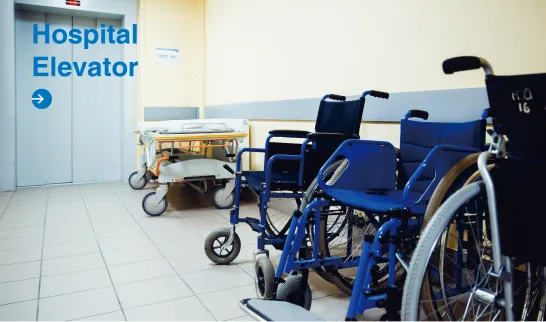
A hospital elevator is not just a means of vertical transportation. It is a critical component of patient care logistics, emergency response, and daily hospital operations. Whether you are constructing a new healthcare facility or upgrading an existing one, selecting the right
hospital elevator supplier demands careful evaluation of technical specifications, safety standards, and after-sales support capabilities.
Unlike standard passenger elevators, hospital elevators must accommodate stretchers, medical equipment, and staff while maintaining smooth, precise, and reliable operation around the clock. A single malfunction can disrupt patient transfers and emergency procedures. This guide outlines what to look for when sourcing hospital elevators and how to identify a supplier that delivers consistent quality.
What Sets Hospital Elevators Apart
Hospital bed elevators are engineered with specific characteristics that distinguish them from commercial or residential lifts. Understanding these differences is the first step toward making an informed purchasing decision.
-
Extended Cabin Dimensions: Hospital elevators feature deeper cabins (typically 1400mm to 2400mm in depth) to comfortably accommodate a standard hospital bed, accompanying medical staff, and portable equipment simultaneously.
-
Superior Leveling Accuracy: The car must stop flush with each floor within extremely tight tolerances, ensuring stretchers and wheelchairs can roll in and out without bumps or gaps that could jeopardize patient safety.
-
Vibration-Free Operation: Smooth starts and stops are essential. Excessive vibration can disturb sensitive medical monitoring equipment and cause discomfort for patients in transit.
-
Hygienic Interior Surfaces: Cabin walls and floors are typically constructed with antimicrobial stainless steel or easy-to-sanitize materials that withstand frequent cleaning with hospital-grade disinfectants.
-
Emergency Power Backup: In the event of a power failure, hospital elevators must have reliable backup systems to ensure patients are never stranded between floors.
Healthcare projects often require more than just bed elevators. A comprehensive elevator plan may include multiple types serving different functions within the same facility. Below is an overview of elevator categories commonly deployed in hospital and healthcare environments.
| Hospital Bed Elevator |
Patient and stretcher transport |
Deep cabin, precise leveling |
| Passenger Elevator |
Visitors and staff |
High speed, aesthetic design |
| Freight Elevator |
Medical supplies and equipment |
High load capacity, durable |
| Dumbwaiter |
Meals, documents, small items |
Compact, efficient |
Sourcing all elevator types from a single supplier simplifies procurement logistics, streamlines maintenance schedules, and ensures consistent quality standards across the entire building. This is where working with an
one-stop architectural solution provider becomes a strategic advantage.
How to Evaluate a Hospital Elevator Supplier
When shortlisting suppliers, go beyond the catalog and examine these critical dimensions:
1. Manufacturing Standards and Certifications. Verify that the supplier adheres to international standards such as ISO 9001 for quality management. Elevators destined for healthcare settings should comply with relevant safety codes and electromagnetic compatibility requirements to avoid interference with medical devices.
2. Product Range Diversity. A supplier offering multiple elevator categories — hospital, passenger, freight, home lift, car lift, and escalator — demonstrates broad engineering capability. This breadth of expertise often translates into better component sourcing, more competitive pricing, and integrated solutions.
3. Customization Capability. Every hospital has unique spatial constraints and operational workflows. The supplier should be able to customize cabin dimensions, door configurations, interior finishes, and control systems to match your specific requirements.
4. Installation and After-Sales Network. Elevator reliability depends as much on proper installation and ongoing maintenance as it does on manufacturing quality. Confirm that the supplier provides installation supervision, technical training for local teams, and accessible spare parts supply.
5. Global Project Experience. Suppliers with international project portfolios have been tested against diverse regulatory environments and building codes. This experience reduces the risk of compliance issues during installation and commissioning.
COLORIA GROUP: A Trusted Partner in Elevator Supply
COLORIA GROUP, operating under FOSHAN COLORIA BUILDING MATERIALS CO., LTD, is a comprehensive
one-stop architectural solution provider headquartered in Foshan, Guangdong, China. With a dedicated overseas agent presence in Saudi Arabia, the company serves residential and commercial projects across the globe.
The company's elevator product line covers six distinct categories, ensuring that healthcare facilities, commercial buildings, and residential projects can source all their vertical transportation needs from a single reliable partner:
| Hospital Elevator |
Patient and stretcher transport in hospitals, clinics, and healthcare centers |
| Home Lift |
Residential buildings, villas, and private residences |
| Freight Lift |
Warehouses, factories, logistics centers, and hospital supply transport |
| Car Lift |
Parking garages, auto showrooms, and service centers |
| Commercial Escalator |
Shopping malls, airports, metro stations, and public venues |
| Moving Walk |
Airports, exhibition halls, and large transit hubs |
Beyond elevators, COLORIA GROUP's catalog spans 13 product categories covering walls, flooring, ceilings, pipes and fittings, sanitary fixtures and bathrooms, customized furniture, home and kitchen appliances, windows and doors, decorative profiles, electrical fixtures, lighting, and solar panels. This makes the company a true one-stop source for construction and fit-out projects of any scale.
The Advantage of Integrated Sourcing
Hospital construction projects involve coordinating dozens of material and equipment suppliers. Each additional vendor adds complexity to communication, logistics, quality control, and warranty management. By consolidating elevator procurement with other building material categories under a single one-stop architectural solution provider, project managers benefit from:
- Streamlined communication with a single point of contact for multiple product categories
- Consolidated shipping and logistics, reducing freight costs and administrative overhead
- Unified quality standards and warranty terms across all supplied materials
- Better coordination of delivery schedules to align with construction timelines
- Simplified after-sales service with one accountable partner
Ready to Source Your Hospital Elevators?
Choosing the right hospital elevator supplier is a decision that affects patient safety, operational efficiency, and long-term maintenance costs. COLORIA GROUP brings together engineering expertise, a comprehensive elevator product line, and the convenience of one-stop building material sourcing to support your healthcare construction projects.
Contact COLORIA GROUP today to discuss your project requirements, request technical specifications, or schedule a consultation with the elevator team. Reach us at
+86-13630185350 (WhatsApp/WeChat) or visit
www.coloriagroup.net to explore the full product catalog.