
When it comes to moving heavy goods efficiently across multiple floors of a warehouse, factory, or commercial building, a reliable freight lift is not just a convenience — it is a critical piece of infrastructure. Whether you are outfitting a new logistics center, upgrading an aging distribution hub, or sourcing equipment for a large-scale construction project, selecting the right freight lift supplier can make a significant difference in your operational efficiency, safety, and long-term maintenance costs. With so many options on the market, how do you identify a supplier that delivers both quality products and dependable service?
A freight lift is a long-term investment. Unlike smaller equipment that can be replaced quickly, a freight elevator becomes part of your building's core infrastructure. The wrong choice can lead to frequent breakdowns, high repair costs, and even safety hazards. A qualified supplier should offer not only robust equipment but also after-sales support, spare parts availability, and technical guidance throughout the product lifecycle. When evaluating potential partners, look beyond the initial price tag and consider the total cost of ownership over the lift's expected lifespan.
Before evaluating suppliers, it helps to understand the different types of lifting equipment available. A comprehensive elevators supplier should be able to provide multiple categories under one roof, which streamlines procurement and ensures consistent quality across your project.
Hydraulic freight lifts are ideal for low to mid-rise buildings and are known for their smooth operation and heavy load capacity.
Traction freight elevators use cables and counterweights, making them suitable for high-rise applications.
Car lifts are specialized for moving vehicles in parking garages and automotive showrooms.
Hospital elevators are designed to accommodate stretchers and medical equipment with higher precision and strict hygiene standards.
Home lifts provide vertical mobility in residential settings, combining compact design with aesthetic appeal.
Commercial escalators and moving walks serve high-traffic public spaces such as shopping malls, airports, and transit stations.
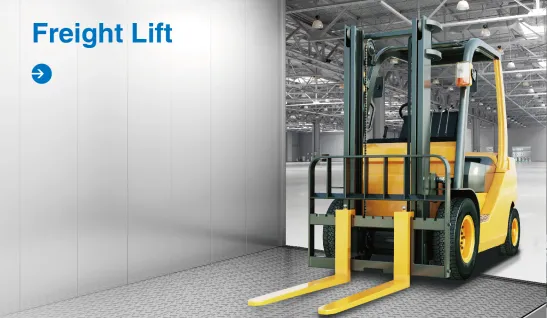
The most important technical factor is load capacity. A freight lift must be rated to safely handle the maximum weight you expect to move — including the weight of goods, pallets, and any material handling equipment such as forklifts that may enter the lift. Discuss your specific requirements with potential suppliers to ensure the lift is engineered to handle your operational demands.
Not every project fits a standard catalog. Warehouses, factories, and commercial buildings each have unique spatial constraints, door configurations, and traffic patterns. A supplier with in-house engineering and customization capability can tailor the lift dimensions, door types, and control systems to your exact needs. This is especially important for projects in the Middle East and other regions where local building codes and climate conditions may require specific adaptations.
Freight lifts must comply with local and international safety standards. When sourcing from a supplier, verify that the equipment meets relevant certifications such as ISO, CE, or regional equivalents. Reliable suppliers will provide documentation and testing reports to confirm compliance, giving you confidence that the equipment will pass inspection in your jurisdiction.
A freight lift is not a one-time purchase — it requires ongoing maintenance. Ask potential suppliers about their warranty terms, spare parts availability, and whether they offer remote technical support or on-site service. A supplier with a global agent network can provide faster response times and significantly reduce operational downtime.
For large-scale construction or renovation projects, working with a single, comprehensive supplier can dramatically simplify logistics. Instead of coordinating with separate vendors for walls, flooring, doors, windows, elevators, and electrical systems, a building material supplier that covers all these categories can streamline procurement, reduce shipping costs, and ensure consistent quality control across every product line.
COLORIA GROUP, headquartered in Foshan, China, exemplifies this approach. As a one-stop solution provider for building materials, the company offers 13 product categories ranging from walls and flooring to pipes, sanitary fixtures, customized furniture, home appliances, windows and doors, decorative profiles, electrical fixtures, lights, and solar panels — alongside a full elevator division that includes freight lifts, home lifts, hospital elevators, car lifts, commercial escalators, and moving walks. With an overseas agent in Saudi Arabia and decades of industry experience, COLORIA GROUP serves clients in both residential and commercial sectors across the globe.
Selecting the right freight lift supplier requires careful evaluation of product quality, customization capability, certification compliance, and after-sales support. By choosing a supplier with a broad product portfolio and international reach, you can ensure that your vertical transportation needs are met with reliable, efficient equipment backed by professional service.
Whether you need a single freight lift for a warehouse upgrade or a full package of building materials for a new development, COLORIA GROUP offers integrated solutions that simplify your procurement process and help you build with confidence. Contact COLORIA GROUP today to discuss your project requirements and discover how a one-stop building materials partner can add value to your next venture.
Recommend Products












