
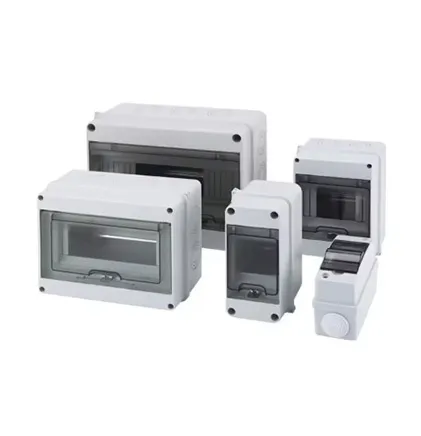
Every modern building relies on a safe and efficient electrical system, and at the heart of that system sits one critical component: the distribution box. Whether you are outfitting a residential apartment, a commercial office tower, or an industrial facility, selecting the right electrical power distribution box can make the difference between a reliable power network and one plagued by faults and downtime.
A distribution box — also called an electrical panel or breaker box — is the central hub that receives incoming electrical power and routes it to individual circuits throughout a building. Think of it as the command center of your electrical infrastructure: it controls, protects, and organizes the flow of electricity, ensuring that every switch, socket, and appliance receives the right amount of power.
A well-designed distribution box provides several essential functions. It offers centralized control, allowing you to selectively activate or deactivate circuits. It delivers critical protection through circuit breakers that trip during overloads or short circuits, preventing damage to wiring, appliances, and — most importantly — reducing fire risk. It also brings organization to what would otherwise be a chaotic web of wiring, making maintenance and troubleshooting far simpler for building managers and electricians.
Understanding the internal makeup of a distribution box helps you evaluate quality when sourcing products. A dependable unit typically includes:
- Main Switch: The master control point that allows complete power shutdown during maintenance or emergencies.
- Circuit Breakers: The frontline defense against overloads and short circuits, automatically cutting power when abnormal conditions arise.
- Busbars: Conductive metal strips that efficiently distribute electricity across multiple circuits within the enclosure.
- Residual Current Devices (RCDs): Safety devices that disconnect power when leakage current is detected, preventing electric shocks.
- DIN Rail: A standardized mounting rail that holds circuit breakers and modular devices securely in place.
- Enclosure: The protective housing that shields internal components from dust, moisture, and accidental contact.
When sourcing a distribution box for a project, inspecting the quality of these components — particularly the circuit breakers and the enclosure material — is essential for long-term reliability and safety compliance.
Distribution boxes are not one-size-fits-all. Different building types and applications require different configurations:
- Residential Projects: Consumer units with adequate circuit separation for lighting, power outlets, kitchen appliances, and HVAC systems. Compact size and ease of access are priorities.
- Commercial Buildings: Main distribution boards (MDBs) feeding multiple sub-distribution boards across floors and zones. Higher capacity, better labeling, and scalability for future expansion are key requirements.
- Industrial Facilities: Heavy-duty power distribution boards designed for high-load equipment, motor control centers, and specialized machinery. These often require custom configurations and robust enclosures rated for harsh environments.
- Infrastructure Projects: Final distribution points serving specific equipment, outdoor-rated enclosures for weather resistance, and compliance with stringent safety codes.
The right choice depends on your total electrical load, the number of circuits needed, local electrical codes, and future expansion plans.
A distribution box does not work in isolation. It is part of a broader electrical fixtures & cables ecosystem that must work together seamlessly. For any building project, you will also need:
- Switches & sockets at every point of use, from standard wall outlets to specialized industrial connectors.
- Cables rated for the appropriate voltage and environmental conditions, connecting the distribution box to every corner of the building.
- Lighting fixtures for interior, exterior, and specialized applications like office, hospitality, and industrial lighting.
Sourcing all these components from a single supplier streamlines procurement, ensures compatibility, and simplifies logistics — especially for large-scale or international projects.
Procurement complexity is one of the biggest challenges in construction. A typical mid-sized project may involve dozens of suppliers across categories like walls, flooring, piping, sanitary ware, electrical systems, and appliances. Each supplier relationship adds administrative overhead, logistical complexity, and potential delays.
COLORIA GROUP operates as a one-stop building materials supplier covering 13 major product categories — from walls and flooring to electrical systems, elevators, and solar panels. With headquarters in Foshan, China and an agent in Saudi Arabia, the company serves residential and commercial projects worldwide, offering a streamlined procurement experience backed by decades of industry expertise.
When you source your electrical distribution boxes, cables, and switches from the same supplier that provides your flooring, sanitary ware, doors, and windows, you gain consistency in quality standards, simplified communication, consolidated shipping, and better overall project coordination.
Even the highest-quality distribution box will underperform if installed incorrectly. Key installation considerations include:
- Location: Install in a dry, well-ventilated area accessible for maintenance but secured against unauthorized access.
- Wiring Standards: Follow local electrical codes strictly. Proper wire sizing, secure connections, and clear labeling of each circuit are non-negotiable.
- Safety Gear: Always use appropriate personal protective equipment during installation and maintenance.
For ongoing maintenance, schedule regular inspections to check for loose connections, signs of overheating, or corrosion. Keep the enclosure clean and free of dust. replace any faulty circuit breakers or components immediately — delays can lead to cascading electrical problems.
Choosing an electrical power distribution box is a decision that affects the safety, efficiency, and scalability of your building for years to come. Focus on component quality, match the type and capacity to your specific project requirements, and consider the broader electrical ecosystem that the distribution box will serve.
Equally important is choosing the right supply partner. A supplier with a broad product range, international experience, and a commitment to quality can simplify your entire procurement process — from distribution boxes and cables to the walls, floors, and ceilings that complete your building.
Looking for reliable electrical distribution boxes and complete building material solutions? COLORIA GROUP offers a comprehensive range of electrical fixtures, cables, switches, and distribution equipment alongside 13 major product categories for residential and commercial projects. Contact us today to discuss your project requirements and discover how our one-stop approach can save you time and reduce procurement complexity.
Visit COLORIA GROUP to explore our full product catalog, or reach out to our team at +86-13630185350 (WhatsApp/WeChat) for personalized assistance.
Recommend Products












