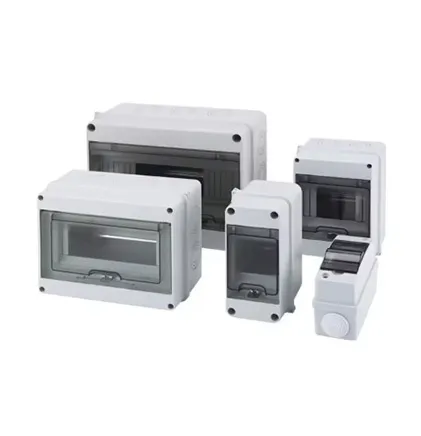
How to Choose the Right Electrical Distribution Box Manufacturer for Your Project
August 11, 2026
Every construction or renovation project, whether residential, commercial, or industrial, depends on a reliable electrical infrastructure. At the heart of that infrastructure sits the electrical distribution box — a component that routes power safely throughout a building while protecting circuits from overloads and short circuits. Selecting the right
electrical distribution box manufacturers is not a decision to take lightly; the quality of this component directly affects the safety, efficiency, and longevity of the entire electrical system.
What Is an Electrical Distribution Box and Why Does It Matter?
An electrical
distribution box — also known as a distribution board, panelboard, or breaker panel — is an enclosure that houses circuit breakers, fuses, and other protective devices. It receives power from the main supply and distributes it across multiple branch circuits, each protected against overcurrent. In residential settings, it safeguards household appliances and lighting circuits. In commercial and industrial environments, it handles higher loads and more complex wiring configurations.
A well-manufactured distribution box ensures consistent power delivery, reduces fire risks, and simplifies maintenance and troubleshooting. Poorly made units, on the other hand, can lead to overheating, electrical fires, and frequent tripping — problems that are costly and dangerous to fix after installation.
Key Factors to Consider When Evaluating Distribution Box Manufacturers
Not all manufacturers are equal. Here are the critical criteria to evaluate before placing an order:
Material Quality and Build Standards. The enclosure material — typically cold-rolled steel, ABS plastic, or polycarbonate — must be durable, fire-resistant, and suitable for the installation environment. Outdoor units require weatherproof ratings such as IP65 or IP66. Indoor units should meet relevant fire safety codes.
Certifications and Compliance. Look for manufacturers whose products carry recognized certifications such as CE, RoHS, and ISO 9001. These indicate adherence to international quality management and safety standards. For projects in specific regions, compliance with local electrical codes is non-negotiable.
Customization Capability. Many projects require non-standard configurations — specific numbers of outgoing circuits, particular busbar arrangements, or integration with smart monitoring systems. A manufacturer with strong OEM and ODM capabilities can tailor the
custom power distribution box to exact project specifications rather than forcing a one-size-fits-all solution.
Production Capacity and Lead Times. For large-scale construction projects, consistent supply is critical. A manufacturer with multiple production lines and automated equipment can deliver on time, even for bulk orders. Verify the factory's monthly output and typical lead time before committing.
After-Sales Support and Warranty. Reliable manufacturers stand behind their products with clear warranty terms and responsive technical support. This is especially important for international buyers who need assurance that issues can be resolved remotely.
Common Types of Distribution Boxes and Their Applications
Distribution boxes come in various configurations, each designed for specific use cases. Understanding these types helps in communicating requirements clearly to manufacturers:
Residential Consumer Units. Compact enclosures designed for houses and apartments, typically housing a main switch and several miniature circuit breakers (MCBs) with residual current device (RCD) protection.
Commercial Distribution Boards. Larger panels used in offices, retail spaces, and hospitality venues. These often include three-phase distribution and may incorporate surge protection devices.
Industrial Power Distribution Cabinets. Heavy-duty enclosures built for factories and plants, handling high amperage loads with robust busbar systems and advanced protection mechanisms.
Weatherproof Outdoor Distribution Boxes. Sealed enclosures with IP65 or higher ratings, designed for outdoor installations such as construction sites, parking lots, and public infrastructure.
The Advantage of Sourcing from a One-Stop Supplier
While it is possible to buy distribution boxes from a specialized manufacturer, sourcing from a comprehensive building materials supplier offers distinct advantages. A one-stop supplier like COLORIA GROUP provides not only the distribution box itself but also complementary electrical components —
switches & socket units,
cables, and conduit fittings — all from a single point of contact. This streamlines procurement, reduces shipping costs through consolidated logistics, and ensures compatibility across all electrical components.
COLORIA GROUP, headquartered in Foshan, China, operates as a one-stop solution provider for building materials, covering 13 product categories — from walls and flooring to elevators and solar panels. With an overseas agent in Saudi Arabia and decades of industry experience, the company supports projects across residential, commercial, and industrial sectors globally. Their electrical fixtures and cables category includes distribution boxes, switches, sockets, and a full range of wiring products, making them a practical choice for buyers who need more than just a single component.
Installation Best Practices for Electrical Distribution Boxes
Even the highest-quality distribution box will underperform if installed incorrectly. Here are essential guidelines to follow:
Hire a Licensed Electrician. Electrical installation is not a DIY task. A qualified electrician ensures compliance with local wiring regulations and safety codes.
Choose the Right Location. The distribution box should be installed in an accessible, dry, and well-ventilated area. Avoid placing it near water sources, gas lines, or in cramped spaces that hinder maintenance access.
Plan for Future Expansion. select a panel with spare capacity — typically 20-30% extra slots — to accommodate future circuit additions without replacing the entire unit.
Label Every Circuit. Clear labeling saves time during troubleshooting and is often required by electrical codes. Each breaker should be clearly marked with its corresponding area or appliance.
Perform Regular Inspections. Schedule periodic checks for signs of wear, loose connections, or corrosion, especially in outdoor or high-humidity installations.
Questions to Ask Before Placing an Order
When communicating with potential manufacturers, asking the right questions upfront can prevent misunderstandings and delays:
What certifications do your distribution boxes carry (CE, RoHS, ISO 9001)?
Can you provide customized configurations for specific project requirements?
What is your typical lead time for bulk orders, and what is your monthly production capacity?
Do you offer sampling before full production, and what are the terms?
What warranty and after-sales support do you provide for international buyers?
Looking for a reliable electrical distribution box supplier? COLORIA GROUP offers a complete range of electrical fixtures and cables, including distribution boxes, switches, sockets, and wiring products — all backed by international certifications and decades of manufacturing expertise. With a one-stop procurement model covering 13 product categories, you can source everything your project needs from a single trusted partner. Contact COLORIA GROUP today to discuss your requirements and request a quotation.