
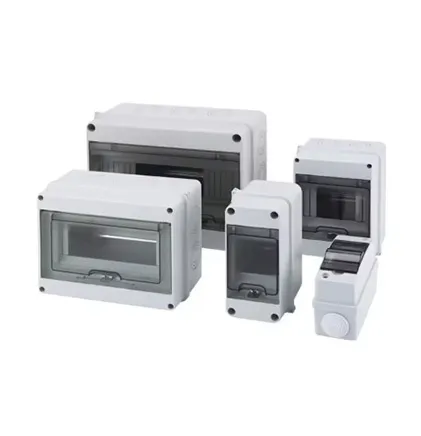
Every building — whether a family home, a high-rise office tower, or a busy factory floor — depends on one unassuming piece of equipment to keep electricity flowing safely where it is needed. That piece of equipment is the distribution box. It sits quietly on a wall, often overlooked, yet it is the central hub that divides incoming electrical power into separate circuits, protecting your wiring, your appliances, and the people who use the building every day.
Choosing the wrong distribution box — or sourcing it from an unreliable supplier — can lead to overloaded circuits, nuisance tripping, fire hazards, and expensive rework down the line. This guide walks you through everything you need to know to select the right distribution box for your project, avoid common pitfalls, and find a supplier you can trust.
A distribution box (also called a distribution board, electrical panel, or breaker panel) receives electricity from the main utility supply or a generator and splits it into multiple subsidiary circuits. Each circuit is protected by its own circuit breaker or fuse, which trips if the current exceeds safe levels. In simple terms, it acts as both a traffic controller and a safety gate for the electricity in your building.
Without a properly specified distribution box, you cannot safely operate lighting, HVAC systems, kitchen appliances, elevators, or any other electrical equipment in a modern building. It is literally the foundation of a building's electrical infrastructure.
Not all distribution boxes are created equal. The type you need depends on the scale of your project and where the box sits in the electrical hierarchy. Here are the most common types you will encounter on construction projects:
| Type | Best For | Typical Location |
|---|---|---|
| Main Distribution Board (MDB) | Large commercial buildings, industrial facilities | Main electrical room |
| Sub-Distribution Board (SDB) | Multi-floor buildings, separate wings | Each floor or zone |
| Final Distribution Board / Consumer Unit | Residential homes, apartments, small offices | Utility room, garage, or hallway |
| Motor Control Center (MCC) | Factories, warehouses, water treatment plants | Adjacent to machinery |
| Lighting Distribution Board | Hotels, retail stores, office complexes | Ceiling voids or dedicated electrical closets |
For most residential and light commercial projects, a final distribution board or consumer unit will suffice. Larger developments and industrial sites will require a cascade of MDBs, SDBs, and specialized panels. Getting the hierarchy right early in the design phase saves significant time and cost during installation.
When evaluating distribution boxes for your project, focus on these five critical factors:
The enclosure must match the installation environment. Indoor residential panels can use standard sheet steel enclosures, but outdoor installations or wet areas demand enclosures with a minimum IP65 rating to keep out dust and water. In corrosive environments — such as coastal areas or chemical plants — stainless steel or specially coated enclosures are essential.
The circuit breakers inside the box are the first line of defence against overloads and short circuits. Look for breakers that carry international certifications such as IEC 60898 or equivalent national standards. Miniature Circuit Breakers (MCBs) protect individual circuits from overcurrent, while Residual Current Devices (RCDs) protect people from electric shock by detecting leakage current. A well-designed board uses a combination of both.
The busbar is the copper or aluminium bar that distributes power internally to each circuit breaker. A busbar that is too thin for the total load will heat up, waste energy, and eventually fail. Always check that the busbar rating matches or exceeds the maximum demand of the installation.
Buildings change over time. New equipment gets added, and electrical demands grow. A distribution box with spare ways (empty slots for additional circuit breakers) allows future expansion without replacing the entire panel. As a rule of thumb, plan for at least 20–25% spare capacity.
Every circuit should be clearly labelled inside the panel, and the supplier should provide a wiring diagram. This makes maintenance faster, troubleshooting easier, and emergency shutdowns safer. A panel without proper labelling is a hazard waiting to happen.
Pro Tip: Before placing an order, always request a sample or detailed datasheet from your supplier. Verify the enclosure thickness, busbar material, and breaker certifications in writing. Reputable suppliers will provide this without hesitation.
Even the best distribution box will underperform if installed incorrectly. Here are the non-negotiable rules for a safe and compliant installation:
After years of working with contractors and developers, we have seen the same errors repeat on project after project. Avoid these pitfalls:
Adding up the ratings of individual appliances is not enough. Motors, compressors, and certain lighting types draw high inrush currents when they start. If your distribution box is sized only for steady-state loads, you will experience frequent breaker trips. Always calculate the maximum demand with diversity factors applied, as specified in your local electrical code.
Circuit breakers, busbars, and enclosures from different manufacturers may not fit together properly, even if they appear compatible. Mixing brands inside the same panel can void warranties, break compliance, and create mechanical stress on connections. Whenever possible, source the complete panel — enclosure, busbars, and breakers — from a single supplier.
A distribution box does not work in isolation. It connects to switches & socket outlets, cables, conduits, and sometimes backup power systems. If any link in this chain is substandard, the entire electrical system is compromised. This is why smart project managers prefer to work with an electrical fixtures & cables supplier that can provide the full range of compatible components — not just the panel in isolation.
A distribution box is not a commodity item you simply pick off a shelf. The quality of the product depends on the manufacturing process, the quality control systems in place, and the technical support available after delivery. Here is what to look for in a supplier:
COLORIA GROUP, headquartered in Foshan, China — one of the world's largest building materials manufacturing hubs — has been supplying electrical fixtures and building materials to residential, commercial, and industrial projects worldwide for years. Their product range covers the full electrical ecosystem: from distribution boxes and switchgear to cables, switches, sockets, and lighting. By consolidating your electrical procurement with one reliable partner, you reduce logistics complexity, ensure component compatibility, and gain a single point of accountability.
Quick Tip
When requesting a quote, always specify whether you need a surface-mounted or flush-mounted enclosure, the IP rating, the number of ways (circuits), and whether you require RCD protection. Providing these four details up front will save multiple rounds of back-and-forth communication.
A distribution box may not be the most glamorous part of a building, but it is unquestionably one of the most important. Getting it right means a safe, reliable electrical system that can serve your building for decades. Getting it wrong means risk, rework, and regret.
Take the time to understand your project's electrical requirements. Insist on certified components. Choose a supplier who offers the full package — not just one piece of the puzzle. And always leave room for the future.
Looking for a Reliable Distribution Box Supplier?
COLORIA GROUP provides certified distribution boxes, cables, switches, and complete electrical solutions for residential, commercial, and industrial projects worldwide. Contact our team today for a project consultation and quote.
Contact COLORIA GROUP →Recommend Products












