
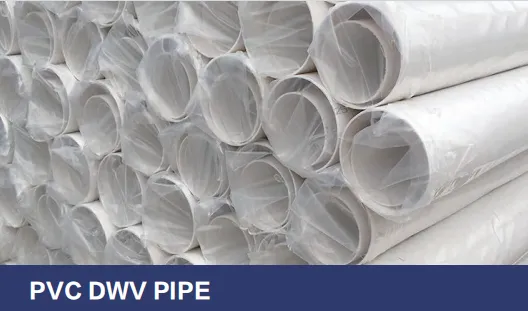
Starting a construction project—whether it's a cozy family home, a bustling commercial complex, or a critical infrastructure development—means making hundreds of decisions. From architectural designs to material selections, every choice ripples through the project's timeline, budget, and long-term success. Among these, one decision often flies under the radar until problems arise: choosing your PVC DWV pipe supplier. Drain, Waste, and Vent (DWV) systems are the unsung heroes of any building, quietly managing water flow, preventing odors, and ensuring structural integrity. But when the wrong supplier is chosen, the consequences can be disastrous: leaks that rot wooden structures, code violations that halt construction, or frequent replacements that drain your budget. So how do you sift through the noise and find a supplier that delivers quality, reliability, and peace of mind? Let's break it down.
Before diving into supplier selection, let's ground ourselves in why PVC DWV pipes matter. Unlike pressure pipes (which carry water under force), DWV pipes handle gravity-driven flow—draining wastewater from sinks, showers, and toilets, venting sewer gases, and preventing pressure buildup in plumbing systems. Their job is deceptively simple, but their performance is critical. A low-quality pipe might crack under temperature fluctuations, develop leaks at joints, or restrict flow with rough inner walls, leading to clogs and backups.
PVC (Polyvinyl Chloride) is the material of choice for DWV systems for good reason: it's lightweight, corrosion-resistant, cost-effective, and easy to install. But not all PVC is created equal. Cheaply made pipes often contain recycled materials or impurities that weaken the structure, while poorly extruded pipes may have inconsistent wall thickness or uneven diameters. These flaws don't just affect performance—they can put your project at odds with building codes. Most regions, including Saudi Arabia, enforce strict standards for DWV systems to ensure safety and longevity. A reputable PVC DWV pipe supplier understands this; they don't just sell pipes—they provide solutions that keep your project compliant and your clients happy.
The first rule of supplier selection? Never judge a pipe by its packaging. To truly evaluate quality, you need to dig deeper into the materials, manufacturing processes, and performance metrics that set great pipes apart from mediocre ones.
High-quality PVC DWV pipes start with virgin PVC resin—no shortcuts with recycled plastics that introduce weak points or contaminants. Ask your supplier about their raw material sourcing: Do they use certified resin? Can they provide documentation of material purity? A trustworthy supplier will happily share test reports or certifications from third-party labs. Impurities in the resin can lead to brittleness, especially in extreme temperatures, which is a major concern in regions like Saudi Arabia, where summer heat can push pipe temperatures to 60°C (140°F) or higher.
Imagine installing a 10-foot section of pipe only to find the next piece is ½ inch shorter in diameter—the joints won't seal, and leaks become inevitable. Dimensional consistency is non-negotiable. Check for uniform wall thickness (measured in Schedule 40 or Schedule 80 for pressure pipes, though DWV typically uses thinner schedules), straightness, and consistent outer diameters. A good supplier will have strict quality control processes, using calibrated equipment to inspect every batch. Ask to see samples: roll a pipe on a flat surface—if it wobbles, it's likely warped. Measure the inner diameter at multiple points; variations of more than 0.5mm could spell trouble during installation.
Construction sites are rough environments. Pipes get dropped, stepped on, and moved around—they need to take a beating without cracking. Ask about impact resistance testing, such as the "drop test" (where pipes are dropped from a specified height onto a concrete surface) or cold impact testing (critical for projects in cooler climates). A pipe that shatters on impact is a liability; one that flexes and holds its shape is a sign of quality. Some suppliers even offer pipes with additives like impact modifiers to, a feature worth prioritizing for high-traffic construction zones.
A pipe's job is to move water—and the smoother the inner wall, the better it performs. Rough surfaces create friction, slowing flow and increasing the risk of clogs (think hair, soap scum, or debris getting stuck). Run your finger along the inside of a sample pipe; it should feel glass-smooth. High-quality extrusion processes minimize imperfections, ensuring wastewater glides through with minimal resistance. This isn't just about performance—it's about reducing long-term maintenance costs. A pipe with smooth inner walls is less likely to need snaking or repairs, keeping your client's plumbing bills low for years to come.
In the construction world, certifications aren't just paperwork—they're proof that a product meets industry standards for safety, performance, and reliability. When evaluating a PVC DWV pipe supplier, certifications should be your first filter.
The American Society for Testing and Materials (ASTM) sets the bar for PVC DWV pipes with ASTM D2665 —the standard specification for PVC pipe, schedules 40, 80, and 120, for DWV applications. This standard covers everything from material composition to dimensional tolerances, impact strength, and chemical resistance. Any reputable supplier will have pipes certified to ASTM D2665. Don't just take their word for it—ask for a copy of the certification, and verify it with the issuing body. If a supplier hesitates to provide this, it's a red flag.
While ASTM standards are widely recognized, local regulations can add layers of complexity. For example, if you're working on a project in Saudi Arabia, your PVC DWV pipes must comply with Saudi Standards, Metrology and Quality Organization (SASO) requirements. A Saudi Arabia building materials supplier with local expertise will understand these nuances, ensuring their products meet SASO's specific testing criteria for durability in arid climates or compatibility with regional plumbing codes. International suppliers might offer ASTM-certified pipes, but they may not be pre-approved for use in Saudi projects, leading to delays in inspections. When in doubt, ask: "Can you confirm your pipes meet [local standard] and provide documentation from [local authority]?"
Beyond basic compliance, look for suppliers with certifications that signal a commitment to quality management. ISO 9001 certification, for example, indicates the supplier follows strict quality control processes throughout production, from raw material sourcing to shipping. For specialized projects—like hospitals or schools—you might need pipes that resist mold, mildew, or chemical corrosion. While PVC is naturally resistant to many chemicals, some suppliers offer enhanced formulations, such as antimicrobial additives. If your project includes sensitive environments, ask if the supplier can provide pipes compatible with class A fireproof CPL inorganic board systems, ensuring seamless integration with other fire-rated materials.
Even the highest-quality pipes are useless if they don't arrive on time. Construction schedules are tight, and delays in material delivery can domino into missed deadlines, labor overruns, and strained client relationships. A reliable supplier isn't just a vendor—they're a partner in keeping your project on track.
Start by asking for clear lead times: How long does it take to process an order? Do they have stock for standard sizes, or do custom orders require manufacturing? A supplier with a local warehouse might deliver in 2–3 days, while an international supplier could take 4–6 weeks (plus shipping). Be wary of suppliers who promise "next-day delivery" without checking inventory—overpromising and underdelivering is a common tactic. Ask for a written quote that includes delivery dates, and build in a buffer (we recommend 10–15% extra time) to account for unforeseen delays.
A supplier with poor inventory management is a ticking time bomb. Imagine needing 500 feet of 3-inch DWV pipe for a residential complex, only to find your supplier has sold out and won't restock for a month. Ask about their inventory levels for common sizes (1½-inch, 2-inch, 3-inch, 4-inch) and their process for restocking. Do they use automated systems to track stock? Do they have relationships with multiple manufacturers to avoid shortages? A supplier that maintains a robust inventory—even for less common sizes—shows they prioritize customer needs over short-term cost savings.
Small suppliers might excel at serving local contractors with small orders, but commercial projects often require thousands of feet of pipe. Can your supplier handle bulk orders? Ask about their production capacity: How many tons of PVC do they extrude monthly? What's their maximum order size? A supplier with limited capacity might subcontract production, leading to inconsistencies in quality. Additionally, inquire about packaging—bulk orders should arrive on pallets, securely strapped to prevent damage during transit. Loose pipes tossed into a truck are likely to arrive scratched, dented, or broken.
Weather delays, port closures, or manufacturing issues can disrupt even the best-laid plans. A proactive supplier has contingency plans: backup manufacturing facilities, alternative shipping routes, or partnerships with secondary suppliers. Ask: "What happens if your main production line goes down?" or "How do you handle delays due to customs issues?" Their answer will reveal how seriously they take reliability. For example, some suppliers maintain safety stock for critical clients, ensuring you get priority during shortages. Others offer expedited shipping options at a reasonable cost, so you're not stuck paying exorbitant fees to meet a deadline.
A pipe is just a piece of plastic until you need help. Whether you're troubleshooting a joint leak, need technical advice on installation, or want to return a defective batch, responsive customer service can make or break your experience. When vetting suppliers, ask: Do they treat you like a transaction, or a partner?
Installing DWV systems isn't always straightforward. You might need advice on pipe sizing for high-rise buildings, or guidance on venting configurations to prevent siphoning. A good supplier employs technical experts—engineers or certified plumbers—who can answer these questions. Test their knowledge: "What's the maximum horizontal run for a 2-inch DWV pipe before needing a vent?" or "How do your pipes perform in temperatures above 50°C?" A supplier that stumbles over basic questions is a red flag. Look for those who offer resources, too: installation guides, CAD drawings, or webinars on best practices. Some even provide on-site training for your crew, ensuring everyone is on the same page.
No one wants to deal with defective products, but when they happen, you need a supplier who takes responsibility. Ask about their return policy: Do they offer full refunds for faulty pipes? Will they send replacements at no cost? A warranty is a good sign—most reputable suppliers offer 5–10 year warranties on PVC DWV pipes, covering manufacturing defects. But read the fine print: Some warranties exclude damage from improper installation, so make sure your crew is trained to follow the supplier's guidelines. Beyond returns, post-installation support matters. If a pipe fails a year into the project, will the supplier send a technician to investigate, or leave you to handle it alone? A partner-like supplier will go the extra mile to resolve issues, even after the sale.
Not every project fits standard pipe sizes. Maybe you need 20-foot lengths instead of the standard 10-foot, or color-coded pipes to differentiate waste lines from vent lines. A flexible supplier can accommodate these needs. Ask about customization: Do they offer cut-to-length services? Can they add colorants or markings (like "DWV" stamps for code compliance)? While customization may add lead time or cost, it can save time during installation. For example, pre-cut pipes reduce on-site labor, and color-coding minimizes errors. A supplier that's willing to adapt shows they value your unique project requirements.
It's tempting to choose the supplier with the lowest price tag, but "cheap" often comes with hidden costs: frequent replacements, repairs, or lost time due to delays. Instead of focusing solely on upfront cost, calculate the total cost of ownership (TCO)—the sum of purchase price, installation, maintenance, and replacement over the pipe's lifespan. A slightly more expensive pipe might save you thousands in the long run.
Let's crunch the numbers. Suppose Supplier A offers 10-foot PVC DWV pipes for $5 each, while Supplier B charges $7. At first glance, Supplier A seems cheaper—but their pipes have a 5-year lifespan and require annual inspections. Supplier B's pipes, certified to ASTM standards, last 20 years with minimal maintenance. Over 20 years, you'd buy four sets from Supplier A ($5 x 4 = $20) plus inspection costs ($100/year x 20 = $2,000), totaling $2,020. With Supplier B, you buy once ($7) and pay $100 in inspections every 5 years ($400 total), totaling $407. The "cheaper" option ends up costing five times more. A good supplier will help you understand TCO, not just push the lowest price.
If you're placing a large order (5,000+ feet of pipe), don't hesitate to negotiate. Many suppliers offer tiered pricing: the more you buy, the lower the per-unit cost. Some even provide loyalty discounts for repeat customers. But be clear about your needs: "I can commit to 10,000 feet annually if you can offer a 10% discount." Suppliers value long-term relationships, and they'll often adjust pricing to secure a steady stream of business. Just ensure discounts don't come with strings attached, like minimum order quantities that lock you into more than you need.
A quote of $5 per pipe might balloon to $7 after adding shipping, handling, or taxes. Always ask for a detailed breakdown: What's included in the price? Are there fuel surcharges for delivery? Do they charge for pallets or packaging? Some suppliers offer free shipping for orders over a certain amount, which can offset higher per-unit costs. Others charge restocking fees for returns, so clarify that upfront. Transparency is key—if a supplier hesitates to itemize costs, they might be hiding something.
| Factor | What to Look For | Why It Matters |
|---|---|---|
| Product Certification | ASTM D2665 compliance, SASO certification (for Saudi Arabia projects), ISO 9001 quality management | Ensures pipes meet safety and performance standards; avoids code violations |
| Material Quality | Virgin PVC resin, consistent wall thickness, smooth inner walls, impact resistance | Reduces leaks, clogs, and replacements; ensures longevity |
| Lead Time | 2–5 days for standard orders; clear timelines for custom sizes | Prevents project delays and labor overruns |
| Inventory | Stocked standard sizes (1½–4 inches); ability to fulfill bulk orders | Avoids stockouts and last-minute scrambles for materials |
| Technical Support | In-house experts, installation guides, on-site training options | Solves problems quickly; ensures proper installation |
| Warranty | 5–10 year coverage for manufacturing defects | Protects against faulty products and unexpected costs |
| Total Cost of Ownership | Transparent pricing, minimal maintenance requirements, long lifespan | Saves money over the pipe's lifetime; avoids hidden expenses |
Choosing a PVC DWV pipe supplier isn't just about buying materials—it's about building a relationship that supports your project's success. The right supplier will prioritize quality, reliability, and your peace of mind, while the wrong one will turn a simple plumbing decision into a recurring headache. By focusing on product quality, certifications, supply chain reliability, customer service, and total cost of ownership, you'll narrow down the options to those who don't just sell pipes—they deliver solutions.
Remember, the best supplier for your project isn't necessarily the biggest or the cheapest. It's the one that listens to your needs, answers your questions honestly, and stands behind their products long after the sale. So take your time, ask tough questions, and don't settle for anything less than a partner who's as invested in your project's success as you are. After all, when your DWV system works flawlessly for decades, you'll be glad you did.
Recommend Products












