
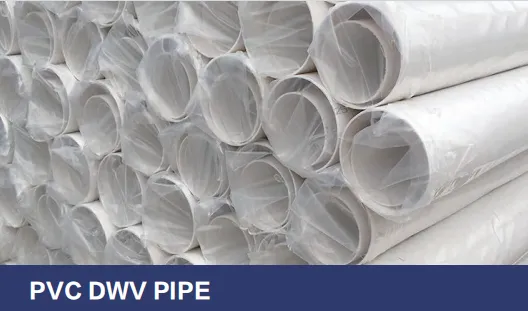
When you walk into a newly built home, office, or hotel, your eyes might be drawn to sleek countertops, modern lighting, or stylish flooring. But beneath the surface—behind walls, under floors, and within ceilings—lies a silent workhorse that keeps these spaces functional: the Drain, Waste, and Vent (DWV) system. Often overshadowed by more visible elements, PVC DWV pipes are the unsung heroes of plumbing, responsible for efficiently carrying wastewater away and ensuring proper ventilation to prevent odors and pressure buildup. Choosing the right PVC DWV pipe solutions isn't just a matter of checking a box on a materials list; it's about ensuring long-term reliability, compliance with codes, and avoiding costly repairs down the line. Whether you're a homeowner tackling a bathroom renovation, a contractor managing a commercial build, or a developer overseeing a residential complex, understanding how to select the best PVC DWV pipes and partner with the right supplier can make all the difference in the success of your project.
Before diving into selection criteria, let's start with the basics: What exactly are PVC DWV pipes, and why have they become the go-to choice for modern construction? DWV stands for Drain, Waste, and Vent, and these pipes form the backbone of a building's plumbing system. Unlike supply pipes, which carry clean water under pressure, DWV pipes handle gravity-driven wastewater (from sinks, showers, toilets) and venting (to equalize pressure and release sewer gases).
PVC, or polyvinyl chloride, is a synthetic plastic polymer prized for its unique combination of properties that make it ideal for DWV applications. Unlike cast iron (once the industry standard), PVC is lightweight—making installation easier and reducing labor costs. It's also highly resistant to corrosion, rust, and chemical damage from common household and commercial waste, ensuring a longer lifespan (typically 50+ years with proper care). Compared to copper, PVC is significantly more affordable, making it a budget-friendly option for large-scale projects. And unlike galvanized steel, it doesn't leach harmful substances into the environment, aligning with modern sustainability goals.
But not all PVC pipes are created equal. DWV pipes are specifically designed for non-pressurized applications, meaning they're not intended for carrying water under pressure (that's the job of pressure pipes like PVC-U or PPR). They're available in various diameters (from 1.5 inches for small fixtures to 10 inches or more for commercial mains) and are often marked with identifiers like "ASTM D2665"—a key standard we'll explore later. When you see terms like "PVC DWV pipe solutions," this refers to the complete package: pipes, fittings (tees, elbows, couplings), and technical support needed to create a functional, code-compliant system.
The first step in choosing PVC DWV pipe solutions is to assess your project type. Residential and commercial projects have vastly different requirements, and a one-size-fits-all approach rarely works.
Residential Projects: Think single-family homes, townhouses, or small apartment buildings. These typically involve lower wastewater volumes, with fixtures like sinks, showers, bathtubs, and toilets spread across a few rooms. For residential use, pipe diameters are often smaller (1.5–4 inches), and the focus is on cost-effectiveness and ease of installation. A reputable residential building materials supplier will offer a range of sizes tailored to these needs, along with fittings designed for tight spaces (like 90-degree elbows for bathroom vanities).
Commercial Projects: Hotels, hospitals, shopping malls, and office complexes demand more robust DWV systems. With dozens (or hundreds) of fixtures—think multiple restaurant kitchens, high-traffic restrooms, and industrial laundry facilities—commercial DWV systems must handle higher flow rates and larger volumes. This often requires larger pipe diameters (4–8 inches or more) and heavy-duty fittings. A commercial building materials supplier will prioritize durability and compliance with strict industry standards, as failure in a commercial setting can lead to costly downtime, health code violations, or even legal issues.
Choosing the right pipe size is critical—too small, and you'll face frequent clogs and backups; too large, and you'll waste money on unnecessary materials. Sizing is determined by "fixture units" (FUs), a measure of how much wastewater a fixture produces. For example, a toilet is typically 3 FUs, a sink is 1 FU, and a shower is 2 FUs. Local building codes (e.g., IPC, UPC) provide charts that map total FUs to required pipe diameters.
For instance, a residential bathroom with a toilet, sink, and shower might have a total of 6 FUs, requiring a 3-inch main drain line. A commercial kitchen with multiple sinks, dishwashers, and floor drains could have 20+ FUs, necessitating a 6-inch line. A trusted PVC DWV pipe supplier will help you calculate FUs based on your fixture list and local codes, ensuring you select the optimal diameter.
When evaluating PVC DWV pipe solutions, certifications are non-negotiable. These ensure the product meets safety, performance, and environmental standards. The most important certification for DWV pipes in North America is ASTM D2665 , which specifies requirements for PVC pipe for drain, waste, and vent applications. Pipes meeting this standard are tested for impact resistance, chemical stability, and dimensional accuracy.
Additionally, look for NSF/ANSI 14 certification, which verifies that the pipe is safe for use with potable water (though DWV doesn't carry potable water, this certification ensures no harmful chemicals leach into the environment). Avoid uncertified pipes—they may be cheaper upfront, but they're prone to cracking, leaking, or failing prematurely, leading to expensive repairs. A reputable PVC DWV pipe supplier will prominently display these certifications and provide test reports upon request.
Even the best pipe design is useless if your supplier can't deliver quality products on time. When vetting a PVC DWV pipe supplier, consider these factors:
To illustrate how to compare suppliers, let's consider three hypothetical PVC DWV pipe suppliers and evaluate them based on the criteria above. This table will help you visualize what to look for:
| Supplier | Experience | Certifications | Product Range | Technical Support | Delivery Time | Customer Reviews |
|---|---|---|---|---|---|---|
| Supplier A (Residential Focus) | 15 years | ASTM D2665, NSF/ANSI 14 | Pipes (1.5–4"), basic fittings | Phone/email support, sizing guides | 2–3 business days (local) | "Reliable for home projects—delivered on time and helped with code questions." |
| Supplier B (Commercial Focus) | 25 years | ASTM D2665, NSF/ANSI 14, ISO 9001 | Pipes (2–12"), heavy-duty fittings, custom adapters | On-site engineers, 24/7 emergency support | 5–7 business days (national) | "Saved our hotel project—their engineer caught a sizing error before installation." |
| Supplier C (Budget Option) | 3 years | No visible certifications | Limited sizes (1.5–3"), generic fittings | Minimal—only order tracking | 7–10 business days (inconsistent) | "Cheap, but pipes arrived cracked. No help with returns." |
As you can see, Supplier A and B prioritize quality and support, while Supplier C cuts corners. For residential projects, Supplier A might be ideal, offering the right mix of affordability and service. For commercial builds, Supplier B's technical expertise and robust product range would be worth the slightly longer delivery time. Supplier C, despite lower costs, poses significant risks—proof that price alone shouldn't drive your decision.
Even the best PVC DWV pipe solutions can fail if installed incorrectly. Here are key tips to ensure a successful installation:
PVC DWV systems are low-maintenance, but proactive care can extend their lifespan and prevent issues:
John, a homeowner in Texas, was renovating his 1970s home, including a complete bathroom overhaul. The original cast iron DWV pipes were corroded, with visible leaks and frequent clogs. His contractor recommended switching to PVC DWV pipes for their durability and cost-effectiveness. John contacted a local residential building materials supplier with 15 years of experience, known for their focus on homeowner projects.
The supplier sent a representative to assess the project, helping John select 2-inch pipes for the shower and toilet, 1.5-inch pipes for the sink, and matching fittings (including a vent stack adapter to connect to the existing roof vent). They provided ASTM D2665-certified pipes and walked the contractor through local code requirements (e.g., slope for the shower drain). The pipes were delivered within 3 days, and the installation took just 2 days (compared to 4+ days for cast iron). Five years later, John reports zero leaks or clogs, and the system has handled everything from family showers to holiday gatherings.
A national hotel chain was constructing a 200-room property in Florida, with 200+ bathrooms, 3 restaurants, and a large laundry facility. They needed a DWV system that could handle high occupancy (up to 400 guests) and comply with strict state health codes. The project manager partnered with a commercial building materials supplier specializing in hospitality projects.
The supplier provided 4-inch main drain lines, 3-inch branch lines for bathroom groups, and heavy-duty PVC DWV fittings designed to withstand constant use. They assigned an on-site engineer to oversee installation, ensuring proper slope (1/4 inch per foot) and vent spacing (per IPC standards). When a last-minute design change required custom adapters to connect to the municipal sewer line, the supplier fabricated and delivered the parts within 48 hours, avoiding construction delays. Today, the hotel has been operational for 3 years, with no DWV-related issues—even during peak tourist seasons.
Even with careful planning, missteps can happen. Here are the most common mistakes to steer clear of:
Choosing the best PVC DWV pipe solutions is a decision that impacts your project's success, budget, and long-term functionality. By understanding your project type (residential or commercial), prioritizing size and certifications, vetting suppliers thoroughly, and following best practices for installation and maintenance, you can create a DWV system that's reliable, efficient, and compliant. Remember, PVC DWV pipes are an investment—not an expense. A well-chosen system, paired with a trusted supplier (whether a residential building materials supplier or commercial building materials supplier), will save you time, money, and stress for decades to come. So, take the time to research, ask questions, and partner with experts—your building (and your future self) will thank you.
Recommend Products












