
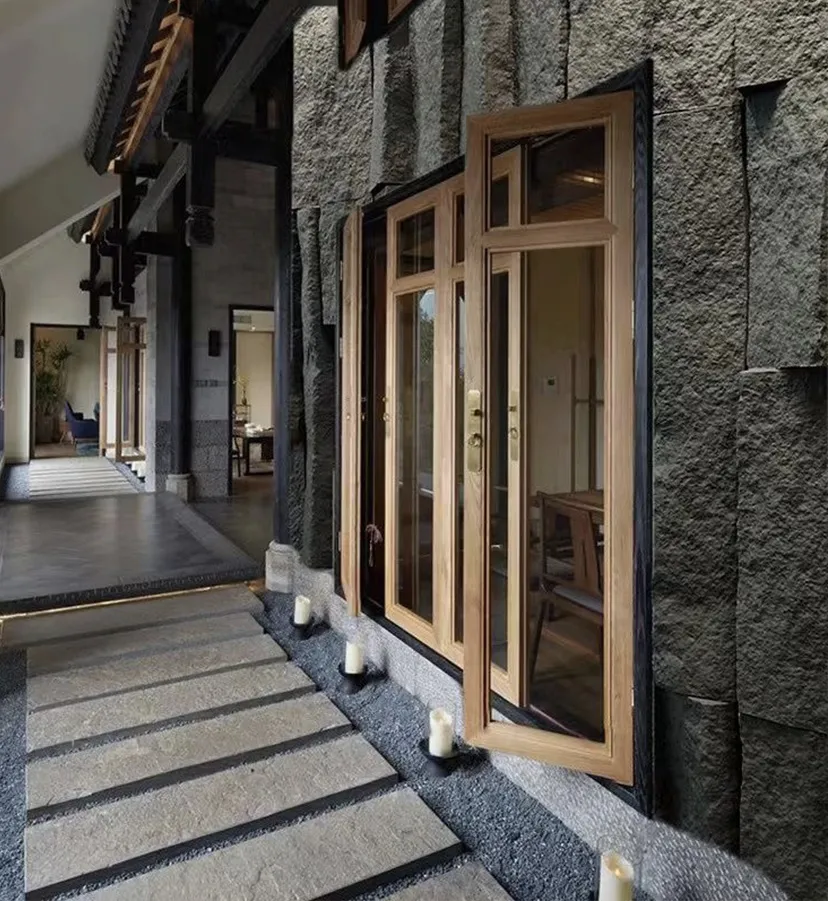
Strip rock wall cladding — also known as ledge stone, stacked stone, or strip stone — has become a go-to choice for architects, interior designers, and homeowners looking to add texture and depth to their spaces. As a leading one-stop architectural solution provider, COLORIA GROUP understands that the key design decision when working with strip rock is orientation: horizontal or vertical? Each direction carries its own visual language, spatial effects, and practical considerations. This guide walks you through how to make the right choice for your project.
Strip rock panels are composed of thin, elongated stone pieces arranged in a linear pattern. Unlike irregular stone veneers that scatter the eye, strip rock emphasizes clean, directional lines that guide attention across a surface. The linear quality of these panels creates a sense of order and rhythm, making them particularly well-suited to contemporary and transitional interiors.
The pattern found in natural stone itself tells a geological story. Sedimentary stones like travertine, sandstone, and limestone form through the compression of mineral deposits over millions of years, creating natural striations. When quarried stone is "vein cut" — sliced parallel to these layers — the result is long, flowing stripes that showcase the stone's organic beauty. For those exploring decorative profiles solutions, strip rock offers a perfect balance of natural character and architectural precision.
Horizontal strip rock installations are the most popular choice in residential and commercial design worldwide. The reason is straightforward: horizontal lines mimic the natural horizon, creating a sense of stability, groundedness, and spaciousness. This format is also forgiving — minor alignment imperfections tend to read as natural texture rather than as installation errors, making it a practical choice for large-scale projects.
The most common horizontal strip rock formats include ledge stone panels — where stones are cut into flat, uniform horizontal bands with sharp, clean edges — and stacked stone panels, which offer a more rustic, naturally textured appearance. Ledge stone suits contemporary and minimalist spaces, while stacked stone adds warmth to traditional or transitional interiors.
Vertical strip rock installations are a bolder, more dramatic choice. By drawing the eye upward, vertical lines make ceilings feel higher and walls feel more imposing — an effect that can be particularly striking in entryways, hotel lobbies, or spaces with generous architectural height. When combined with the right walls solutions, vertical strip rock can transform an ordinary wall into a commanding design statement.
Choosing the right material is as important as choosing the right orientation. Natural stones like quartzite, slate, sandstone, and marble each bring distinct colors, textures, and durability profiles. Engineered stone options — including PU stone panels, WPC wall panels, and MCM flexible cladding — offer lighter weight and more consistent finishes, which can be advantageous for interior walls where load-bearing capacity is a concern or where budget constraints demand more economical alternatives without sacrificing visual impact.
For horizontal installations, stones with natural striations — such as travertine, layered sandstone, or vein-cut marble — enhance the linear effect and create a seamless flow across the wall. For vertical applications, split-face finishes and stones with pronounced vertical veining can amplify the upward movement and create a more dramatic presence.
A growing trend in contemporary design is the combination of horizontal and vertical strip rock within the same space. For example, a horizontal stacked stone feature wall can be paired with vertical accent panels on adjacent walls, creating visual tension and layered complexity. This approach works particularly well in open-plan living areas where different zones benefit from distinct spatial cues — a horizontal treatment in the dining area can create intimacy, while a vertical accent in the entryway adds drama and grandeur.
Beyond aesthetics, several practical factors should guide your orientation decision. Horizontal installations are generally more forgiving during installation — minor alignment imperfections read as natural texture rather than errors. Vertical installations require more precise execution, as the human eye is more sensitive to deviations in vertical alignment.
Lighting also plays a crucial role. Grazing light — where fixtures are positioned to wash light across the stone surface — dramatically enhances the texture of strip rock. For horizontal installations, linear LED strips placed above or below the panel can emphasize the banding effect. For vertical installations, side-mounted lighting creates dramatic shadow play that highlights the stone's depth and three-dimensional quality.
Wall preparation is equally important regardless of orientation. The surface should be clean, dry, and structurally sound before installation. For concrete or brick substrates, a primer or bonding agent may be needed. For wooden surfaces, additional reinforcement is often required to support the weight of natural stone panels.
The choice between horizontal and vertical strip rock ultimately depends on the spatial effect you want to achieve and the architectural context of the room. Horizontal orientation brings calm, width, and modern restraint — it is the safer, more versatile option that works well in most residential settings. Vertical orientation brings height, drama, and architectural presence — it is the bolder choice that makes a lasting impression in commercial and high-end residential projects.
By understanding these principles and carefully evaluating your space, you can select strip rock solutions that not only complement your design theme but actively enhance the experience of the space itself. Whether you are designing a cozy living room feature wall or a grand hotel lobby, the right strip rock solution — in the right orientation — can elevate your project from ordinary to extraordinary.
Recommend Products












