
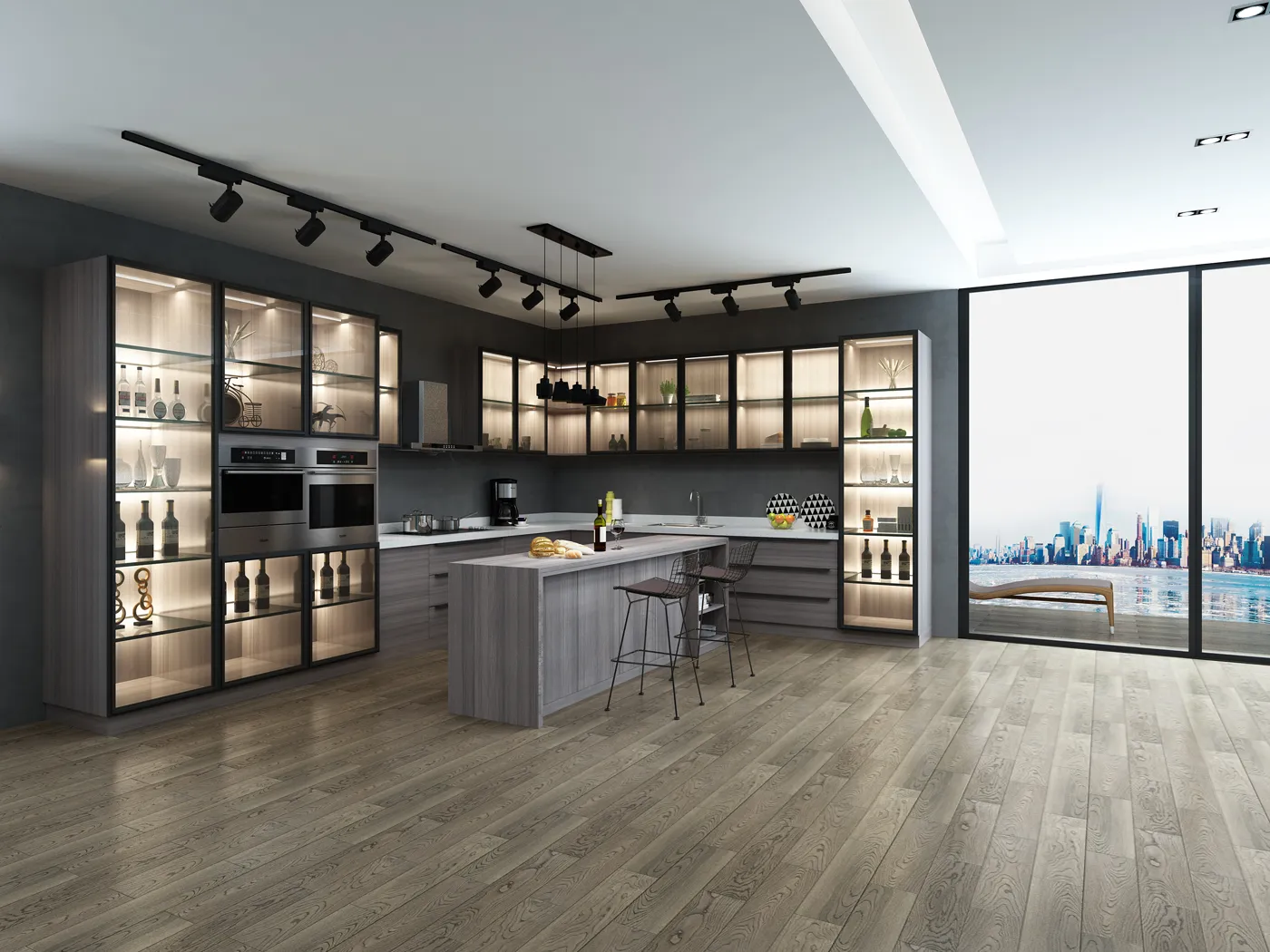
Your essential guide to creating a space that's both beautiful and functional
Picture walking into a kitchen where every design element feels intentional, where clean lines and thoughtful details create a space that's both sophisticated and welcoming. That's the magic of modern kitchen design. Unlike traditional kitchens with ornate details, modern designs embrace simplicity, functionality, and a sense of spaciousness. The cabinets become the visual anchor of the space, setting the tone for everything else.
Contemporary kitchen styles focus on what architects call "visual weight reduction" – creating a sense of airiness and openness through sleek surfaces and hidden storage. The color palette typically leans toward monochromatic schemes with accents of natural materials, while hardware becomes jewelry-like in its simplicity. When your cabinetry aligns with these principles, you create a kitchen that doesn't just look good in photographs – it feels good to live in every day.
Minimalist door styles without intricate detailing create visual calm
Innovative pull-outs and organizational systems keep counters clutter-free
Quality finishes from smooth laminates to natural wood grains
Getting your cabinet style right is about finding that sweet spot between your aesthetic preferences and practical needs. Let's explore four popular modern cabinet profiles:
With absolutely no trim or detail, these ultra-minimalist cabinets represent pure modern sophistication. The completely smooth surface becomes a canvas for incredible finishes like high-gloss lacquers that seem to glow from within. The seamless look gives walls the appearance of continuous material rather than interrupted cabinet doors. For small kitchens especially, that uninterrupted visual plane creates an expanded sense of space. Hardware can be recessed touches or even fingerprint-resistant push-to-open systems that maintain the perfect clean plane.
The Shaker style gets a modern refresh by slimming down everything. Frame dimensions get thinner, rails and stiles become more delicate, and center panels sit nearly flush. The result honors timeless craftsmanship while feeling thoroughly current. Unlike their chunkier traditional cousins, these slim-profile Shakers play well in small kitchens and open-concept spaces. The subtle recess at the center panel creates just enough shadow to add dimension without visual weight. Pair with brass rod pulls that extend nearly the full width of drawers for a sophisticated contemporary touch.
Fluted designs bring rhythmic texture that catches light differently throughout the day. The vertical lines create visual height in a space while adding tactile interest. When used selectively – perhaps on an island or pantry cabinet – fluting becomes sculptural. Wire-brushed woods reveal the grain beneath in a way that glossy finishes can't. These natural textures ground ultra-modern kitchens, keeping them from feeling sterile. The beauty lies in how these surfaces evolve over time, developing a patina that synthetic surfaces can't replicate.
The most dynamic modern kitchens often feature clever color blocking. By painting upper cabinets a lighter shade (or even white) while keeping lowers darker, you anchor the space visually. This technique makes ceilings appear taller while creating a grounded, stable feel below counter height. You might match lowers to an accent wall or a statement range hood. The key is choosing colors with similar undertones so they harmonize rather than clash. Modern interpretations often use moody charcoals and navy blues for lowers while floating uppers seem to disappear against light walls.
Your cabinet surfaces impact both the aesthetics and longevity of your kitchen. Modern designs embrace materials that deliver both beauty and performance:
High-Pressure Laminates have evolved tremendously beyond the drab options of decades past. Today's laminates offer stunning reproductions of marble veins, concrete textures, and fine wood grains indistinguishable from the real thing at a fraction of the cost. Technological advancements mean these surfaces now resist scratches, heat, and stains far better than earlier generations. For contemporary kitchens prioritizing low maintenance, laminates are the smart choice.
Wood Veneers bring the warmth of natural materials. Modern applications focus on showcasing distinctive grain patterns – think dramatic rift-cut white oak with pronounced rays, or walnut with deep, swirling figuration. The beauty comes from embracing wood's natural variations rather than trying to homogenize them. Pair with flush-inlay pulls that become nearly invisible on the surface for a supremely sophisticated look.
Painted Finishes remain a modern staple but with updated approaches. Instead of uniform factory finishes, many designers are embracing subtle variations with brushed-on paint that reveals the painter's hand. Soft sheens rather than high gloss create sophistication that wears well over time. The trend toward deep, saturated colors like forest greens and navies makes cabinetry the kitchen's focal point rather than something to hide.
Color transforms cabinets from mere storage to design statements that shape how we experience space:
Monochromatic Magic doesn't have to mean all-white. Consider working within a single color family but varying intensity. Light greyish blues on walls might deepen to a saturated navy on the island. Or take greens from barely-there sage to deep forest. This monochromatic approach creates visual harmony and sophistication. The key is keeping undertones consistent – mix warm with warm, cool with cool.
Wood Tones create instant warmth in modern kitchens. Modern approaches avoid the honeyed oranges of traditional oak in favor of cooler, more neutral woods. Think white oak with its subtle grey undertones, or walnut that reads as a complex dark neutral rather than just brown. Contemporary finishes often leave wood lighter or go dramatically dark – that middle-ground caramel finish feels dated to modern sensibilities.
Contrast as Composition plays beautifully in open-plan kitchens where cabinetry helps define zones. Try matching the kitchen island color to the living room's accent wall. Or carry the cabinet hue onto a range hood that acts as sculpture. In small kitchens, consider carrying cabinet colors right to the ceiling to increase the sense of height. Dark cabinetry can actually make a small space feel cozier and more intimate rather than cramped – especially with thoughtful lighting.
Reflective finishes like high-gloss lacquered surfaces bounce light around, multiplying both natural and artificial lighting. This works particularly well in urban apartments with smaller windows.
Open shelving alternation - instead of all uppers, try having one run of cabinets with open shelving beside it. This breaks up the visual weight while providing both display and concealed storage.
Toe-kick drawers utilize that often-wasted space beneath base cabinets for shallow storage of baking sheets or cutting boards.
Hardware transforms cabinets from generic to personal style statements. Modern kitchens approach pulls and knobs as the jewelry that completes the outfit:
Recessed Pulls maintain that minimalist profile by carving channels directly into drawer and door fronts. Your fingers naturally find these grooves without needing any protruding elements. This approach creates stunning shadow lines on vertical surfaces that change with the daylight.
Long Linear Pulls emphasize the horizontal lines of contemporary designs. Brass and matte black options dominate modern kitchens, with lengths that span nearly the full width of drawers. This creates a graphic element that draws the eye across cabinetry compositions.
Integrated Touch Systems offer the ultimate minimalist approach using push-to-open mechanisms with soft-close hardware. A gentle push on the cabinet front releases the door, which closes silently without slamming. This keeps surfaces completely clean when installed properly with hidden hinges.
When investing in cabinetry, consider how it will serve you 5 or 10 years from now:
Universal Design Features like base cabinet roll-out shelves bring everything within view and reach without crouching or rummaging. Consider drawer depths that accommodate both shallow utensils and tall bottles. Soft-close hardware isn't just luxurious – it prevents damage from slammed doors.
Adaptable Systems allow cabinet configurations to change as your needs evolve. Look for partition systems inside cabinets that can be repositioned. Some drawer systems even offer convertible organization with dividers that snap in and out as needed.
Material Innovations continuously emerge. New laminates with anti-fingerprint finishes keep surfaces looking pristine. Materials like terrazzo tile are making their way into cabinet design through accents and integrated splashes of texture and color that complement minimalist aesthetics. Meanwhile, eco-conscious options like bamboo composites offer sustainability without sacrificing beauty.
Creating your dream modern kitchen involves balancing aesthetics, functionality, and personal expression:
Start with priorities – what matters most? Minimal appearance? Maximum storage? Easiest cleaning? Be honest about how you'll really use the space daily.
Seek harmony between your cabinet choices and other kitchen elements. The backsplash shouldn't fight with cabinet fronts – their textures and colors need conversation, not competition.
Remember scale - oversize hardware on small cabinets becomes overwhelming, while tiny pulls get lost on large drawer fronts. Test how elements look together at actual size using samples mounted on boards.
Lighting completes the picture . Modern cabinet designs come alive with layered lighting – undercabinet LEDs that graze textured surfaces, interior cabinet lights that showcase contents, and overhead fixtures that complement your hardware finishes.
Before finalizing your cabinet decisions, run through this essential list:
Recommend Products












