
The fitting room is where purchase decisions are made. A shopper may browse racks for twenty minutes, but the final yes or no almost always happens in those few square feet behind a curtain or door. At the center of that decision is the mirror. Choosing the right fitting room mirror is not just about reflection — it is about building customer confidence, reducing returns, and driving sales. This guide walks you through what to look for when selecting mirrors for your retail fitting rooms.
Standard mirrors often use glass with a high iron content, which produces a faint green tint. This subtle color cast can alter how fabrics look, wash out skin tones, and make clothing appear duller than it actually is. For a retail store, this is a silent sales killer — the customer tries on a garment, feels something is off, and puts it back without ever knowing the mirror was the problem.
High-quality mirrors use low-iron glass with a clean silver backing. The result is a true-to-life reflection with no color distortion. When a shopper sees the real color and texture of a garment, their confidence in the purchase increases measurably. As a trusted mirror supplier, COLORIA GROUP provides commercial-grade mirrors that deliver accurate, distortion-free reflections — exactly what retail environments demand.
Beyond glass clarity, flatness is equally important. Cheap mirrors can warp over time due to humidity and temperature changes, creating wavy or stretched reflections. A warped mirror breaks trust instantly. Customers notice when their reflection looks wrong, even if they cannot articulate why. Commercial-grade mirrors with proper thickness and backing maintain their flatness for years, even in high-traffic retail settings.
Full-length mirrors are the gold standard for fitting rooms. They allow customers to see their entire outfit from head to toe without stepping back or craning their neck. This complete view is essential for evaluating how a garment fits as a whole — not just the top or bottom in isolation. If your fitting room can accommodate one, a full-length mirror should be your first choice.
Wall-mounted mirrors, while often smaller, offer flexibility in tight spaces. They can be installed at specific heights and angles to serve different purposes. For boutiques with limited square footage, a combination works well: a large wall-mounted mirror as the primary reflection surface, paired with a smaller adjustable mirror for side and back views.
A single front-facing mirror is not enough. Customers want to see how a garment fits from the side and back. Three-way mirrors — either foldable panels or fixed multi-angle installations — provide this complete view without requiring the shopper to twist awkwardly. This setup is especially valuable for formal wear, tailored clothing, and any store where fit is a primary selling point.
Mounting a mirror at a slight backward tilt — typically 3 to 5 degrees — creates a subtle elongating effect that looks natural and flattering. This technique is widely used in high-end boutiques. The angle should be precise enough to enhance the view without making the customer aware of any trickery. Professional installation is key here; a poorly executed tilt looks unnatural and can have the opposite effect.
Even the best mirror will underperform in poor lighting. Harsh overhead bulbs cast unflattering shadows on the face, accentuate fine lines, and create dark bags under the eyes. This is a common mistake in retail fitting rooms — a single ceiling fixture that works against the mirror rather than with it.
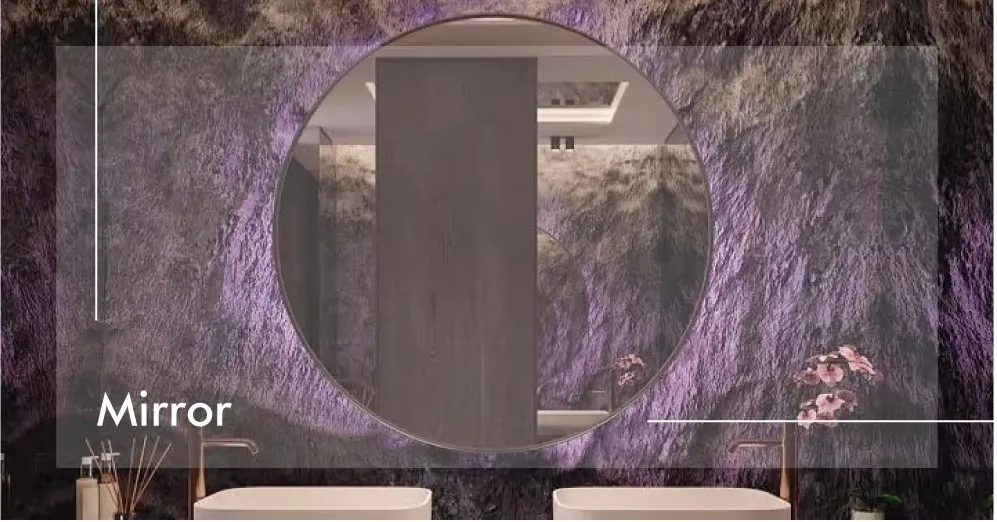
The ideal setup pairs a high-quality mirror with soft, front-facing or side-lit LED lighting. Backlit mirrors with integrated LED strips around the frame create an even wash of light that eliminates shadows and shows true fabric colors. The color temperature should be in the warm-neutral range — around 3000K to 4000K — to mimic natural daylight without appearing clinical.
If integrated lighting is not feasible, wall sconces positioned at face height on either side of the mirror are the next best option. They provide the frontal illumination needed for an accurate, flattering reflection. For stores seeking comprehensive mirror solutions, combining quality glass with thoughtful lighting design is the most effective approach.
Mirrors do more than reflect — they shape the perception of space. A large, ceiling-height mirror panel can make a small fitting room feel twice its actual size. The reflective surface captures ambient light and bounces it deep into corners, turning a cramped stall into an open, airy environment.
For standard fitting rooms, a mirror that is at least 48 inches tall and 24 inches wide provides adequate coverage for most customers. For a more premium experience, go floor-to-ceiling with a width of 30 to 36 inches. The extra surface area not only improves the customer experience but also adds a sense of luxury that aligns with higher-end branding.
Pro tip: If your fitting room is narrow, mount the mirror on the longer wall rather than the shorter one. This creates a sense of depth and makes the room feel wider.
Retail fitting rooms are high-traffic environments. Mirrors in these spaces face daily contact with bags, hangers, belt buckles, and cleaning products. Choosing a mirror that can withstand this wear is as important as choosing one that looks good.
Commercial-grade mirrors should feature safety backing — a vinyl film applied to the rear surface that holds glass shards in place if the mirror ever breaks. This is a critical safety feature that protects both customers and the business from liability. Look for mirrors that comply with recognized safety standards for commercial applications.
The mounting method is equally important. Mirrors in commercial settings should be anchored to wall studs with heavy-duty clips and channels, not simply glued to drywall. Over time, humidity and building movement can weaken adhesive bonds, creating a serious safety hazard. A professional installation using mechanical fasteners ensures the mirror stays securely in place for the life of the store.
Your fitting room mirrors should reflect your brand identity as clearly as they reflect your customers. A minimalist boutique benefits from frameless, edge-polished mirrors with clean lines. A store with industrial or rustic design elements can use mirrors framed in dark metal, brass, or wood to complement the overall aesthetic.
Frameless mirrors offer a sleek, modern look and work well with hidden LED backlighting. The polished edges catch light subtly and create a floating effect when mounted with a small gap from the wall. Framed mirrors, on the other hand, make a stronger design statement and can serve as focal points within the fitting room. The choice between frameless and framed should align with the store's broader visual language.
For retailers undertaking a full fit-out, working with a comprehensive commercial building materials supplier like COLORIA GROUP streamlines the process. A single-source supplier can provide not only mirrors but also flooring, wall panels, lighting fixtures, and sanitary ware — ensuring consistency across every element of the retail space.
Mirrors inside each fitting room are essential — they give shoppers privacy to evaluate clothing without feeling observed. However, placing mirrors outside the fitting area serves a different but equally valuable purpose. External mirrors encourage customers to step out, view themselves from a distance, and invite opinions from companions or staff.
This external mirror placement creates natural opportunities for associate interaction. When a customer steps out to check a look in a larger mirror, a staff member can offer a genuine compliment, answer a fit question, or suggest a complementary item. These casual conversations frequently lead to upsells and additional purchases.
A balanced approach places a full-length mirror inside each room for private evaluation, plus a larger shared mirror in the fitting room corridor or lounge area for social viewing and staff interaction. Both serve distinct roles in the customer journey.
A high-quality mirror with accurate, distortion-free reflection builds customer confidence. When shoppers see themselves looking good in a garment, they are far more likely to purchase. Conversely, a poor mirror creates doubt and leads to abandoned purchases and higher return rates.
For most standard fitting rooms, a mirror measuring at least 48 inches tall by 24 inches wide provides good coverage. For a premium experience, floor-to-ceiling mirrors 30 to 36 inches wide create a more spacious, luxurious feel.
A slight backward tilt of 3 to 5 degrees can create a naturally flattering, elongating effect. The tilt should be subtle enough that the customer does not notice it consciously. Professional installation is recommended to achieve the correct angle.
Yes. Backlit mirrors with LED strips provide even, shadow-free illumination that flatters skin tones and shows true fabric colors. They eliminate the harsh shadows created by overhead lighting, which is one of the most common fitting room complaints.
Commercial-grade mirrors should include safety backing film that holds glass shards in place if breakage occurs. They should also be mounted with mechanical fasteners anchored to wall studs rather than relying on adhesive alone.
Choosing the right fitting room mirrors is a direct investment in your store's conversion rate. Quality glass, proper lighting, durable construction, and thoughtful placement work together to create a space where customers feel confident — and confident customers buy. Whether you are outfitting a single boutique or a chain of retail locations, the mirror is the final touchpoint before purchase. Make it count.
Recommend Products












