
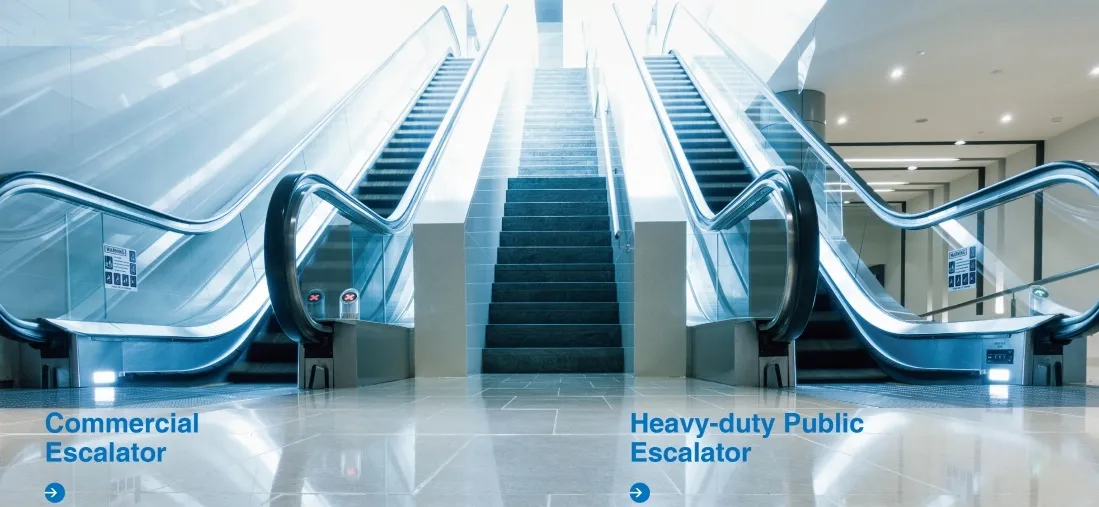
Selecting the right escalator for your project is a decision that directly impacts safety, long-term operational costs, and user experience. Whether you are outfitting an indoor shopping mall or a street-level subway entrance, the environmental demands placed on the equipment are fundamentally different. A unit designed for a climate-controlled interior will quickly deteriorate if installed outdoors without proper protection. This guide walks you through the key factors to consider when evaluating commercial escalator solutions for both indoor and outdoor applications.
The fundamental distinction between indoor and outdoor escalators lies in the level of environmental protection built into each unit. The table below summarizes the most critical differences:
| Feature | Indoor Escalator | Outdoor Escalator |
|---|---|---|
| Waterproofing | Basic splash protection (IP21–IP22) | Heavy-duty waterproofing (IP54 or higher) |
| Corrosion Resistance | Standard protective coating | Hot-dip galvanized or stainless steel components |
| Dust Protection | Basic covers and brushes | Sealed bearings, dust-proof enclosures |
| Operating Temperature | Controlled indoor environment | -20°C to 50°C or wider range |
| Drainage System | Not required | Built-in drainage channels, optional heating |
Outdoor escalators face continuous exposure to rain, snow, and humidity. A properly designed outdoor unit must meet at least an IP54 ingress protection rating, meaning it is protected against dust ingress and water splashes from any direction. In regions with heavy rainfall, some models are rated IP55 or higher. Key waterproofing features include sealed control cabinets, water-resistant step materials, and integrated drainage channels beneath the steps that divert water away from critical mechanical components.
Indoor units operate in a controlled environment and require only basic protection against incidental spills or cleaning water. An IP21 or IP22 rating is generally sufficient. However, in high-humidity locations such as indoor swimming pools or food courts, additional anti-corrosion treatments may still be advisable to prevent gradual deterioration of metal components.
For outdoor escalators installed in coastal areas or regions where de-icing salt is used on roads, corrosion resistance becomes a top priority. Stainless steel or specially treated aluminum alloys should be used for steps, handrail guides, and structural trusses. Hot-dip galvanizing of the main truss frame provides long-term protection against rust. A surface paint coating alone is insufficient for these demanding environments.
Most indoor commercial escalators run at a standard speed of 0.5 meters per second, which balances passenger throughput with comfort and safety. Outdoor escalators may operate at the same speed, but some are configured to run slightly slower — around 0.45 m/s — to account for wet or slippery conditions. Advanced models also offer variable-speed functionality: the escalator slows down when unoccupied to conserve energy, then accelerates to normal speed when passengers approach.
The standard inclination for both indoor and outdoor escalators is 30 degrees, which provides the most comfortable and safe riding experience for the majority of users. A steeper 35-degree angle is occasionally used in outdoor settings where space is limited, though it is less comfortable for passengers carrying luggage or pushing strollers. For applications requiring a gentler slope — such as airports, exhibition halls, and convention centers — moving walk solutions with inclinations of 10 to 12 degrees or completely flat configurations are the preferred choice.
Indoor escalators are the standard choice for climate-controlled environments such as shopping malls, department stores, hotels, office buildings, hospitals, airport terminals, and underground metro stations. In these settings, the primary design considerations are passenger traffic volume, noise reduction, and aesthetic integration with the surrounding architecture. Customization options for handrail color, step finish, and balustrade material allow indoor units to blend seamlessly into high-end commercial interiors.
Outdoor escalators are essential for street-level subway entrances, pedestrian overpasses, outdoor plazas, stadiums, theme parks, and hillside residential complexes. A "semi-outdoor" category also exists for escalators installed under a canopy or roof but still exposed to wind-driven rain, dust, or temperature fluctuations. These units typically require a mid-range protection level such as IP43 or IP44. Always evaluate the actual weather exposure at the installation site rather than relying solely on the presence of overhead cover.
When evaluating commercial escalator solutions for your project, follow this structured approach:
Step 1: Analyze the Installation Environment
Determine whether the unit will be exposed to direct rain, snow, or salt spray. If the answer is yes, an outdoor-rated model with full waterproofing and anti-corrosion treatment is non-negotiable. For coastal or industrial zones, request an enhanced anti-corrosion package with stainless steel components.
Step 2: Estimate Passenger Traffic Volume
For light to moderate traffic — up to 3,000 passengers per hour — a standard step width of 800 mm or 1,000 mm is adequate. For high-traffic transit hubs exceeding 6,000 passengers per hour, wider steps of 1,200 mm and heavy-duty drive components are recommended to ensure reliable, continuous operation.
Step 3: Verify Local Safety Codes and Standards
Most jurisdictions mandate emergency brakes, handrail speed monitoring, step-gap protection, and anti-slip step surfaces. Outdoor escalators may require additional features such as emergency stop buttons rated for wet conditions and heated handrails in cold climates. Always confirm your local regulatory requirements before finalizing specifications.
Step 4: Match Speed and Slope to Passenger Needs
Consider who will use the escalator. An airport with travelers carrying rolling luggage benefits from a 0.5 m/s speed and a 30-degree slope. A family-oriented outdoor tourist attraction may be better served by a slightly slower 0.45 m/s model with anti-slip steps. For steep hillside locations, a 35-degree slope can save space but may be less comfortable for elderly passengers.
Step 5: Factor in Maintenance and Lifecycle Costs
Outdoor escalators typically require more frequent maintenance than indoor units due to exposure to the elements. When budgeting, consider not only the upfront purchase cost but also the long-term expenses for periodic inspections, component replacement, and energy consumption. A well-built outdoor escalator with proper corrosion protection can deliver 20 years or more of reliable service with regular upkeep.
As a trusted one-stop architectural solution provider, COLORIA GROUP offers a comprehensive range of commercial escalators, moving walks, and other vertical transportation solutions tailored to diverse project requirements. Our escalator portfolio includes:
With headquarters in Foshan, China, and an overseas agent in Saudi Arabia, COLORIA GROUP draws on decades of industry experience to deliver building material solutions that meet international quality standards. Our team provides end-to-end support, from technical consultation and specification matching to installation guidance and after-sales service. Every escalator and moving walk we supply is built using new materials and advanced manufacturing processes to ensure durability, safety, and energy efficiency.
Choosing between indoor and outdoor escalator solutions is not simply a matter of comparing prices. It requires a careful evaluation of environmental exposure, expected passenger traffic, safety code compliance, and long-term maintenance costs. An indoor escalator placed outdoors will rapidly deteriorate and become a safety hazard, while a properly specified outdoor unit — though higher in upfront cost — can deliver decades of reliable performance with appropriate maintenance.
For project managers, architects, and procurement professionals seeking dependable commercial escalator solutions, COLORIA GROUP is ready to assist with tailored recommendations based on your specific climate, traffic, and budget requirements. Contact our team today to discuss your project and explore the full range of vertical transportation products available.
Recommend Products












