
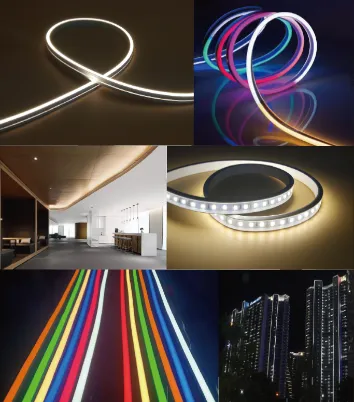
LED strip lights have become one of the most versatile lighting solutions for homes, retail spaces, hotels, and architectural projects. They deliver energy-efficient illumination, flexible installation, and a level of design freedom that traditional fixtures simply cannot match. But the quality of the final result depends almost entirely on one decision: which manufacturer you choose to work with.
China is home to the world's largest and most mature LED manufacturing ecosystem, which is why most importers naturally look there first. The challenge is that the market is crowded, and the difference between a reliable partner and a disappointing one is not always obvious at first glance. This guide explains how to evaluate led strip light manufacturers china and build a sourcing process that delivers consistent quality, order after order.
China's position in the LED industry is not accidental. Decades of investment in production infrastructure, a complete supply chain for components, and a large pool of engineering talent have created an environment where manufacturers can offer competitive pricing without sacrificing technical capability. For buyers, this means access to a wide range of options, from standard single-color strips to sophisticated addressable and tunable-white products.
The scale of Chinese production also supports flexibility. Most established manufacturers offer OEM and ODM services, allowing you to customize length, voltage, IP rating, color temperature, and even packaging to suit your market. Whether you need a small pilot run or a full container shipment, a capable supplier can adapt to your requirements.
However, scale cuts both ways. The same ecosystem that produces world-class products also contains suppliers who compete mainly on price, sometimes at the expense of materials and testing. That is why the selection process matters so much. A structured approach to evaluating manufacturers is the most reliable way to protect your project and your reputation.
When you compare strip light supplier candidates, focus on the factors that directly influence the consistency and longevity of the product. The following checklist covers the most important ones.
The performance of an LED strip is determined by the quality of its core components: the LED chips, the flexible printed circuit board, the resistors, and the adhesive. Reputable manufacturers use chips from established brands and specify the grade of copper used in the circuit board. Ask directly which components are used and whether the supplier can provide datasheets. A supplier who cannot answer these questions clearly is unlikely to deliver consistent quality.
Certifications are the most objective signal of a manufacturer's commitment to quality. Look for ISO 9001 for quality management, CE for the European market, RoHS for restricted substances, and UL or other regional certifications where your market requires them. Beyond holding certificates, a serious manufacturer will have in-house testing for brightness, color consistency, and lifespan. Ask for test reports on the specific model you intend to buy, not just general marketing claims.
For projects where strips from different batches will sit side by side, color consistency is critical. A low Color Rendering Index (CRI) can make whites look dull and colors appear washed out, which is unacceptable in retail, hospitality, and residential settings. A reliable supplier should be able to guarantee a minimum CRI and explain how they control color binning across production batches. This is one of the clearest differences between professional manufacturers and low-cost producers.
Consistency is not only about the product itself but also about the supply. Ask about monthly production capacity, current order backlog, and realistic lead times. A manufacturer that is overbooked may rush your order or delay shipment. A good supplier will give you honest timelines and keep you updated if anything changes.
The quality of communication during the quotation stage is often a preview of the whole relationship. Pay attention to how quickly the supplier responds, whether they answer technical questions accurately, and whether they proactively flag potential issues. A manufacturer that is transparent about specifications, pricing, and limitations is far more likely to be a dependable long-term partner.
Following a structured process keeps the decision objective and reduces the risk of being swayed by attractive prices or impressive websites. Here is a sequence that works well for most buyers.
Start by researching manufacturers online and on B2B platforms. Create a shortlist of five to ten candidates and record their contact details, product range, and website links in a simple spreadsheet. This makes later comparison much easier.
A professional manufacturer maintains an up-to-date website with detailed product pages, specifications, and ideally a blog or knowledge section that demonstrates technical expertise. Look for evidence of real manufacturing capability, such as factory photos, certification displays, and case studies. A supplier who invests in clear product information is usually more serious about quality.
Contact the shortlisted suppliers with a clear list of questions covering component brands, CRI and color temperature options, IP ratings, warranty terms, and minimum order quantities. The depth and accuracy of the answers will tell you a lot about their competence and honesty.
Never commit to a large order without testing samples first. Check the light output, color consistency across the strip, flexibility, adhesive strength, and how the strip behaves after being powered for several hours. Compare samples from different suppliers side by side under the same conditions. This step alone will eliminate most unsuitable candidates.
If the order size justifies it, arrange a factory visit or a live video tour. Seeing the production line, testing equipment, and working conditions gives you confidence that the supplier is a genuine manufacturer rather than a trading intermediary. If a visit is not possible, ask for recent factory photos and video evidence.
Before scaling up, place a small trial order that matches your final specification. This verifies that the production quality matches the sample and gives you a chance to assess packaging, documentation, and shipping reliability. A supplier who performs well on a trial order is a strong candidate for a long-term partnership.
Even experienced buyers make avoidable errors. The most common ones include choosing a supplier purely on price, skipping the sample test, failing to confirm certifications in writing, and not agreeing on quality standards before production begins. Another frequent mistake is assuming that a large manufacturer automatically means good service for small orders. Clarify from the start how your order size will be treated.
It is also worth remembering that the cheapest quote is rarely the cheapest in the long run. Strips that fail early, show inconsistent color, or use weak adhesive will cost you more in replacements, labor, and lost customer trust than the amount you saved on the initial purchase.
For buyers managing complete construction or renovation projects, there is a significant advantage in working with a supplier that covers lighting as part of a broader product range. COLORIA GROUP is a one-stop building materials supplier based in Foshan, Guangdong, China, offering everything from walls, flooring, and ceilings to sanitary fixtures, customized furniture, home appliances, and lighting solutions. Its strip light range sits within a wider lighting portfolio that includes shop lighting, hospitality lighting, outdoor lighting, magnetic track lights, spotlights, and more.
This breadth matters for consistency in two ways. First, it simplifies procurement: instead of coordinating multiple suppliers across different product categories, you can source lighting and other materials from a single accountable partner. Second, it reflects an organization with mature quality management and export experience, the same discipline that applies to its lighting products. With an overseas agent in Saudi Arabia and decades of industry experience, COLORIA GROUP understands the expectations of international buyers and the importance of dependable, repeatable quality.
At minimum, look for ISO 9001 for quality management and RoHS for restricted substances. For products sold in Europe, CE certification is expected, and for North America, UL or ETL certification may be required. Always ask to see the certificates that apply to the specific product you are buying.
For most residential and commercial applications, a CRI of 80 or above is recommended. For retail, hospitality, and other settings where accurate color rendering matters, look for CRI 90 or higher.
Yes. Samples are the only reliable way to verify light output, color consistency, build quality, and adhesive strength before you commit to a large order. Testing samples from several suppliers side by side is strongly recommended.
Most established manufacturers offer customization of length, voltage, color temperature, IP rating, and packaging. Discuss your requirements clearly during the quotation stage and confirm the customization details in writing before production begins.
Choosing among led strip light manufacturers china does not have to be a gamble. By evaluating component quality, certifications, color consistency, production capacity, and communication, and by following a disciplined process of shortlisting, questioning, sampling, and trial orders, you can build a sourcing relationship that delivers consistent quality every time.
For buyers who want a single, accountable partner across lighting and other building materials, COLORIA GROUP offers a complete range of interior and exterior solutions backed by years of export experience. Contact the team to discuss your project requirements and request samples today.
Recommend Products












