
Key factors every contractor and developer should evaluate before partnering with a piping supplier
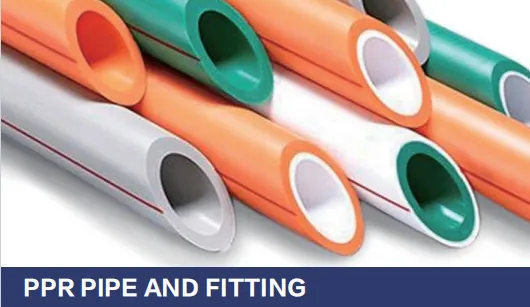
Choosing the right ppr pipe and fitting supplier is one of the most consequential decisions in any residential or commercial construction project. PPR (Polypropylene Random Copolymer) piping systems carry hot and cold water throughout a building, and the quality of both pipes and fittings directly affects long-term reliability, maintenance costs, and occupant safety. A poor supplier choice can lead to leaks, pressure failures, and expensive rework — problems no project manager wants to face.
Yet many procurement teams focus narrowly on price per meter and overlook the factors that determine whether a supplier can deliver consistent quality across an entire project. This article outlines the practical criteria that matter when evaluating a PPR pipe and fitting supplier, from material sourcing and manufacturing standards to supply chain reliability and after-sales support.
The performance of a PPR piping system begins long before the pipe reaches a construction site — it starts with the raw polypropylene granules. Reputable pipes fittings supplier partners use virgin PP-R raw materials from established petrochemical producers, not recycled or mixed-grade resins that can compromise structural integrity.
When raw materials are inconsistent, pipes may exhibit uneven wall thickness, poor fusion characteristics, or reduced resistance to thermal expansion. Over time, these defects manifest as joint failures or micro-cracks that are difficult and costly to repair. A trustworthy supplier will disclose the source and grade of their PP-R materials and maintain strict incoming inspection protocols to verify melt flow rate, purity, and moisture content before production begins.
Key question to ask: Does the supplier use 100% virgin PP-R raw materials from certified sources, and can they provide traceability documentation for each batch?
Not all PPR pipes are produced to the same standard. Different markets require compliance with different norms — DIN standards in Europe, ASTM in North America, ISO internationally, and various national standards across Asia, the Middle East, and Africa. A competent pp-r hot/cold water pressure piping system supplier manufactures products that meet the specific regulatory requirements of the regions they serve.
Look for suppliers who can demonstrate third-party testing and certification. Properly certified pipes and fittings undergo pressure testing, thermal cycling tests, and long-term hydrostatic strength evaluation. These tests confirm that the piping system can withstand years of service under real-world temperature and pressure conditions without degradation.
A supplier with a broad certification portfolio is also better positioned to serve projects in multiple geographies — an advantage for developers and contractors who operate across borders.
A common frustration in piping procurement is discovering that pipes and fittings from different suppliers do not match perfectly. Slight dimensional variations, even within the same nominal size, can lead to weak fusion joints or installation delays while crews search for compatible components.
The most reliable approach is to source pipes, fittings, and valves from a single pipes fittings supplier who produces the complete system. This ensures dimensional consistency across every component — elbows, tees, couplings, reducers, end caps, and valves all fit together as designed.
Beyond fittings, consider whether the supplier can also provide complementary products that your project needs. A building material supplier with a broad catalog saves procurement teams from managing dozens of separate vendor relationships. Instead of sourcing pipes from one company, bathroom fixtures from another, and wall panels from a third, a one-stop partner consolidates ordering, logistics, and quality assurance into a single workflow.
Quality cannot be inspected into a product at the final stage — it must be built in at every step. When evaluating a supplier, ask about their quality control checkpoints during production:
Suppliers who invest in automated production lines and systematic QC processes produce more consistent output than those relying on manual inspection alone. Automation reduces human error and ensures that every meter of pipe meets the same specification.
Even the best pipe is useless if it does not arrive on time. Construction schedules are tight, and delays in material delivery cascade through every subsequent trade. A professional ppr pipe and fitting supplier should demonstrate predictable lead times, transparent inventory management, and the capacity to handle both regular orders and urgent requirements.
Ask about the supplier's production capacity, warehousing infrastructure, and shipping experience to your target region. A supplier with dedicated export logistics teams understands customs documentation, container optimization, and port-to-site coordination — details that inexperienced exporters often get wrong.
While a specialized PPR supplier can serve a narrow need, projects often benefit from working with a comprehensive building material supplier. Modern construction requires hundreds of material types across multiple categories — walls, flooring, ceilings, sanitary fixtures, furniture, appliances, doors and windows, lighting, and more. Managing separate suppliers for each category multiplies administrative overhead.
COLORIA GROUP, headquartered in Foshan, China, with an overseas agent in Saudi Arabia, operates as a one-stop solution provider spanning 13 product categories. Whether a project needs PPR pipes and fittings for plumbing, porcelain slab tiles for walls, customized furniture for interiors, or solar panels for energy systems, a single supplier relationship covers the full scope.
This integrated approach simplifies procurement in several practical ways:
The relationship with a supplier should not end when the shipment leaves the factory. Installation questions, technical specifications, and occasional product issues require responsive after-sales support. A responsible ppr pipe and fitting supplier provides installation guidance, technical datasheets, and troubleshooting assistance when needed.
Look for suppliers who can offer welding parameters for their specific PPR formulations, guidance on expansion loop design, and recommendations for buried vs. exposed installation. This technical depth distinguishes commodity traders from genuine manufacturing partners who understand how their products perform in the field.
Selecting a PPR pipe and fitting supplier is about more than comparing unit prices. The right supplier delivers material consistency, dimensional accuracy, regulatory compliance, reliable logistics, and ongoing technical support — factors that together determine whether a piping system performs quietly in the background for decades or becomes a source of costly callbacks.
When evaluating options, prioritize suppliers who are transparent about their raw material sources, manufacturing processes, and quality control procedures. Favor those who can serve as a comprehensive building material supplier rather than a single-category vendor, especially if your project spans multiple material categories. And look for partners with proven export experience to your target market, since logistics expertise is as critical as product quality in international construction supply.
COLORIA GROUP supplies high-quality PPR pipes and fittings as part of a comprehensive building materials portfolio covering 13 product categories. Whether your project requires a complete pp-r hot/cold water pressure piping system, pipes fittings for plumbing infrastructure, or a full range of building materials for interior and exterior construction, our team is ready to support your next project.
Contact us today to discuss your requirements and request a quotation.
Recommend Products












