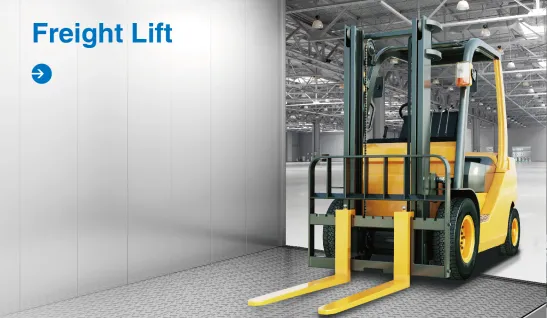
Freight lifts are the backbone of material handling in warehouses, factories, logistics hubs, and commercial high-rises around the world. Whether you are outfitting a new industrial facility or upgrading an existing building, finding a dependable
freight lift supplier is one of the most consequential procurement decisions you will make. The right partner delivers not just a piece of equipment but a long-term commitment to safety, reliability, and operational continuity. This guide walks you through the essential factors to evaluate when selecting a freight lift supplier and explains why working with a
one-stop architectural solution provider can streamline your entire project.
Understanding Freight Lift Types and Their Applications
Before approaching a supplier, it helps to understand the main categories of freight lifts available on the market. Hydraulic freight lifts are widely used in low-to-mid-rise buildings where heavy loads need to be moved between a limited number of floors. They offer smooth operation and robust lifting power, making them a popular choice for warehouses and manufacturing plants. Traction freight elevators, on the other hand, are better suited for high-rise commercial buildings where speed and energy efficiency are priorities. There are also specialized variants such as explosion-proof freight lifts for hazardous environments, vehicle freight lifts for automobile showrooms and parking structures, and dumbwaiters for restaurants and hotels that need to move smaller loads between floors.
Each type comes with its own requirements for shaft dimensions, pit depth, machine room space, and power supply. An experienced
elevators supplier will walk you through these technical specifications and help you match the right equipment to your building's structural parameters and operational needs.
Key Factors to Evaluate When Choosing a Freight Lift Supplier
Manufacturing Quality and Certifications. The quality of a freight lift directly affects workplace safety and equipment longevity. Look for suppliers who adhere to recognized international standards and can provide documentation of their quality management systems. A reputable supplier will have in-house quality inspection departments that test every unit before shipment.
Customization Capabilities. Off-the-shelf solutions rarely fit every project perfectly. Whether you need non-standard platform dimensions, specific door configurations, or integration with existing building management systems, a capable freight lift supplier should offer flexible customization options backed by engineering expertise.
After-Sales Support and Maintenance. A freight lift is a long-term investment. The supplier's commitment should extend well beyond the delivery date. Inquire about warranty terms, spare parts availability, technical support responsiveness, and whether the supplier provides installation guidance or on-site commissioning services.
International Logistics Experience. For buyers importing from overseas, the supplier's experience with export documentation, freight forwarding, and compliance with destination-country regulations is critical. Delays at customs or missing paperwork can derail tight construction schedules.
The Advantage of a One-Stop Solution Provider
Construction and renovation projects involve dozens of material categories, from walls and flooring to electrical fixtures and elevators. Coordinating with multiple suppliers for each category multiplies administrative overhead, increases the risk of miscommunication, and complicates logistics. This is where a
one-stop architectural solution provider offers a distinct advantage.
By consolidating procurement through a single partner, project managers reduce the number of vendor relationships they need to manage, simplify shipping and customs clearance, and often achieve better pricing through bundled orders. More importantly, a one-stop supplier takes ownership of the entire material package, which means fewer gaps in responsibility and a more coordinated delivery timeline.
COLORIA GROUP: Your Partner for Freight Lifts and Beyond
COLORIA GROUP, headquartered in Foshan, China's premier building materials manufacturing hub, has established itself as a trusted
freight lift supplier serving clients across the globe. The company's elevator product line includes freight lifts, hospital elevators, home lifts, car lifts, commercial escalators, and moving walks — covering virtually every vertical transportation need in residential, commercial, and industrial settings.
What sets COLORIA GROUP apart is the breadth of its offering. Beyond
commercial elevators and freight lifts, the company supplies 13 product categories encompassing walls, flooring, ceiling systems, pipes and fittings, sanitary fixtures and bathroom products, customized furniture, home and kitchen appliances, windows and doors, decorative profiles, electrical fixtures and cables, lighting solutions, and solar panels. This comprehensive portfolio means that whether you are building a hospital, a hotel, a residential complex, or an industrial facility, you can source the majority of your building materials from a single reliable partner.
COLORIA GROUP at a Glance:
Company: FOSHAN COLORIA BUILDING MATERIALS CO., LTD
Location: Foshan, Guangdong, China
Overseas Agent: Saudi Arabia
Product Categories: 13 (560+ products)
Slogan: Together We Build the Future
Safety and Quality: What to Look For
Safety is non-negotiable when it comes to freight lifts. A responsible supplier should conduct comprehensive testing and commissioning on every unit before it leaves the factory. Key inspection items include structural integrity checks, hydraulic system testing, safety gear and overspeed governor verification, control system functionality, lifting speed calibration, and noise level assessment.
Additionally, the supplier should provide clear documentation including load capacity certificates, electrical schematics, maintenance manuals, and installation guides. These documents are not just formalities — they are essential references for local regulatory compliance, third-party inspections, and the maintenance teams who will service the equipment over its operational life.
Regular maintenance is the key to extending the service life of any freight lift. Even the most robust equipment requires periodic inspection of mechanical parts, hydraulic fittings, electrical connections, and safety devices. When evaluating a freight lift supplier, ask about their recommended maintenance schedule and whether they provide remote technical support or on-site service through local partners.
Making the Final Decision
Selecting a freight lift supplier is rarely a decision based solely on price. The lowest bid can end up costing far more in downtime, repairs, and replacement if the equipment fails to meet quality standards or if the supplier cannot provide adequate after-sales support. Instead, weigh the total value proposition: manufacturing quality, customization flexibility, export experience, warranty coverage, and the supplier's track record in your region.
For project managers overseeing large-scale developments, the additional benefit of working with a supplier who can also provide other building materials — from flooring and wall panels to lighting and electrical fixtures — should not be underestimated. A single point of contact, a consolidated shipment, and a unified quality standard across product categories can significantly reduce project complexity and risk.
Ready to Source Your Freight Lift?
COLORIA GROUP brings together manufacturing expertise, global export experience, and a comprehensive product portfolio under one roof. Whether you need a single freight lift or a full suite of building materials for a large-scale project, our team is ready to assist. Visit our website to explore the full product range or reach out directly for a customized quotation. Together, we build the future.