
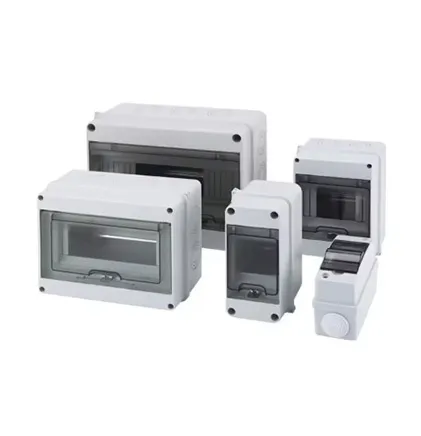
Okay, let's talk distribution boxes. You know that metal cabinet packed with switches and wires you see in basements? Yeah, that's the heart of your electrical system. Getting its sizing right isn't just about following rules—it's about safety, efficiency, and avoiding those annoying tripped breakers at 2 AM.
Imagine this: You're halfway through cooking Thanksgiving dinner when the lights go out. Your oven, microwave, and countertop gadgets all went silent. Frustrating, right? That's what happens when you overload circuits. But with some simple math and planning (don't worry, we'll walk through it!), you can design a system that works smoothly even when you're running all the gadgets.
Pro Insight: A well-planned distribution box feels like a silent partner—you only notice it when something's wrong. Our goal? Make sure you never notice it.
Before we dive into calculations, let's get familiar with a few essentials:
This isn't just adding up wattages randomly. Think of your home as a busy kitchen—not every appliance runs at once. Do you really need the hair dryer, microwave, and vacuum running simultaneously? Consider your actual usage patterns.
Real-life example: For a 3-bedroom home, your total wattage demand might hover around 12,000W after applying realistic usage factors.
In most homes, you'll find:
Here’s where calculators like Online-Calculator.com and Desmos shine. You don’t need complex tools—just some basics:
But hold on—you can’t max out the breaker! Electrical codes (like NEC) require breathing room. We follow the 80% rule :
Example:
Need a circuit for your 1,800W microwave?
Raw amps: 1,800W ÷ 120V = 15A
Adjusted for safety: 15A ÷ 0.8 = 18.75A → Use a
20A circuit
Calculator Tip: Tools like Desmos’ scientific calculator make light work of conversions. Just plug in your wattage and voltage—let it handle the decimals.
You're not just calculating numbers—you're designing a system that matches how you live .
Kitchen Strategy: Avoid plugging your fridge and toaster oven together. They'll trip constantly. Instead:
Home Office Setup: With computers, monitors, and printers, this area often causes trips. Solution:
Critical Zones: Furnaces, sump pumps, medical equipment always get dedicated circuits. Imagine losing heat in winter because someone used the wrong outlet!
Your circuit count leads directly to the box size. Most homes need:
| Home Size | Typical Circuits | Recommended Box Size |
|---|---|---|
| Apartment (800 sq ft) | 8-12 | 100A, 12-space panel |
| Family Home (2,000 sq ft) | 20-30 | 200A, 30-space panel |
| Large Home (4,000+ sq ft) | 35-50 | 400A, dual panels |
Future-Proofing: Add 20% extra circuit spaces upfront. Future solar panels or EV chargers won't require expensive upgrades.
The distribution box is just one piece. Your power cables (included per project keywords) must handle the load too. Undersized wires cause:
Cable Sizing Rule: For 20A circuits, use 12-gauge wire minimum. For 30A circuits (like dryers), step up to 10-gauge.
Tool Tip: Use calculators to check voltage drop over distances. A 100-foot run needs thicker wire than a 20-foot run for the same appliance!
If any of this sounds overwhelming—please hire an electrician. Messing up can lead to:
A good pro will help translate your usage patterns into a safe, efficient design. They’ll also handle permits and local code quirks that calculators don’t cover.
Let's recap your action plan:
Get this right, and your electrical system hums quietly in the background. Get it wrong, and you'll be resetting breakers during movie nights. Your call!
Recommend Products












