
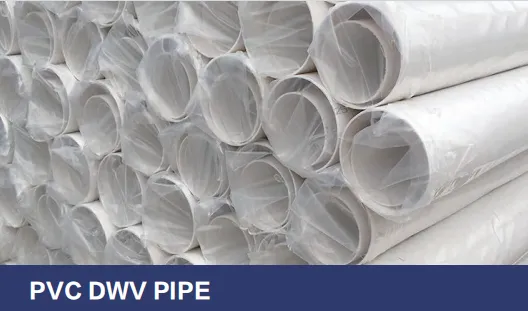
When it comes to building construction—whether residential complexes, commercial offices, or public facilities like hospitals and schools—the plumbing system is the unsung hero that keeps everything running smoothly. At the heart of this system lies the PVC DWV (Drain, Waste, and Vent) pipe network, responsible for efficiently carrying wastewater and sewage away while ensuring proper ventilation to prevent odors and pressure buildup. It's a component that's easy to overlook until something goes wrong: a leak that damages walls, a clog that halts daily operations, or a system failure that leads to costly repairs. The root cause of many such issues? Choosing the wrong PVC DWV pipe supplier.
Selecting a supplier isn't just about finding the lowest price or the nearest distributor. It's about partnering with a provider who understands your project's unique needs, prioritizes quality, and stands behind their products long after the sale. Yet, in the rush to meet tight deadlines or cut costs, many buyers fall into common traps that can derail their projects. In this guide, we'll walk through these pitfalls, why they matter, and how to steer clear of them—so you can feel confident that your PVC DWV pipes, and the supplier behind them, are built to last.
Before diving into mistakes, let's clarify why this decision carries so much weight. PVC DWV pipes aren't just pieces of plastic—they're critical to a building's safety, compliance, and longevity. Poor-quality pipes can crack under temperature changes, corrode from chemical exposure, or fail to meet local building codes, leading to failed inspections and expensive rework. A unreliable supplier might delay deliveries, leaving your construction team idle, or offer little support when questions arise during installation. On the flip side, a trusted supplier acts as a partner: they provide high-quality, compliant products, offer technical guidance, and ensure timely delivery to keep your project on track.
In a market flooded with options—from local distributors to international manufacturers and even "one-stop architectural solution provider" companies that offer everything from pipes to wall panels—it's easy to feel overwhelmed. To help you navigate this landscape, let's break down the most common mistakes buyers make and how to avoid them.
We've all been there: you're reviewing quotes, and one supplier's price is significantly lower than the rest. It's tempting to jump at the savings, especially when project budgets are tight. But here's the hard truth: in the world of PVC DWV pipes, you often get what you pay for. Cheap pipes may be made from recycled or low-grade PVC resin, which lacks the structural integrity to withstand the rigors of daily use. They might be thinner than standard, prone to cracking under minor impacts, or more susceptible to chemical degradation from cleaning agents or wastewater.
Consider a scenario: a residential developer opts for a budget PVC DWV pipe supplier to save 10% on material costs. Six months after the building is occupied, multiple units report leaks in the walls. An inspection reveals the pipes have started to degrade, with hairline cracks forming at joints. The developer now faces the cost of tearing down walls, replacing all affected pipes, and compensating homeowners for water damage—expenses that dwarf the initial "savings." Worse, the project's reputation takes a hit, making future sales harder to close.
Instead of fixating on the lowest price, focus on value . A slightly higher upfront cost for quality pipes from a reputable PVC DWV pipe supplier will pay off in the long run through fewer repairs, longer product lifespan, and better performance. Ask suppliers for detailed specifications: what grade of PVC resin do they use? What is the pipe's thickness (schedule) and pressure rating? Do they conduct third-party testing to verify strength and durability? Reputable suppliers will happily share this information; if a supplier hesitates or provides vague answers, it's a red flag.
Every region has strict building codes governing plumbing systems, and PVC DWV pipes are no exception. These codes specify standards for material quality, dimensions, performance, and installation to ensure safety and compatibility. For example, in the United States, PVC DWV pipes must typically comply with ASTM D2665, a standard set by the American Society for Testing and Materials that outlines requirements for dimensions, impact resistance, and chemical resistance. In Saudi Arabia, local regulations might reference SASO (Saudi Arabian Standards Organization) standards. Using non-compliant pipes isn't just risky—it can lead to failed inspections, project delays, and even legal liability if issues arise later.
Some suppliers offer pipes that claim to "meet international standards" but lack official certification. These products often enter the market through unauthorized channels (the "gray market") and may not have undergone rigorous testing. For instance, a pipe labeled "ASTM-compliant" might have been tested in-house by the manufacturer, not by an accredited third party. When inspectors arrive, they'll ask for certification documents—and without them, your project could come to a grinding halt.
Always verify certifications before placing an order. Ask the supplier for copies of third-party test reports and certification certificates from recognized bodies (e.g., ASTM, SASO, ISO). Cross-check these documents with the certifying organization's database if possible—some suppliers falsify certificates, so due diligence is key. Additionally, if you're working on a project in a specific region (like Saudi Arabia), ensure the supplier understands local building codes and can provide products tailored to those requirements. A reliable PVC DWV pipe supplier will not only have the necessary certifications but will also guide you through compliance, helping you avoid costly oversights.
Even if a supplier offers great prices and certified products, their reliability matters just as much. Imagine partnering with a company that promises timely delivery but consistently ships late, leaving your construction team waiting with nothing to install. Or a supplier that disappears after the sale, refusing to address defects or answer technical questions. These issues can derail project timelines, strain relationships with contractors, and erode trust with clients.
A supplier's history reveals a lot about their business practices. How long have they been in the industry? Do they work with reputable clients (e.g., large construction firms, government projects)? What do their customers say about them? A quick online search might reveal reviews or complaints, but don't stop there—ask the supplier for references and follow up with those references directly. A past client might share insights like, "They delivered on time for our hospital project, but when we had a question about installation, their technical team took three days to respond." That's valuable information you won't find on a sales brochure.
Research the supplier thoroughly. Check their website for case studies or client testimonials, and look for industry awards or memberships (e.g., associations for plumbing suppliers or building materials). If possible, visit their manufacturing facility or warehouse—seeing their operations firsthand can give you confidence in their capacity and quality control processes. For international suppliers, verify their export history and logistics capabilities; a supplier with no experience shipping to your region might struggle with customs clearance or delivery delays.
PVC DWV pipe installation might seem straightforward, but every project has unique challenges: tight spaces, unusual layouts, or compatibility issues with other plumbing components (like pipes fittings from a different supplier). In these situations, technical support from your supplier can make all the difference. A good supplier will have a team of engineers or technical experts who can help with everything from pipe sizing and layout design to troubleshooting installation problems. Similarly, after-sales service matters—if a batch of pipes arrives damaged or defective, you need a supplier who will replace them quickly, no questions asked.
Consider a commercial project where the plumbing contractor is installing PVC DWV pipes in a high-rise building. The team encounters a design flaw: the pipe layout doesn't account for the building's expansion joints, leading to potential stress on the pipes. Without technical support, the contractor might proceed with the installation, risking future leaks. With support, the supplier's engineer could suggest a modified layout or recommend flexible joints to accommodate movement—saving time and preventing issues down the line. On the flip side, a supplier with no technical team leaves the contractor to fend for themselves, increasing the risk of mistakes.
During the vetting process, ask specific questions about support: Do you have a dedicated technical support team? What are their response times (e.g., 24 hours for urgent issues)? Can you provide installation guides or training for our contractors? For after-sales service, inquire about their return policy: What happens if products arrive damaged? How quickly can you replace defective items? A supplier that values long-term relationships will invest in these services; one that sees you as a one-time transaction will brush off these questions.
Most construction projects require more than just PVC DWV pipes—they need fittings, valves, vents, and sometimes other types of pipes (like PPR or UPVC) for different parts of the plumbing system. Working with multiple suppliers for these components can lead to compatibility issues: a fitting from Supplier A might not seal properly with a pipe from Supplier B, causing leaks. It also complicates logistics, as you'll have to coordinate deliveries from multiple sources, increasing the risk of delays. This is where a "one-stop architectural solution provider" shines—suppliers that offer a full range of plumbing products (including PVC DWV pipe solutions, pipes fittings, and related accessories) ensure compatibility and simplify the procurement process.
Even small differences in product specifications can cause big problems. For example, PVC DWV pipes from one supplier might have slightly different outer diameters than fittings from another, leading to loose connections. Over time, these connections can leak, causing water damage and mold growth. In contrast, a one-stop provider designs their products to work together seamlessly, reducing the risk of compatibility issues.
Evaluate the supplier's product range. Do they offer not just PVC DWV pipes but also the necessary fittings (elbows, tees, couplings), vents, and accessories? If your project requires other plumbing components (like PPR pipes for hot water lines), do they carry those as well? Choosing a supplier with a comprehensive product lineup ensures that all parts of your plumbing system work together, reducing the risk of leaks and simplifying maintenance. If you must work with multiple suppliers, confirm that their products meet the same standards and are tested for compatibility.
Construction schedules are tight, and delays in material delivery can have a domino effect: if the PVC DWV pipes don't arrive when the plumbing team is scheduled to work, the team moves on to other tasks, and when the pipes finally arrive, there's no one available to install them. This leads to idle labor costs, missed deadlines, and frustrated clients. Yet many buyers focus solely on the product and forget to assess the supplier's logistics capabilities—how they store inventory, manage shipping, and handle unexpected delays (like port congestion or transportation strikes).
A supplier might offer great prices and quality products but have no local warehousing, meaning they have to ship pipes from overseas for every order. If there's a delay at the port, your delivery could be pushed back by weeks. Similarly, a supplier with limited shipping partners might not be able to rush an order if your project hits an unexpected deadline. These issues are avoidable with a supplier that has a robust logistics network—local warehouses, multiple transportation options, and contingency plans for disruptions.
Ask the supplier about their logistics setup: Do you have warehouses in the region where my project is located? What's your typical lead time for bulk orders? How do you handle delays (e.g., weather, port issues)? A reliable supplier will have clear answers and may even share their delivery performance metrics (e.g., "95% of orders arrive on time"). If your project has strict deadlines, consider suppliers that offer expedited shipping options or have backup inventory in case of emergencies. You should also clarify who is responsible for customs clearance (if importing) and transportation insurance—these details can save you from unexpected costs later.
| Common Mistake | Potential Impact | How to Avoid |
|---|---|---|
| Prioritizing price over quality | Low-grade pipes prone to cracking, leaks, and early failure; higher long-term repair costs | Focus on value (quality + durability); ask for resin grade, thickness, and third-party test reports |
| Overlooking certification and compliance | Failed inspections, project delays, legal liability | Verify third-party certifications (ASTM, SASO, ISO); cross-check with certifying bodies |
| Ignoring supplier reliability | Missed deadlines, poor communication, lack of accountability | Check track record, client references, and industry reputation; visit facilities if possible |
| Neglecting technical support | Installation mistakes, compatibility issues, unresolved problems | Ask about technical team availability, response times, and after-sales service policies |
| Failing to assess product range | Compatibility issues between components, increased procurement complexity | Choose suppliers with comprehensive product lines (pipes, fittings, accessories) for seamless integration |
| Overlooking logistics | Delivery delays, idle labor costs, missed project deadlines | Evaluate warehousing, lead times, and contingency plans for shipping disruptions |
To summarize, here's a checklist of questions to ask during the supplier vetting process. These will help you uncover red flags and identify the best partner for your project:
Choosing a PVC DWV pipe supplier is more than a transaction—it's a decision that impacts the safety, durability, and success of your construction project. By avoiding the common mistakes outlined above—prioritizing quality over price, verifying certifications, assessing reliability and support, evaluating product range, and checking logistics—you'll position yourself to select a supplier that acts as a true partner, not just a vendor.
Remember, the best suppliers aren't just selling pipes—they're selling peace of mind. They understand that your project's success is their success, and they'll go the extra mile to ensure you have the right products, support, and delivery to keep things running smoothly. So take the time to research, ask tough questions, and trust your instincts. In the end, the effort you put into choosing a supplier will save you time, money, and headaches down the line.
Whether you're building a small residential complex or a large commercial development, the right PVC DWV pipe supplier is out there. By avoiding these mistakes, you'll find them—and build a plumbing system that stands the test of time.
Recommend Products












