
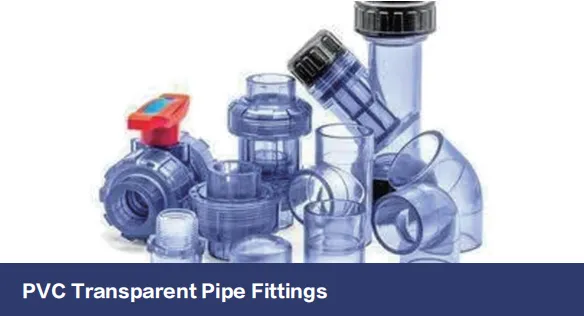
Ever wondered what really happens behind the scenes at pipe fitting manufacturers? When your project depends on high-performance PVC transparent pipe fittings, a supplier audit isn't just paperwork - it's your frontline defense against leaks, failures, and costly do-overs. Yet too many buyers skip this step and regret it later when substandard fittings start failing prematurely.
I've walked countless factory floors globally, and let me tell you - not all PVC suppliers are created equal. The best ones treat quality as a living process, not just a certificate on the wall. They know that superior fittings begin long before the extrusion line, tracing back to raw material chemistry and employee training.
"But it passed certification!" I often hear. Certification is just the starting line. What matters is how consistently they hit quality targets when your 10,000-unit order is running at 2 AM.
PVC resin variations can make or break your clear fittings. Reputable suppliers use virgin polymer grades with consistent molecular weight distribution. Ask to see their resin certificates and batch testing protocols.
True optical clarity requires precision stabilization systems to prevent yellowing. Top manufacturers balance UV stabilizers, impact modifiers, and optical brighteners using proprietary formulations.
Temperature zones must be controlled within ±2°C to prevent haze development. The best plants have automated parameter tracking that flags deviations in real-time.
Why do some clear fittings develop micro-cracks? Often it's trace mold release agents interacting with PVC. Evaluate their tool cleaning protocols and mold release application systems.
A veteran plant manager once shared: "You can't inspect quality into a product - it must be built in." This mindset separates adequate suppliers from exceptional partners.
Light transmission testing should exceed 90% with haze values under 3%. But don't settle for occasional lab reports - examine their in-line automated optical inspection systems.
Hydrostatic burst testing is essential, but true evaluation requires pressure cycle testing simulating actual operating conditions. Assess their fatigue testing protocols - 5000 cycles at operating pressure is the industry benchmark.
Can they trace resin batches through processing to final fittings? Robust systems use dual-layer documentation: digital tracking plus physical batch tagging.
The strongest building material supplier partnerships feature transparent access to quality data through customer portals showing real-time:
Top manufacturers dedicate engineering teams specifically to PVC clarity enhancement. Ask about their R&D projects - are they advancing fundamental polymer science or just maintaining standards?
I recall one European fittings manufacturer whose engineers studied optical physics to improve light diffusion. That's commitment to transparency in every sense!
When choosing between seemingly qualified suppliers, two factors often distinguish the best:
The ideal partner provides unrestricted access to their quality data and welcomes collaborative problem-solving. They understand that when your PVC fittings perform flawlessly, both companies win.
Remember: Your pipe fitting manufacturer becomes an extension of your quality system. Treat supplier selection as you would any other critical component specification - with thorough due diligence.
Recommend Products












