
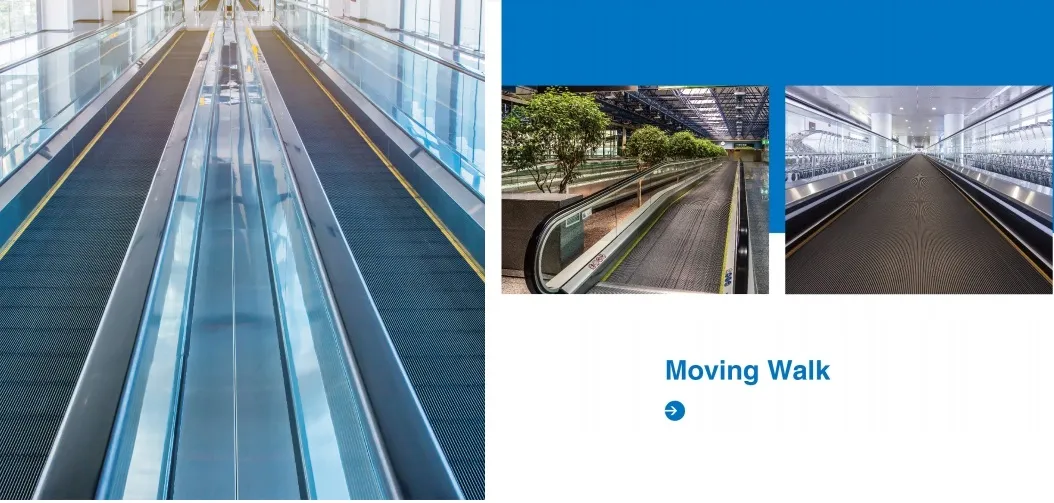
A practical guide for project managers, architects, and procurement professionals evaluating moving walk solutions for airports, shopping malls, and transportation hubs.
Moving walks—also known as moving walkways or travelators—have become an essential component of modern commercial infrastructure. From international airports to large-scale shopping centers and exhibition halls, these horizontal transportation systems improve passenger flow, enhance accessibility, and elevate the overall user experience. However, the success of any moving walk installation depends heavily on one critical decision: choosing the right moving walk supplier.
With the global construction industry projected to grow steadily and infrastructure investment rising across the Middle East, Southeast Asia, and Africa, the demand for reliable moving walk solutions is greater than ever. Yet procurement teams often face a fragmented market where suppliers specialize in only one product category, forcing buyers to coordinate multiple vendors for a single project. This is where partnering with a one-stop architectural solution provider can make a decisive difference.
Selecting a moving walk supplier involves more than comparing price quotes. A thorough evaluation should cover product quality, technical certifications, after-sales support, and the supplier's ability to deliver on time. Below are the key factors to assess:
Different commercial environments demand different types of moving walks. Airports typically require long-distance horizontal units with high load capacity, while shopping malls may need inclined models that connect multiple floors seamlessly. A competent supplier should offer both horizontal and inclined moving walk configurations, with options for custom dimensions, speed settings, and aesthetic finishes to match the architectural design of the project.
Moving walks are subject to stringent safety regulations in most countries. Look for suppliers whose products comply with international standards such as EN 115 (European safety standard for escalators and moving walks), ASME A17.1 (American safety code), or equivalent local certifications. The supplier should be transparent about their testing procedures and willing to provide documentation for third-party inspection.
A moving walk is a long-term investment with a typical service life of 20 to 30 years. The supplier's commitment to after-sales service—including spare parts availability, technical training for local maintenance teams, and emergency response protocols—is just as important as the initial product quality. Confirm that the supplier has a proven track record of supporting international projects and can provide references from previous clients.
One of the most common pain points in large-scale construction projects is managing multiple vendors. When a project requires elevators, escalators, moving walks, electrical fixtures, pipes, flooring, and wall materials, coordinating five or six different suppliers creates significant administrative overhead and increases the risk of delivery delays.
COLORIA GROUP addresses this challenge by operating as a comprehensive commercial building materials supplier that covers 13 product categories under one roof. From moving walks and elevators to flooring, walls, sanitary fixtures, doors and windows, lighting, and even solar panels, clients can source an entire building's material requirements through a single point of contact. This integrated approach streamlines procurement, reduces shipping costs through consolidated logistics, and ensures consistent quality standards across all product lines.
Key Advantages of a One-Stop Building Materials Partner
As part of its ELEVATORS category, COLORIA GROUP supplies moving walks designed for high-traffic commercial environments. The product portfolio includes solutions for various applications:
Beyond moving walks, the ELEVATORS category also includes hospital elevators, home lifts, freight lifts, car lifts, and commercial escalators. This breadth means that a project manager outfitting a mixed-use commercial complex can procure all vertical and horizontal transportation equipment from one supplier.
For projects in the Middle East, COLORIA GROUP's agent presence in Saudi Arabia provides a significant advantage. With decades of industry experience in the region, the Saudi Arabia office offers localized support, faster response times, and a deep understanding of regional building codes and construction practices. This local presence bridges the gap between manufacturing in China and on-the-ground project execution in one of the world's most active construction markets.
Before finalizing your moving walk supplier, run through this checklist to ensure you have covered all critical aspects:
The moving walk industry is evolving with broader trends in smart buildings and sustainable construction. Energy-efficient drive systems, regenerative braking technology that feeds power back into the building grid, and IoT-enabled remote monitoring for predictive maintenance are becoming standard features. Suppliers who invest in R&D and stay ahead of these technological curves will provide more future-proof solutions for their clients.
COLORIA GROUP continuously updates its product offerings to align with market demands and sustainability goals. The company's commitment to team development and talent training ensures that its technical staff remains knowledgeable about the latest industry standards and innovations.
Ready to Source Moving Walks for Your Project?
Whether you are planning a new airport terminal, renovating a shopping mall, or developing a mixed-use commercial complex, COLORIA GROUP offers end-to-end building materials solutions tailored to your project requirements. Contact the team today to discuss your moving walk specifications, request a quotation, or explore the full range of products across 13 categories. Visit the ELEVATORS product page to learn more, or reach out directly via phone at +86-075782666790 or WhatsApp at +86-13630185350.
Recommend Products












