
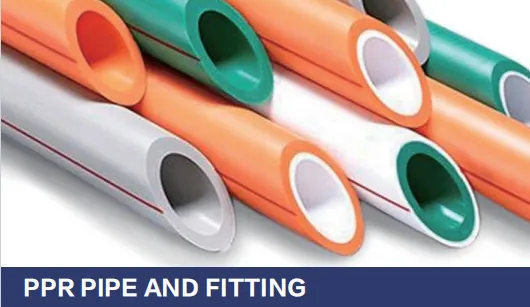
Think about the last time you turned on a faucet for a glass of water, stepped into a hot shower, or washed dishes in a restaurant. Chances are, you didn't spare a thought for the pipes behind the walls that made it all possible. Yet these unassuming tubes are the circulatory system of every building—residential homes, hospitals, schools, and skyscrapers alike. When they fail, the consequences range from minor inconveniences to costly water damage. That's why choosing the right piping system matters more than you might think. As a dedicated PPR pipe and fitting supplier with over a decade of experience, we've seen firsthand how the right materials can transform a building's functionality and longevity. Today, we're pulling back the curtain to explain how PPR pipes work, why they've become a go-to choice for modern plumbing, and how our PPR pipe and fitting solutions can elevate your next project.
Let's start with the basics: PPR stands for Polypropylene Random Copolymer. It's a type of plastic pipe, but not the flimsy, easily cracked kind you might associate with cheap hardware store finds. PPR is engineered for durability, flexibility, and performance, making it a staple in plumbing systems worldwide. Unlike older materials like copper (prone to corrosion) or galvanized steel (prone to rust), PPR is a synthetic material created by blending polypropylene with other polymers in a "random" structure—hence the "Random Copolymer" in its name. This unique molecular arrangement gives PPR pipes a rare combination of strength and elasticity, which we'll dive into more later.
At our core as a PPR pipe and fitting supplier , we often get asked: "Why PPR over other plastics like PVC or PEX?" The answer lies in that molecular structure. Imagine a chain link fence—if the links are all identical and rigidly connected, the fence is strong but brittle. But if the links are mixed with flexible, interlocking loops, it becomes both strong and bendable. That's PPR in a nutshell: a material that can handle high pressure, resist heat, and still adapt to minor shifts in building structures without cracking.
A Quick Story: The Hospital That Switched to PPR
Last year, we worked with a hospital in Jeddah that was renovating its maternity ward. Their old copper pipes had developed pinhole leaks after just 12 years, leading to mold growth in the walls—an unacceptable risk for newborns and patients with weakened immune systems. The contractors initially considered PEX pipes (another popular plastic option), but the hospital's engineers had concerns: PEX can leach chemicals when exposed to extreme heat, and its crimped fittings are more prone to leaks over time. After consulting with our team, they chose PPR. Today, two years later, the ward has zero leaks, and the maintenance team reports that the pipes require almost no upkeep. "It's like night and day," one engineer told us. "We should have switched sooner."
To understand how PPR pipes work, let's break it down into three parts: the material itself, how it's made, and how it's installed. It's a bit like baking a cake—great ingredients, careful preparation, and skilled assembly all matter.
PPR's magic starts with its raw materials. We source food-grade polypropylene copolymer resin, free from lead, BPA, or other harmful chemicals—critical for systems that carry drinking water. This resin is melted down and mixed with stabilizers that protect against UV rays, heat, and oxidation, ensuring the pipes don't degrade over time. The result? A material that can handle water temperatures up to 95°C (203°F) and pressures up to 10 bar (145 psi) without warping or weakening. For context, that's hot enough for most residential and commercial hot water systems, and strong enough to withstand the pressure of multi-story building plumbing.
Ever wondered how pipes are shaped so uniformly? It starts with extrusion. At our production facilities, the PPR resin is fed into a heated extruder, where it's melted into a thick, molten "dough." This dough is then pushed through a die—a specialized mold that shapes it into a hollow tube. As the tube exits the die, it's cooled rapidly with water to set its shape, then cut into standard lengths (usually 4m or 6m). The key here is precision: even a tiny inconsistency in wall thickness can create weak points. That's why we use computer-controlled extrusion lines that monitor thickness, diameter, and temperature 24/7. As a PPR pipe and fitting supplier , we reject any batch that doesn't meet our strict quality standards—no exceptions.
What truly sets PPR apart is how it's connected. Unlike copper pipes (soldered with lead-based alloys) or PEX (crimped with metal rings), PPR uses socket fusion —a process that melts the pipe and fitting together to form a single, seamless joint. Here's how it works: A special heating tool warms the end of the pipe and the inside of the fitting to exactly 260°C. Once molten, the pipe is inserted into the fitting and held for a few seconds. As it cools, the plastic re-solidifies, creating a bond that's stronger than the pipe itself. No, no gaskets, no risk of leaks. It's like welding two pieces of metal, but for plastic—and it's surprisingly simple to learn with the right training.
We once trained a team of contractors in Riyadh who were used to working with UPVC pipes (glued joints) and were skeptical about PPR. After a 2-hour workshop, they were fusing pipes like pros. "This is faster than gluing, and we don't have to wait for the adhesive to dry," one contractor noted. "Plus, we can test the system immediately—no more coming back the next day to check for leaks."
So, why do we, as a PPR pipe and fitting supplier , stand behind this material? Let's cut through the marketing jargon and focus on the benefits that matter to you —whether you're a homeowner, contractor, or project manager.
| Feature | PPR Pipes | PEX Pipes | UPVC Pipes |
|---|---|---|---|
| Material | Polypropylene Random Copolymer | Cross-Linked Polyethylene | Unplasticized Polyvinyl Chloride |
| Max Temperature | 95°C (continuous use) | 82°C (continuous use) | 60°C (continuous use) |
| Joint Type | Socket fusion (seamless, permanent) | Crimped/clamped (mechanical, potential for leaks) | Glued (chemical bond, prone to weakening over time) |
| Lifespan | 50+ years | 40–50 years | 25–30 years |
| Best For | Hot/cold water, hospitals, schools, high-pressure systems | Residential hot water, underfloor heating | Cold water, drainage, non-potable applications |
At the end of the day, pipes are only as good as the system they're part of. That's why we don't just sell pipes—we offer PPR pipe and fitting solutions tailored to your project's unique needs. Whether you're building a 50-story hotel, a pediatric hospital, or a family home, we start by listening. What's the water pressure? Will the pipes carry hot or cold water (or both)? Are there space constraints in the walls? From there, we recommend the right pipe diameters, fittings, and accessories to ensure optimal performance.
Case Study: A School in Dammam That Needed Fire-Safe Plumbing
Last year, a school district in Dammam approached us with a challenge: they needed a plumbing system for a new elementary school that was both fire-safe and easy to install. Schools have strict fire codes, and they wanted pipes that wouldn't release toxic fumes if exposed to high heat. We recommended our fire-resistant PPR pipes (tested to Class B1 fire standards) paired with heat-insulated fittings. We also provided custom elbows and tees to navigate the school's tight wall cavities, reducing installation time by 30%. The project was completed under budget, and the district has since ordered PPR systems for three more schools. "Working with a supplier that understands our safety requirements made all the difference," the project manager told us.
Our range includes everything from standard straight pipes and elbows to specialized fittings like reducers, flanges, and manifolds for radiant floor heating. We also stock fusion tools, repair kits, and even offer on-site training for your installation team—because a great product is only great if it's installed correctly.
You could buy PPR pipes from any supplier, but not all pipes are created equal. The difference lies in the details: the quality of the raw materials, the precision of manufacturing, and the support you get after the sale. As a trusted PPR pipe and fitting supplier , here's what sets us apart:
Even the best pipes need a little TLC. Here are a few easy tips to keep your PPR system running smoothly for decades:
Pipes may not be the most glamorous part of building a home or commercial space, but they're one of the most critical. They affect everything from your daily comfort to your long-term maintenance costs. As a PPR pipe and fitting supplier , we believe that everyone deserves a plumbing system they can rely on—one that works quietly behind the scenes, year after year, without surprises.
Whether you're planning a new build, renovating an existing space, or simply curious about upgrading your plumbing, we're here to help. Our team of experts is ready to answer your questions, share samples, or even visit your job site to assess your needs. After all, being a supplier isn't just about selling products—it's about building partnerships. And we're in it for the long haul.
Ready to upgrade your plumbing system? Contact us today to learn more about our PPR pipe and fitting solutions —because your building deserves pipes as reliable as the people in it.
Recommend Products












