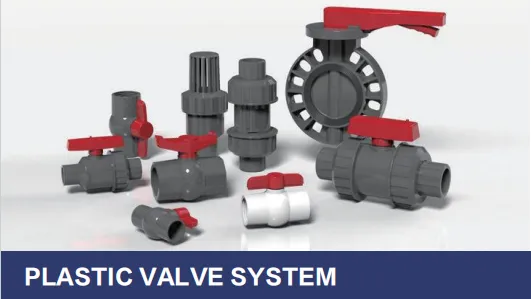
Walk into any modern building—whether it's a bustling hospital, a sleek commercial office, or a cozy residential complex—and you'll find an invisible network working tirelessly behind the walls: pipes, fittings, and, crucially, valves. These small but mighty components control the flow of water, gas, and other fluids, ensuring everything from your morning shower to the HVAC system in a school runs smoothly. But what happens when a valve fails? A minor leak could escalate into water damage, mold growth, or even structural issues. In critical settings like hospitals, a faulty valve might disrupt life-saving equipment or compromise sterile environments. That's where the role of a
plastic valve system supplier
becomes indispensable. These suppliers don't just manufacture valves—they engineer peace of mind. And at the heart of that promise lies rigorous durability testing. Let's pull back the curtain on how these suppliers ensure their
plastic valve system solutions
stand the test of time, pressure, and the chaos of real-world use.
Why Durability Testing Isn't Just a "Checkbox"
For a
plastic valve system supplier
, durability testing isn't an afterthought—it's the backbone of product development. Unlike metal valves, which have been trusted for decades, plastic valves are often met with skepticism: "Will they crack under pressure?" "Can they handle extreme temperatures?" "How long until they degrade?" These questions aren't just hypothetical. In 2019, a residential building in Riyadh faced a major flood after a plastic valve in the DWV (Drain-Waste-Vent) system failed, causing over $200,000 in damages. The root cause? A valve that hadn't undergone proper long-term creep testing, leading to gradual deformation and eventual rupture. Stories like these highlight why testing isn't just about meeting regulations—it's about protecting lives, property, and a supplier's reputation.
"We see ourselves as partners, not just vendors," says a quality assurance manager at a leading
pvc dwv pipe supplier
that also specializes in plastic valves. "When a contractor installs our valves in a hospital, they're trusting us with the safety of patients and staff. That trust isn't given—it's earned through thousands of hours of testing." For suppliers, durability testing is a multi-layered process that starts the moment raw materials arrive and doesn't end until the valve is certified for use. Let's break down the key stages.
Stage 1: Material Testing—The Foundation of Durability
You can't build a strong valve with weak materials. That's why
plastic valve system supplier
s start by putting their raw materials under the microscope—literally. Most plastic valves are made from polymers like PVC, CPVC, PPR, or PE, each chosen for specific properties: PVC for chemical resistance, CPVC for high-temperature tolerance, PPR for flexibility. But even the best polymer is only as good as its quality.
First, suppliers test the resin—the base material—for purity. Contaminants like dirt, moisture, or leftover additives from previous batches can weaken the plastic, leading to cracks or brittleness. Using Fourier-transform infrared spectroscopy (FTIR), labs analyze the resin to ensure it meets industry standards (e.g., ASTM D1784 for PVC). Next, they check for melt flow rate (MFR), a measure of how easily the plastic melts and flows during manufacturing. A consistent MFR ensures uniform valve walls, preventing weak spots.
Additives are another critical piece. Plastic valves often include UV stabilizers to prevent degradation from sunlight, impact modifiers to boost toughness, and fire retardants for safety-critical applications. Testing here involves measuring tensile strength (how much force the plastic can withstand before breaking) and Izod impact resistance (how well it resists sudden blows). For example, a valve destined for a school's plumbing system must withstand accidental impacts from tools during maintenance—so suppliers test samples by striking them with a pendulum at varying temperatures (down to -20°C) to simulate cold, brittle conditions.
"We once rejected an entire batch of resin because the impact resistance was 5% below our specs," recalls a material scientist at a
plastic valve system supplier
. "It was costly, but replacing failed valves in the field would have been 10 times more expensive—plus the reputational damage. Quality starts with the resin."
Stage 2: Pressure Testing—Pushing Valves to Their Limits
If there's one test that makes or breaks a plastic valve, it's pressure testing. Valves are designed to handle specific pressure ratings—for example, 10 bar (145 psi) for residential water lines or 16 bar (232 psi) for commercial HVAC systems. But suppliers don't just test to the "rated" pressure—they test to failure.
The hydrostatic pressure test is a industry standard. Here's how it works: A valve is mounted in a test rig, filled with water, and pressurized to 1.5 times its rated pressure. It's then held at that pressure for a set duration—usually 1 hour for small valves, up to 1000 hours for large-diameter ones. During this time, sensors monitor for leaks, deformation, or "creep" (slow, permanent deformation under constant load). A valve that passes this test is certified to handle its rated pressure for decades.
For more demanding applications, like industrial pipelines, suppliers conduct burst pressure testing. This involves ramping up pressure until the valve fails—often at 3–4 times the rated pressure. The goal isn't just to see if it breaks, but how it breaks. A clean, ductile fracture (where the plastic stretches before breaking) is a good sign, indicating the material was tough. A brittle fracture (sudden, sharp break) suggests weak points, prompting a redesign.
Fatigue testing is another critical step. Valves aren't just under static pressure—they're opened and closed repeatedly, which can cause wear and tear. Suppliers simulate this by cycling the valve (opening/closing) thousands of times under pressure. For example, a ball valve in a commercial kitchen might be cycled 100,000 times to mimic 20 years of use. If the seal starts leaking or the handle becomes stiff, the design goes back to the drawing board.
To put these tests in context, let's compare key standards used by
plastic valve system supplier
s worldwide:
|
Test Type
|
Standard (Example)
|
Key Parameters
|
Purpose
|
|
Hydrostatic Pressure
|
ASTM D1713 (PVC Valves)
|
1.5x rated pressure for 1 hour
|
Verify resistance to constant pressure
|
|
Burst Pressure
|
DIN EN 12201 (PE Valves)
|
3x rated pressure until failure
|
Determine ultimate strength
|
|
Fatigue Cycling
|
ISO 10933 (Plastic Valves)
|
10,000–100,000 cycles at rated pressure
|
Simulate long-term wear from operation
|
|
Creep Rupture
|
ASTM D2992
|
Constant load at elevated temperature for 10,000+ hours
|
Predict lifespan under sustained stress
|
Stage 3: Temperature and Environmental Testing—Surviving the Elements
Plastic valves don't live in a controlled lab—they're installed in attics that hit 50°C in summer, basements that freeze in winter, and even outdoors exposed to rain and UV rays. To ensure they hold up,
plastic valve system supplier
s subject valves to extreme temperature testing.
Low-temperature testing is crucial for regions with cold climates. Valves are placed in a freezer at -30°C for 24 hours, then immediately tested for impact resistance and pressure integrity. Cold plastic becomes brittle, so a valve that cracks under impact at low temps is useless in a winter storm. On the flip side, high-temperature testing simulates hot water systems or industrial processes. Valves are heated to 95°C (for CPVC) or 70°C (for PVC) and held there while pressure is applied. This tests for "thermal creep"—the tendency of plastic to deform when heated and stressed. A valve that maintains its shape and seal after 1000 hours at high temp is deemed reliable for hot water lines.
UV resistance is another concern, especially for valves installed outdoors (e.g., in irrigation systems or outdoor plumbing). Suppliers use xenon arc lamps to simulate years of sun exposure in just weeks, then check for discoloration, cracking, or loss of strength. Valves that pass this test are often marked with a "UV stabilized" label, giving contractors confidence they won't degrade in sunlight.
Stage 4: Chemical Resistance—Battling Corrosive Fluids
Valves don't just handle water—they're exposed to everything from bleach in a laundry room to acids in a lab. A valve that dissolves or weakens when in contact with these chemicals is a disaster waiting to happen. That's why
plastic valve system solutions
include rigorous chemical resistance testing.
The process is straightforward but time-consuming: Valve samples are immersed in common chemicals (chlorine, sulfuric acid, motor oil, etc.) at various concentrations and temperatures for 30–90 days. After exposure, they're tested for changes in weight, dimensions, and strength. For example, a valve used in a hospital's medical waste system must resist disinfectants like hydrogen peroxide. If the plastic swells or loses more than 5% of its tensile strength after exposure, the material is rejected.
"We once had a client request a valve for a food processing plant that handles citrus juice," says a product engineer at a
plastic valve system supplier
. "Citric acid is highly corrosive, so we tested 10 different material formulations before finding one that maintained 98% of its strength after 60 days of immersion. That's the level of detail we go into."
Stage 5: Long-Term Durability—Testing "Time" Itself
A valve might pass all the above tests, but how do suppliers know it will last 50 years? They can't wait half a century to find out, so they use accelerated aging tests to simulate decades of wear in months.
One common method is the Arrhenius equation, which uses elevated temperatures to speed up chemical reactions (like polymer degradation). By testing valves at 80°C, 90°C, and 100°C, suppliers can extrapolate how the material will age at room temperature. For example, a valve that lasts 10,000 hours at 80°C might be projected to last 50 years at 25°C.
Creep testing is another long-term test. Valves are subjected to constant pressure at high temperatures for 10,000+ hours (over a year) to see if they slowly deform. The goal is to ensure the valve doesn't "creep" more than 2% over that period—a threshold that indicates it will remain functional for decades.
Field testing is the final frontier. Some suppliers partner with construction companies to install prototype valves in real buildings, then monitor them for years. Data from these tests—leak rates, operational smoothness, visual degradation—feeds back into product design, ensuring continuous improvement.
Supplier Insights: The Human Side of Testing
Behind every test result is a team of engineers, technicians, and quality control experts. At a leading
plastic valve system supplier
in Saudi Arabia, the testing lab operates 24/7, with technicians monitoring pressure rigs, temperature chambers, and chemical baths around the clock. "Our lab is like a hospital for valves," jokes a lab technician. "Every sample has a 'patient file,' tracking its journey from raw material to certified product."
For suppliers, transparency is key. Many publish detailed test reports on their websites, allowing contractors and engineers to verify compliance with standards like ASTM, DIN, or ISO. Some even invite clients to witness tests in person, building trust through openness. "A contractor once asked to watch a burst pressure test," recalls a lab manager. "We let him press the start button. When the valve finally burst at 35 bar—way above the rated 10 bar—he smiled and said, 'I'll never question your valves again.'"
Case Study: DWV Valves in a Riyadh Hospital
To see how testing translates to real-world success, consider a recent project: a 500-bed hospital in Riyadh requiring DWV valves for its plumbing system. The
pvc dwv pipe supplier
partnered with a
plastic valve system supplier
to provide valves that could handle high flow rates, resist chemical cleaners, and meet Saudi Arabia's strict fire safety codes.
The valves underwent extensive testing: 1000-hour hydrostatic pressure tests at 10 bar, chemical resistance tests with hospital-grade disinfectants, and fire testing to ensure they didn't release toxic fumes. During installation, a few valves were accidentally dropped from a height of 2 meters—yet they showed no cracks or leaks, thanks to the impact modifiers tested earlier. Two years later, the hospital reports zero valve failures, with maintenance teams noting the valves still open and close as smoothly as day one.
"Hospitals can't afford downtime," says the hospital's facilities manager. "Knowing the valves were tested to such extremes gives us peace of mind. We don't have to worry about leaks disrupting surgeries or patient care."
Conclusion: Durability Is in the Details
Plastic valves may seem simple, but their durability is the result of a meticulous, multi-stage testing process. From resin purity to long-term creep testing,
plastic valve system supplier
s leave no stone unturned. For contractors, builders, and facility managers, this testing isn't just about compliance—it's about trust. When you choose a supplier that prioritizes testing, you're not just buying a valve—you're investing in a product that will keep buildings safe, functional, and efficient for decades to come.
So the next time you turn on a faucet or walk through a hospital corridor, take a moment to appreciate the invisible heroes: the plastic valves that work tirelessly behind the scenes. And remember—their reliability isn't an accident. It's the result of thousands of hours of testing, a commitment to quality, and a supplier's promise to deliver nothing less than the best.